Liverpool SEO Consultant: Why Local Expertise Matters
Liverpool is a thriving commercial centre where a strong online presence translates directly into footfall, enquiries, and local loyalty. A Liverpool-based SEO consultant brings intimate knowledge of the city’s districts, consumer journeys, and competitive signals, turning city-wide authority into suburb-specific relevance and edge activations that convert. Localised insight isn’t merely a nice-to-have; it accelerates trust, improves click-through, and supports long-term growth in a market that values proximity and credibility. This Part 1 outlines why locality matters, what excellent Liverpool SEO looks like in practice, and how to start evaluating providers to secure durable, measurable outcomes. Practical governance resources and locality-driven playbooks are available on Liverpool Local SEO Services to support UK-market strategies and regulator-ready reporting.
What A Liverpool SEO Consultant Brings To Your Business
A Liverpool consultant acts as both navigator and accelerator, translating city-wide authority into suburb-level relevance and edge experiences that drive tangible outcomes. The core remit combines strategic thinking with practical delivery, aligning local signals to real customer journeys. A strong local consultant will typically:
- Understand Liverpool’s districts and sectors: Demonstrated fluency in areas such as City Centre, Baltic Triangle, Anfield, Woolton, and Crosby, with evidence of impact in multiple neighbourhoods.
- Prioritise sustainable, white-hat practices: Adhere to search-engine guidelines to protect long-term visibility and avoid penalties.
- Provide transparent governance and reporting: Regular, accessible artefacts that show data sources, decisions, and outcomes, making diffusion health visible to stakeholders.
- Deliver customised roadmaps with measurable ROI: Roadmaps that tie activity to inquiries, bookings, or revenue, with regular reviews and course-corrections.
Core Signals To Optimise In Liverpool
Local SEO success in Liverpool hinges on a disciplined mix of signals that Google and users recognise as credible and useful. A Liverpool SEO partner should focus on:
- GBP health and proximity signals: Regular optimisation of Google Business Profile health, reviews management, and up-to-date categories to feed Maps visibility.
- NAP parity across surfaces: Consistent name, address, and phone number across maps, directories, and your site to preserve proximity signals.
- Local citations and data provenance: Accurate, locally relevant listings and verifiable proofs that anchor trust in district pages.
- Edge activations tied to suburb pages: Maps prompts, local guides, and event calendars that reference suburb-depth content and hub topics to capture near-me intent.
Hub To Suburb Diffusion In Liverpool
A practical Liverpool diffusion spine starts with city-wide hub topics that establish authority and then branches into suburb-depth pages that address local intents with credible proofs. Suburb pages should reference hub topics, supporting edge activations that capture near-me queries. For example, a hub around "Liverpool City Centre" can diffuse into suburbs like Baltic Triangle, Toxteth, and Woolton, each with 4–6 local intents and proofs such as client testimonials, local data, and partnerships. Governance artefacts should accompany each activation to ensure the diffusion journey remains auditable as campaigns scale across the city’s markets.
- Local relevance and district fluency: Build depth content for key Liverpool districts, reflecting local demand, industry patterns, and service footprints.
- Ethical practices: Maintain white-hat SEO aligned with best-practice guidelines.
- Transparent governance: Regular, accessible reporting that documents data origins, calculations, and decisions.
- Evidence-driven actions: Use data-led hypotheses and audits to guide every activation rather than guesswork.
Starting Point: First Steps In Liverpool
To start implementing these principles in Liverpool, begin with a quick signal audit focused on GBP health, NAP parity, and suburb-depth potential. Create a diffusion map that seeds two adjacent suburbs to test depth content and edge activations, then establish governance artefacts for major activations and set up a monthly health dashboard that reports diffusion health by suburb and surface. For practical governance resources and Liverpool-first playbooks, visit Liverpool Local SEO Services on liverpoolseo.org, and review Google's quality guidelines as a baseline for credible practice. If you’d like tailored onboarding, contact us via Contact Us to discuss a Liverpool-focused diffusion plan.
Next Steps And Governance For Liverpool Campaigns
From Part 1 to the ongoing programme, the objective is a regulator-ready diffusion spine that blends hub authority, suburb depth, and edge experiences. If you’re evaluating Liverpool partners, require What-If gates, Explain Logs, Provenance Envelopes, and RegExports attached to major activations, and demand a two-suburb pilot to validate diffusion patterns. For governance templates and Liverpool playbooks, explore Liverpool Local SEO Services and refer to Google’s quality guidelines for credible practice.
What An SEO Company In Liverpool Does
Liverpool businesses rely on a credible, locally attuned online presence to win visibility in a crowded market. An experienced Liverpool-based SEO consultant acts as both navigator and accelerator, translating city-wide authority into suburb-level relevance and edge activations that generate real inquiries and revenue. In practice, a Liverpool agency collaborates with in-house teams, consultants, and external partners to build a sustainable diffusion spine: hub topics that establish city-wide authority, depth pages for key districts, and edge content such as Maps prompts and local guides that capture near-me intent. This Part 2 clarifies the typical roles, capabilities, and client profiles you can expect from a Liverpool-focused partner, grounded in governance and measurable outcomes aligned with Liverpool market dynamics.
Core Capabilities Of A Liverpool SEO Agency
A top Liverpool SEO partner brings a balanced, locality-forward skillset, combining technical discipline with content strategy, local activation, and accountable governance. The core capabilities typically include:
- Technical SEO And Site Health: Robust site audits, crawl optimisation, indexability, and performance improvements that support long-term growth across Liverpool’s districts.
- On-Page Optimisation And Content Strategy: Keyword research, topic clustering, and optimised page architecture designed for city-wide authority and suburb relevance.
- Digital PR And Link Building: Ethical outreach campaigns that secure high-quality, locally relevant backlinks and brand mentions that reinforce EEAT signals.
- Local SEO And GBP Optimisation: Optimising Google Business Profile health, reviews strategy, and proximity signals to improve local packs and Maps visibility.
- Content Creation For Local Audiences: Suburb-specific pages and case studies that demonstrate local proof, partnerships, and practical value.
- Ecommerce And Lead-Gen SEO: Product and category optimisations, structured data, and conversion-focused content for Liverpool-based shops and service providers.
Liverpool Client Profiles And Sectors
Liverpool is a diverse business ecosystem. Understanding typical client types helps shape a practical diffusion spine and governance-driven roadmap. Common Liverpool engagements include:
- B2B Tech And Professional Services: Companies seeking scalable lead generation and thought leadership through technical content and robust product pages.
- Ecommerce And Local Retail: Merchants and retailers seeking local visibility, product schema, and edge experiences (Maps prompts, local guides) to capture immediate buying interest in city centre and surrounding suburbs.
- Hospitality And Tourism: Hotels, venues, and experiences aiming to appear in local searches and destination results for near-me audiences.
How A Liverpool SEO Agency Fits With Your In-House Team
Most Liverpool businesses achieve best results when an agency complements internal teams rather than replacing them. A typical collaboration blends governance discipline with execution expertise. The agency handles technical audits, content ideation, and edge activations, while your team focuses on product strategy, local operations, and customer relationships. Regular governance artefacts, transparent reporting, and a clear ROI narrative ensure both sides stay aligned and accountable across the diffusion spine.
Next Steps For Part 2
If you’re evaluating Liverpool SEO partners, use this practical lens: ask how a firm structures its diffusion spine (hub topics, suburb depth, edge assets), request regulator-ready governance artefacts (What-If gates, Explain Logs, Provenance Envelopes, RegExports), and insist on suburb-level proofs that anchor EEAT signals. Seek two to three suburb depth examples and a clear plan for edge content tied to real local activity. For governance templates and Liverpool-first playbooks, explore Liverpool Local SEO Services on liverpoolseo.org, and review Google's quality guidelines as a trusted baseline. If you’d like tailored onboarding, contact us via Contact Us to discuss a Liverpool-focused diffusion plan.
Local SEO In Liverpool: The Foundation For Discovery
Liverpool's local search landscape is highly location-specific, with discovery driven by proximity, community signals, and credible local proofs. A Liverpool-based SEO consultant builds a diffusion spine that starts with city-wide hub topics and diffuses into suburb-depth pages across districts such as City Centre, Baltic Triangle, Toxteth, Anfield, Woolton, and Crosby. This Part 3 outlines the essential local signals and practical steps to establish discovery in Liverpool, complemented by governance artefacts and measurable milestones that align with Liverpool's market dynamics. For governance templates and Liverpool-first playbooks, explore Liverpool Local SEO Services on Liverpool Local SEO Services and review Google's quality guidelines for credible practice.
Hub To Suburb Diffusion In Liverpool
A practical diffusion spine in Liverpool starts with city-wide hub topics that establish authority and then branches into suburb-depth pages addressing local intents. Each suburb page should reference the hub topics and present credible proofs such as client testimonials, local datasets, and partnerships. A well-governed diffusion spine ensures edge activations—Maps prompts, local guides, event calendars—are anchored to suburb pages, reinforcing near-me demand and improving overall diffusion health. For example, a hub around "Liverpool City Centre" can diffuse into Baltic Triangle, Toxteth, and Woolton, each with 4–6 local intents and proofs that translate city-wide authority into suburb-level relevance.
- City-wide pillars to suburb depth: Build depth content for key Liverpool districts that reflect local demand and service footprints.
- Local proofs integrated into pages: Include dated testimonials and local data on each suburb page to strengthen EEAT signals.
- Edge activations linked to suburbs: Ensure maps prompts and local guides tie back to the relevant suburb pages.
- Governance and reporting: Maintain accessible artefacts that document data origins, decisions, and outcomes.
GBP Health And Local Signals In Liverpool
Google Business Profile (GBP) health and proximity signals are foundational to local discovery in Liverpool. Regular GBP health checks, timely updates to business categories, and a proactive reviews management approach feed Maps visibility and local packs. Keep GBP descriptions, attributes, and posts current to mirror seasonal or event-driven activity in districts like City Centre, Baltic Triangle, and Anfield. A disciplined approach to GBP complements site content, boosting trust signals for both users and search engines.
- GBP completeness and updates: Ensure the profile contains accurate hours, services, and location details, mirroring on-site content.
- Reviews management: Respond promptly to reviews and maintain a consistent tone that reinforces locality credibility.
- Proximity emphasis: Align GBP categories with suburb-specific intents to surface in near-me searches.
- Edge tie-ins: Use GBP posts to promote local events or partnerships that support suburb pages.
NAP Parity Across Surfaces In Liverpool
Consistency of name, address, and phone number (NAP) across maps, directories, and your website is essential for Liverpool’s diffusion health. Discrepancies can dilute proximity signals and undermine local authority. Create a master NAP record and replicate it across all local directories and GBP. Regularly audit for variations, especially when opening hours change or services expand into new Liverpool suburbs like Crosby or Childwall. Suburb pages should tie back to the hub topics with clear proofs that reinforce local credibility and trust.
- Unified NAP record: Maintain a single source of truth for all local citations and GBP profiles.
- Local data provenance: Document the origins of changes to business data and mapping entries to support auditability.
- Citation quality and relevance: Prioritise locally relevant directories and partner listings that match Liverpool’s geography.
- Suburb-level proofs linked to NAP: Include testimonials and local data on each suburb page to reinforce proximity signals.
Suburb Depth Content And Edge Activations
Depth pages for Liverpool suburbs should address 4–6 local intents with credible proofs, connecting to edge activations such as Maps prompts and local guides. Suburb pages gain authority as they accumulate proofs—testimonials, local datasets, and partnerships—while hub topics maintain city-wide relevance. An edge activation calendar that synchronises with local events and seasonal activity helps capture near-me demand and improves engagement across district audiences.
- Intent mapping per suburb: Define 4–6 district-specific intents and align them to hub topics.
- Proof density on suburb pages: Populate pages with dated testimonials, local data, and partnerships.
- Edge activation planning: Create Maps prompts and local guides linked to the corresponding suburb pages.
Starting Point: Two-Suburb Pilot In Liverpool
Begin with two adjacent Liverpool suburbs to test depth content and edge activations before broader rollout. City Centre and Baltic Triangle are strong candidates due to high near-me demand and vibrant local ecosystems. For each suburb, publish 4–6 intents, supporting proofs, and geo-targeted CTAs that reference hub topics. Build governance artefacts for the pilot and set up a monthly diffusion-health dashboard to monitor suburb performance, GBP readiness, and edge activation engagement.
- Suburb selection: City Centre and Baltic Triangle as seed suburbs.
- Content map: Assign 4–6 intents per suburb and map them to 2–3 hub topics.
- Proof strategy: Publish 3–4 dated testimonials and 1–2 local data sources per suburb.
- Edge activation: Create Maps prompts and local guides that link to each suburb page.
- Governance attachment: Attach What-If gates and Explain Logs to all pilot activations.
Governance, Measurement, And Next Steps
Maintain a governance cadence from the outset. Use What-If gates to forecast diffusion impact, Explain Logs for data provenance, and Provenance Envelopes to attach licensing and origin disclosures to signals. RegExports can be prepared for regulator reviews at key milestones. Establish a monthly diffusion health dashboard that aggregates hub authority, suburb engagement, GBP readiness, and edge activation performance, and schedule quarterly governance reviews to recalibrate the diffusion spine. For practical governance templates and Liverpool-first playbooks, visit Liverpool Local SEO Services on liverpoolseo.org, and reference Google's quality guidelines as the baseline for credible practice.
Core Services A Liverpool SEO Consultant Typically Provides
A Liverpool-based SEO consultant offers a practical, locality-aware service suite that translates city-wide authority into district-level relevance. The aim is a diffusion spine that starts with hub topics to establish credibility, followed by suburb-depth pages that address specific Liverpool communities, and finally edge activations that capture near-me demand. This Part 4 surveys the essential services you should expect, how they interlock in the local market, and how governance artefacts keep every step auditable for stakeholders.
Core Service Categories In Liverpool SEO
Each service area below is designed to work in concert with the diffusion spine. The emphasis is on practical delivery, locality fidelity, and measurable outcomes aligned to EEAT principles and local buyer journeys in Liverpool.
- Technical SEO And Site Health: Comprehensive site audits, crawl optimisation, indexability improvements, and performance enhancements to support long-term visibility across Liverpool’s districts.
- Keyword Research And Topic Modelling: City-wide pillars mapped to suburb intents, with topic clusters that enable scalable content architecture for districts like City Centre, Baltic Triangle, Toxteth, and Crosby.
- On-Page Optimisation And Content Strategy: Optimised meta data, headings, internal linking, and structured content plans that balance hub authority with suburb relevance. Content should serve real local questions and include proofs that reinforce EEAT signals.
- Local SEO And GBP Optimisation: Google Business Profile health, proximity signals, reviews management, and NAP parity across Liverpool’s surfaces to improve Maps visibility and local packs.
- Local Citations And Data Provenance: Accurate, locally meaningful citations and verifiable proofs that anchor trust in district pages and edge assets.
- Content Creation For Local Audiences: Suburb-focused pages, case studies, testimonials, and partnerships that demonstrate local credibility and practical value.
- Link Building And Digital PR: Ethical outreach campaigns and locally relevant backlinks that reinforce EEAT and authority signals within Liverpool’s markets.
- Edge Activations And Local Experiences: Maps prompts, local guides, event calendars, and near-me content tightly linked to suburb pages and hub topics.
- Ecommerce And Lead Gen SEO (where relevant): Product and category optimisations, schema, and conversion-oriented content for Liverpool-based shops or service providers.
- Mobile SEO And Performance: Mobile-first optimisation, fast loading and smooth UX across Liverpool’s busy urban and suburban environments.
From Hub To Suburb: A Practical Diffusion Approach
Begin with city-wide hub topics to establish authority and then develop suburb-depth pages that address 4–6 local intents per district. Each suburb page should reference hub topics and present credible proofs—dated testimonials, local data, and partnerships—that reinforce proximity signals. Edge activations (such as Maps prompts and local guides) should be anchored to the corresponding suburb pages, ensuring a coherent diffusion journey across Liverpool’s markets.
- District fluency: Develop depth content for major Liverpool districts like City Centre, Baltic Triangle, Anfield, and Crosby.
- Proof density: Populate suburb pages with up-to-date testimonials and local data to strengthen EEAT.
- Edge alignment: Tie Maps prompts and local guides to the relevant suburb pages and hub topics.
- Governance traction: Attach What-If gates and Explain Logs to major activations to support auditability.
Hub Topics, Suburb Depth, And Edge Activation Workflows
In practice, Liverpool campaigns perform best when the hub-suburb-edge sequence is explicit. A typical workflow includes: selecting two priority suburbs to pilot depth content, generating 4–6 intents per suburb, embedding proofs (testimonials, datasets, partnerships), and scheduling edge activations that reference the suburb pages. Governance artefacts accompany each activation to ensure traceability and regulator readiness.
- Hub to suburb mapping: Define 3–5 hub topics and link each to 4–6 suburb pages.
- Suburb proofs: Include dated evidence and local data on each suburb page.
- Edge planning: Plan Maps prompts, local guides, and event calendars with direct links to the suburb content.
- Governance artefacts: Attach What-If gates and Explain Logs to major activations.
Two-Suburb Pilot: A Measured Start
Launching with City Centre and Baltic Triangle as pilot suburbs provides quick insights into depth content performance and edge activation uptake. For each suburb, publish 4–6 local intents with proofs, establish geo-targeted CTAs, and attach governance artefacts to the major activations. Track diffusion health monthly and adjust the plan based on data signals from hub-to-suburb diffusion and edge engagement.
- Suburb choices: City Centre and Baltic Triangle for their high near-me demand and vibrant local ecosystems.
- Content plan: Map 4–6 intents per suburb to 2–3 hub topics.
- Proofs: Publish 3–4 dated testimonials and 1–2 local data sources per suburb.
- Edge activations: Create Maps prompts and local guides linked to each suburb page.
- Governance attachments: Include What-If gates and Explain Logs for the pilot.
Governance, Measurement, And Next Steps
From the outset, maintain a governance cadence that includes What-If gates, Explain Logs, Provenance Envelopes, and RegExports attached to major activations. Establish a monthly diffusion health dashboard that aggregates hub authority, suburb engagement, GBP readiness, and edge activation performance. Schedule quarterly governance reviews to recalibrate the diffusion spine as Liverpool markets evolve. For practical governance templates and Liverpool-first playbooks, explore Liverpool Local SEO Services on liverpoolseo.org, and reference Google's quality guidelines to stay aligned with credible practice.
A Typical Liverpool SEO Consultant Process
In Liverpool, a disciplined, locality-aware approach to search optimisation starts with a clearly defined process. A Liverpool-based SEO consultant translates city-wide authority into suburb-specific relevance, then scales edge activations such as Maps prompts and local guides. This Part 5 outlines a practical end-to-end workflow—from discovery and audits through strategy formation, implementation, testing, and ongoing optimisation—designed to deliver measurable ROI for Liverpool businesses. For governance templates and Liverpool-first playbooks, visit Liverpool Local SEO Services on liverpoolLocal SEO Services hosted at liverpoolseo.org and align with Google's quality guidelines to stay regulator-ready.
Discovery, Audit, And Baseline Health
The first phase anchors the programme in solid data. A Liverpool consultant begins with a comprehensive audit that covers technical health, content quality, local signals, and competitive positioning within the city’s districts. Core steps include:
- Technical SEO Audit: Crawlability, indexability, site speed, mobile UX, and structured data hygiene across Liverpool pages.
- Content Audit: Assess current hub topics, suburb-depth content, and edge assets for topical coverage, proofs, and alignment with user intents in Liverpool areas such as City Centre, Baltic Triangle, Toxteth, and Woolton.
- Local Signal Review: GBP health, NAP parity, local citations, and proximity signals across Liverpool surfaces to establish baseline credibility.
- Competitive Benchmark: Map competitors’ hub strategies, suburb pages, and edge activations to identify gaps and opportunities for diffusion health improvement.
Strategic Roadmap: Hub Topics, Suburb Depth, And Edge Activations
With the audit complete, a Liverpool consultant designs a diffusion spine that begins with city-wide hub topics and diffuses into suburb-depth pages. Each suburb page should address 4–6 local intents and include credible proofs such as client testimonials, local datasets, and partnerships. Edge activations—Maps prompts, local guides, and event calendars—must anchor to the relevant suburb pages and hub topics. Governance artefacts accompany every activation to ensure auditability as campaigns scale across Liverpool's markets.
- Hub-First Content Architecture: Define 3–5 city-wide pillars that support deeper suburb content.
- Suburb Intent Mapping: Identify 4–6 district-level intents per suburb aligned to hub topics.
- Proof Strategy: Attach dated testimonials, local datasets, and credible partnerships to each suburb page.
- Edge Activation Plan: Plan Maps prompts, local guides, and event calendars tied to suburb pages.
Execution: Implementation And Content Deployment
The implementation phase converts strategy into tangible assets. A Liverpool consultant coordinates technical fixes, on-page optimisation, and content production while ensuring close integration with local signals. Key activities include:
- Technical And On-Page Optimisation: Implement canonical structures, improve internal linking, and optimise title tags, meta descriptions, and headers for hub and suburb pages.
- Content Production: Create suburb-depth pages with unique, locally informed content and proofs that reinforce EEAT signals.
- Local Signals Management: Ensure GBP health, reviews strategy, and NAP parity are consistently maintained across Liverpool surfaces.
- Edge Asset Development: Develop Maps prompts and local guides that point to the most relevant suburb pages.
Testing, Optimisation, And Measurement
Measurement is embedded from the outset. A Liverpool consultant prescribes a cycle of testing, learning, and refinement that links activity to business outcomes. Core practices include:
- A/B Testing And Content Experiments: Test variations of hub and suburb content to identify what drives engagement and conversions in Liverpool's districts.
- Performance Monitoring: Track Core Web Vitals, crawl metrics, and indexation health alongside local signal performance.
- Attribution Modelling: Establish sensible cross-surface attribution to connect hub topics, suburb pages, and edge assets to inquiries and revenue.
- Governance Feedback Loop: Use What-If gates and Explain Logs to document decisions and iterations for auditability.
Reporting, Governance, And Ongoing Optimisation
Reporting closes the loop between strategy and outcomes. A Liverpool-focused programme uses regulator-ready artefacts and a structured governance cadence. Components include:
- Monthly Diffusion Health Dashboard: Aggregates hub authority, suburb engagement, GBP readiness, and edge activation performance by district.
- What-If Gates And Logs: Preflight checks and data provenance are attached to major activations and content migrations.
- Provenance Envelopes And RegExports: Attach licensing and origin disclosures to diffusion signals for audits and regulatory reviews.
- Strategic Reviews: Quarterly strategy sprints to recalibrate the diffusion spine and adjust allocations to suburbs and edge assets.
Collaboration, Timelines, And Next Steps
In Liverpool, the optimal process combines external execution with strong internal governance. Initiate with a two-suburb pilot to validate depth content and edge activations, assign a governance lead to coordinate with your team, and maintain a monthly dashboard to track progress. For governance templates and Liverpool-first playbooks, explore Liverpool Local SEO Services on liverpool Local SEO Services and consult Google's quality guidelines to ensure regulator-ready practice across surfaces.
Pricing, Budgeting And Pricing Models In Liverpool
In Liverpool, pricing strategy for SEO campaigns must align with governance, locality fidelity, and a clear ROI. A diffusion spine approach—hub topics feeding suburb-depth pages and edge activations such as Maps prompts and local guides—requires selecting outsourcing models that preserve regulator-ready reporting and robust data provenance. This Part 6 outlines practical pricing models suitable for Liverpool businesses, typical budget ranges, and a decision framework to help you choose a structure that scales responsibly. For governance templates and Liverpool-first playbooks, explore Liverpool Local SEO Services and reference Google’s quality guidelines to establish credible practice.
Outsourcing Models At A Glance
Four core models underpin Liverpool campaigns. Each offers a different balance of control, velocity, governance, and cost. The aim is to map internal capabilities to the diffusion spine required by hub-to-suburb-to-edge activations, while maintaining regulator-ready reporting and data provenance.
- Freelancers: Flexible, cost-efficient for narrowly scoped tasks such as keyword briefs or initial suburb-depth drafts, but require tight governance to preserve quality and consistency.
- Specialised Agencies (Full-Service): End-to-end execution with established governance processes and integrated reporting. Best for campaigns spanning multiple Liverpool suburbs with complex edge activations.
- White-Label Partners: Brand-forward delivery that allows you to scale an SEO service line under your own brand, subject to clear IP ownership, data controls, and reporting standards.
- Hybrid Arrangements: Internal governance combined with external execution to balance control, speed, and scalability. A common approach when teams want to protect governance artefacts while outsourcing edge activations.
Freelancers: When They Work Best
Freelancers can accelerate discovery work, provide pillar briefs, or draft suburb-depth pages that require local flavour but minimal governance. They excel for well-scoped tasks with clear milestones and short time horizons. Guardrails include defined scopes, access to analytics, mandatory Explain Logs for data-driven decisions, and regular updates. Pair a freelancer with a governance lead in-house to ensure edge activations stay on brand and meet EEAT expectations for Liverpool audiences.
- Scope clarity: Define deliverables, timelines, and acceptance criteria before work begins.
- Data transparency: Require Explain Logs and provenance records for significant decisions.
- Calendar integration: Tie outputs to a shared content calendar aligned with the diffusion spine.
- Regular communication: Establish weekly or biweekly updates to maintain alignment.
Specialised Agencies: Full-Service Advantage
Specialised Liverpool agencies bring scale, governance discipline, and cross-functional expertise across technical SEO, content, local signals, and edge activations. They are often the best fit for programmes spanning multiple suburbs and requiring regulator-ready reporting. Expect a published methodology for suburb mapping, a robust content calendar, and a governance dossier that includes What-If gates, Explain Logs, Provenance Envelopes, and RegExports. Verify their Liverpool-focused case studies and ensure alignment with EEAT signals and local ROI expectations.
White-Label Partners: Brand-Forward Delivery
White-label arrangements can accelerate client-facing delivery while preserving your brand voice. They work well when you resell SEO services or need a scalable engine behind a branded service line. Key considerations include IP ownership and data control, confidentiality, regulatory readiness, and a standard reporting framework that mirrors your governance artefacts: What-If gates, Explain Logs, Provenance Envelopes, and RegExports. If you choose this route in Liverpool, ensure the partner can deliver edge activations and suburb-depth content that speak to real local intents while preserving brand integrity.
Hybrid Arrangements: The Best Of Both Worlds
A hybrid model blends in-house governance with external execution for balance and speed. In Liverpool, a two-tier system often works well: an internal governance lead owns What-If gates, Explain Logs, Provenance Envelopes, and RegExports, while external partners execute content, audits, and edge initiatives within the defined diffusion spine. This approach provides scalability without compromising locality credibility and regulator readiness, with clear escalation paths and transparent pricing.
Deciding What Model Suits Your Liverpool Business
Begin with a candid assessment of internal capabilities, growth goals, and regulatory considerations. If rapid, brand-forward execution across multiple Liverpool suburbs is essential, a specialised agency or white-label partner with governance frameworks may be optimal. If you have a lean team needing controlled flexibility, a hybrid model offers balance. For tight budgets or task-specific needs, freelancers can help, provided governance, data access controls, and a clear escalation plan are in place. Regardless of the model, insist on regulator-ready reporting, clear data provenance, and a transparent ROI narrative that ties SEO activity to meaningful inquiries, bookings, or revenue.
Next Steps For Liverpool Teams
- Two-model shortlist: Choose one freelancer and one agency or white-label partner as benchmarks, with governance artefacts requested in proposals.
- Two-suburb pilot: Seed depth content and edge activations in two Liverpool suburbs to validate diffusion patterns.
- Governance cadence: Establish What-If gates, Explain Logs, Provenance Envelopes, and RegExports for major activations.
- Measurement framework: Deploy a diffusion health dashboard tracking hub authority, suburb engagement, GBP readiness, and edge performance.
Measuring Success: KPIs, Reporting, And ROI For Liverpool Campaigns
In Liverpool, translating locality insights into tangible business outcomes requires a disciplined measurement framework. A diffusion spine—hub topics feeding suburb-depth pages and edge activations such as Maps prompts and local guides—must be tracked with decision-grade metrics. This Part 7 focuses on practical KPIs, dashboard design, ROI modelling, and governance practices tailored to Liverpool’s market dynamics, ensuring every optimisation contributes to real inquiries, bookings, and revenue. For governance templates and Liverpool-first playbooks, explore Liverpool Local SEO Services on Liverpool Local SEO Services at liverpoolseo.org and align with Google's quality guidelines as a baseline for credible practice.
Key Performance Indicators For Liverpool Campaigns
A robust Liverpool programme measures both visibility and commercial impact. The following KPIs align with the hub-to-suburb-to-edge diffusion model and EEAT signals, ensuring actions are tethered to real outcomes.
- GBP Health And Local Pack Visibility: Monitor Google Business Profile completeness, proximity relevance, reviews velocity, and Maps presence to protect and grow local packs in Liverpool districts.
- Hub Authority Growth: Track rankings and backlink momentum for city-wide pillars that diffuse authority into suburb pages.
- Suburb Engagement And Depth: Measure pageviews, dwell time, and scroll depth on suburb-depth pages to confirm local interest and proof density.
- Edge Activation Performance: Assess engagement with Maps prompts, local guides, and event calendars by clicks, saves, and conversions linked to suburb pages.
- Local Conversion Signals: Count inquiries, form submissions, calls, and bookings attributed to organic and local search surfaces, using sensible cross-surface attribution.
- ROI And Revenue Impact: Model incremental revenue against SEO costs, applying attribution to hub topics, suburb pages, and edge activations to quantify real returns.
Dashboard Architecture And Data Sources
A practical Liverpool dashboard aggregates data from multiple trusted sources to present a unified picture of diffusion health. Core data sources include:
- Analytics And Search Data: Google Analytics 4 (user journeys, conversions) and Google Search Console (visibility by queries and pages).
- GBP Insights And Local Signals: Proximity signals, reviews velocity, and listing health across Liverpool surfaces.
- CRM And Attribution: Lead and revenue attribution models that connect organic and local signals to inquiries and sales.
- Edge Activation Metrics: Engagement with Maps prompts, local guides, and event calendars by suburb.
- Local Contextual Data: Nearby events, partnerships, and community signals that support suburb proofs.
Suburb-Level Measurement And Attribution
To avoid city-wide obfuscation, segment metrics by suburb and by edge asset. For each district, implement 4–6 local intents, each supported by credible proofs (dated testimonials, local data, partnerships). Edge activations should be anchored to the corresponding suburb pages and hub topics, creating a coherent diffusion journey. The diffusion health index (DHI) should aggregate hub authority, suburb engagement, and edge performance into a single, interpretable score for governance reviews.
- Intent Coverage Per Suburb: Track the number and quality of local intents addressed on each suburb page.
- Proof Density On Pages: Ensure suburb pages host timely testimonials, datasets, and partnerships that reinforce EEAT signals.
- Edge Asset Linkage: Confirm Maps prompts and local guides point to the exact suburb pages and hub topics they reference.
- Governance Documentation: Attach What-If gates and Explain Logs to major activations, maintaining full auditability.
ROI Modelling For Liverpool SEO
ROI modelling translates diffusion activity into finance-ready insight. Start with the assumption of incremental inquiries generated by Liverpool-focused SEO, then apply conversion rates and average value per conversion. A practical framework might look like this:
- Incremental Inquiries: e.g., 15–25 additional inquiries per month from Liverpool-focused SEO in the first quarter.
- Lead-To-Customer Conversion: 15–25% depending on sector and offer, with a conservative middle ground of 20% for service-led businesses.
- Average Value Per Conversion: £150–£350 for services, or higher for high-value local packages; use your typical case mix to refine.
- Cost Of Activation: Include monthly agency fees, content production, and edge activations tied to the diffusion spine.
Example: If you generate 20 incremental inquiries per month, with a 20% conversion rate and an average value of £250, monthly revenue from SEO would be £1,000. If the monthly SEO investment is £2,000, the ROI would be negative in this simplified scenario, underscoring the importance of plugging the ROI model into longer horizons and broader diffusion effects. When scaled or combined with higher-value edge activations and more mature suburb depth, the ROI improves as diffusion health strengthens across hub, suburb, and edge surfaces.
Governance, Compliance, And What-To-Expect
To maintain credibility and regulator readiness, embed governance artefacts with every activation. What-If gates forecast diffusion outcomes; Explain Logs provide data provenance; Provenance Envelopes attach licensing and origin disclosures; RegExports package diffusion journeys for regulator reviews. A monthly diffusion health dashboard should track hub authority, suburb engagement, GBP readiness, and edge activation performance, with quarterly governance reviews to recalibrate the diffusion spine as Liverpool markets evolve.
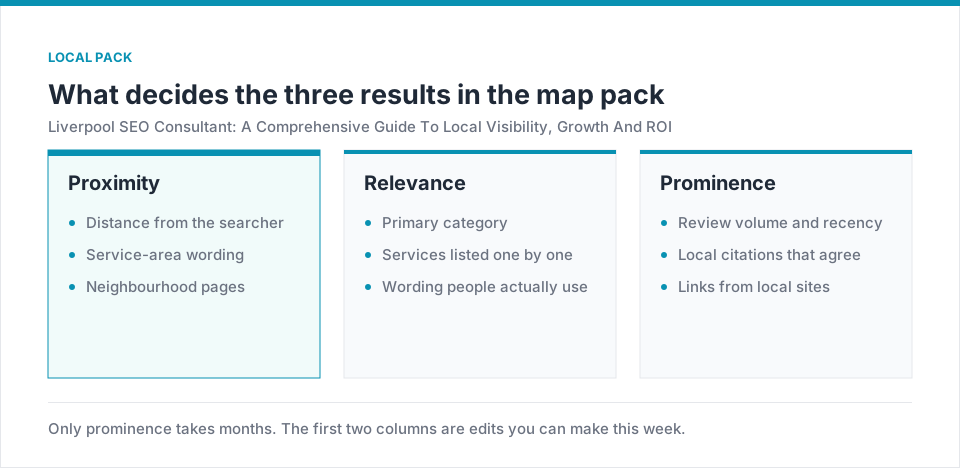
- What-If Gates: Preflight checks for diffusion impact before new content or edge launches.
- Explain Logs: Comprehensive documentation of data sources, transformations, and decisions.
- Provenance Envelopes: Attach licensing and origin disclosures to diffusion signals.
- RegExports: Export diffusion journeys for regulator reviews and client audits.
Next Steps For Part 7: Practical Onboarding Plan
Begin with a quick baseline audit focused on GBP readiness, NAP parity, and suburb-depth potential. Identify two priority suburbs for depth content with proofs and geo-targeted CTAs, then construct a diffusion spine linking hub topics to suburb pages and edge assets like Maps prompts and local guides. Establish governance artefacts for major activations and set up a monthly diffusion health dashboard to report performance by suburb and surface. For governance templates and Liverpool-first playbooks, visit Liverpool Local SEO Services on liverpoolseo.org, and reference Google's quality guidelines as the baseline for credible practice. If you’d like tailored onboarding, contact us via Contact Us to discuss a Liverpool-focused diffusion plan.
How To Choose A Liverpool SEO Consultant
Selecting the right Liverpool-based SEO partner is a strategic decision that shapes local visibility, credibility, and long-term growth. A well-chosen consultant understands not only technical optimisation but also the dynamics of Liverpool’s districts, consumer journeys, and business realities. This Part 8 offers a practical, evidence-based framework to evaluate, compare, and select a Liverpool SEO consultant who can deliver a durable diffusion spine—from hub topics through suburb-depth content to edge activations that capture near-me intent. For governance templates and Liverpool-first playbooks, you can explore Liverpool Local SEO Services on Liverpool Local SEO Services and align with Google’s quality guidelines to maintain regulator-ready practice across surfaces.
Core Criteria To Judge A Liverpool SEO Consultant
When you evaluate candidates, look beyond generic promises. The strongest Liverpool partners demonstrate a precise, locality-aware capability set that connects strategic objectives to measurable outcomes in the city’s unique market. Key criteria include:
- Local Fluency And Track Record: A proven history of delivering results in Liverpool’s districts such as City Centre, Baltic Triangle, Anfield, and Crosby, with documented improvements in Maps visibility, local packs, and suburb-level engagement.
- Hub-To-Suburb Diffusion Experience: A clear methodology for building hub topics that extend into suburb-depth pages, supported by edge activations that capture near-me queries.
- Governance Maturity: Regular, regulator-ready artefacts (What-If gates, Explain Logs, Provenance Envelopes, RegExports) attached to major activations and content migrations.
- Evidence‑Led ROI And Transparency: Ability to link activities to inquiries, bookings, or revenue with auditable data trails and transparent reporting.
- Structured Roadmaps And Practical Deliverables: Request a tangible roadmap with milestones, ownership, and governance artefacts that travel with every activation.
Assessing The Consultant’s Methodology
A robust Liverpool proposal should outline a repeatable diffusion spine and a disciplined delivery process. Look for these components:
- Discovery And Baseline: A documented audit of GBP health, NAP parity, local citations, and suburb-depth potential, with initial hypotheses about diffusion health.
- Hub Topics And Suburb Mapping: A plan showing 2–3 city-wide pillars that cascade into 4–6 intents per key suburb, each backed by proofs (testimonials, datasets, partnerships).
- Edge Activation Strategy: A concrete calendar of Maps prompts, local guides, and event calendars linked to suburb pages.
- Governance Integration: A bespoke set of artefacts accompanying major activations, enabling auditability and regulator readiness.
References And Case Studies
Ask for evidence from Liverpool-specific clients that demonstrates durable diffusion health: how hub authority diffused to suburb pages, how edge assets performed against local intents, and how ROI was tracked over time. Seek case studies with data on GBP performance, suburb engagement, and conversions, ideally with metrics broken down by district. If available, request anonymised datasets or partnership outcomes that mirror your sector in Liverpool.
Practical Due Diligence Checklist
Use a consistent, discoverable checklist to compare proposals side-by-side. The following items help separate well-structured Liverpool-focused firms from generic operators:
- Governance Artefacts: Do proposals include What-If gates, Explain Logs, Provenance Envelopes, and RegExports for major activations?
- Suburb Depth Content Strategy: Are there concrete plans for 2–3 priority suburbs with 4–6 intents each and credible proofs?
- Attribute To ROI: Is there a transparent model showing how diffusion activities translate into inquiries or revenue?
- Measurement Cadence: Does the proposal include a monthly diffusion health dashboard and quarterly governance reviews?
- References And Local Proofs: Can the consultant provide Liverpool-focused case studies or client references?
Questions To Ask In Your First Strategy Session
The first strategy session should establish a shared understanding of goals, geography, and governance requirements. Consider asking:
- Local Experience: Which Liverpool districts have you worked with, and can you show concrete results by suburb?
- Diffusion Methodology: How do you structure hub topics, suburb depth, and edge activations, and how do you measure diffusion health?
- Governance And Compliance: What artefacts will accompany major activations, and how will data provenance be maintained?
- ROI And Attribution: What is the proposed attribution model, and how will ROI be demonstrated over time?
- Delivery Cadence: What are the milestones for a two-suburb pilot, and how will governance reviews be scheduled?
Making Your Final Decision
Balance price, capability, and credibility. The right Liverpool SEO consultant should offer a transparent ROI narrative, regulator-ready governance artefacts, and a proven track record that mirrors your market needs. Confirm they can implement a two-suburb pilot with clear KPIs, and request a detailed onboarding plan that covers discovery, strategy, implementation, testing, and ongoing optimisation. For governance templates and Liverpool-first playbooks, visit Liverpool Local SEO Services and consult Google's quality guidelines to stay aligned with industry standards.
Red Flags And How To Avoid Overpriced Or Low-Quality SEO In Liverpool
In Liverpool, a prudent approach to choosing an SEO partner hinges on recognising genuine capability from hype. This Part 9 outlines common warning signs, practical evaluation criteria, and actionable steps to avoid overpriced or low-quality SEO. By foregrounding governance artefacts, locality fidelity, and regulator-ready reporting, local businesses can protect diffusion health while securing measurable value. For governance resources and Liverpool-first playbooks, see Liverpool Local SEO Services on Liverpool Local SEO Services and consult liverpoolseo.org for guidance aligned with Google standards.
Guaranted Rankings And Unrealistic Timelines
Promises of guaranteed top rankings or rapid transformations in Liverpool markets are red flags. Local diffusion takes time: hub topics establish authority, then diffuse into suburb-depth pages, supplemented by edge activations like Maps prompts and local guides. A credible proposal should describe phased milestones, not a single peak result. Look for clear calendars, governance checkpoints, and transparent reporting that connect activities to real business outcomes rather than speculative timelines.
Pricing Red Flags To Spot
Avoid proposals with vague scopes, hidden charges, or renewals tied to performance without clear attribution. A reputable Liverpool partner will provide a detailed price breakdown tied to specific deliverables: hub topic maintenance, suburb-depth content, edge activations, GBP management, and governance artefacts. Expect an explicit explanation of what is included in each line item, plus a reasonable plan for price reviews as the diffusion spine matures in Liverpool.
- Undefined deliverables: If a quote omits hub topics, suburb pages, or edge assets, treat with caution.
- Hidden or opaque costs: Watch for extra charges for audits, updates, or minor changes not clearly documented.
- Auto-renewals without review points: Avoid long lock-ins without renegotiation milestones and performance visibility.
- Performance-based pricing without guardrails: Insist on caps and explicit attribution methods to prevent gaming diffusion health.
Governance Gaps That Undermine Credibility
Governance artefacts are not optional extras; they are the backbone of auditable diffusion. Proposals that omit What-If gates, Explain Logs, Provenance Envelopes, or RegExports create blind spots for decision-making and regulatory reviews. When governance is absent or superficial, you cannot reliably trace how content changes translate into outcomes in Liverpool’s districts. Seek a structured governance package that accompanies major activations and content migrations, with accessible logs and provenance notes for every decision point.
- What-If gates: Preflight checks forecasting diffusion impact before publishing new content or launching edge assets.
- Explain Logs: Comprehensive documentation of data sources, transformations, and decisions.
- Provenance Envelopes: Licensing and origin disclosures attached to diffusion signals.
- RegExports: Export packages for regulator reviews and client audits.
Screening A Liverpool Partner Effectively
A robust screening framework focuses on locality fluency, governance maturity, and measurable ROI. Ask for a two-suburb pilot plan with 4–6 local intents per suburb and credible proofs, plus a full breakdown of deliverables. Demand governance artefacts underpinning major activations and a transparent attribution model that clearly links activities to inquiries or revenue. Validate Liverpool-specific references or anonymised datasets that reflect market realities similar to yours.
- Two-suburb pilot plan: Should map hub topics to suburb intents with visible proofs.
- Governance documentation: What-If gates, Explain Logs, Provenance Envelopes, RegExports.
- ROI attribution: Clear cross-surface attribution for hub, suburb, and edge actions.
- Local references: Verifiable Liverpool client references.
Next Steps For Quick Start
If you are interviewing Liverpool partners today, pursue a two-suburb pilot to validate depth content and edge activations. Insist on What-If gates and Explain Logs to support auditability. Demand a transparent ROI model that ties activity to inquiries or revenue and require regulator-ready dashboards with quarterly governance reviews. For governance templates and Liverpool-first playbooks, visit Liverpool Local SEO Services on liverpoolseo.org, and reference Google’s quality guidelines as the baseline for credible practice.
Future-Proofing Liverpool SEO: GEO, AEO, And AI
Search engines and AI-driven assistants are reshaping how locals discover Liverpool businesses. A forward-looking Liverpool SEO strategy must blend Generative Engine Optimisation (GEO), Answer Engine Optimisation (AEO), and principled AI use within a governance framework that preserves locality fidelity and regulator-ready reporting. This Part 10 explains how GEO and AEO concepts apply to Liverpool’s diffusion spine—hub topics that establish city-wide authority, suburb-depth pages that address local intents with credible proofs, and edge activations that capture near-me demand—while ensuring every step remains auditable and aligned with Google’s EEAT principles. For practical governance templates and Liverpool-first playbooks, visit Liverpool Local SEO Services on Liverpool Local SEO Services and reference Google’s quality guidelines for credible practice.
Generative Engine Optimisation (GEO) In Liverpool
GEO is about shaping content so it performs well when search engines and AI characters generate concise, trustworthy answers. In Liverpool, GEO starts with city-wide hub topics that anchors authority and then directs AI systems to reference well-structured suburb-depth pages for local intents. Practical steps include:
- Define hub pillars: Identify 3–4 city-wide themes that can underpin diffusion, such as the Liverpool City Centre economy, waterfront regeneration, transport accessibility, and cultural venues across districts like Baltic Triangle and Toxteth.
- Structure content for AI readability: Use clear headings, short summaries, and factual proofs on hub and suburb pages to improve AI extraction and accuracy of responses.
- Anchor with structured data: Implement LocalBusiness, Organisation, and event schemas to guide AI references to verifiable sources.
- Proof density on suburb pages: Include dated testimonials, local datasets, and trusted partnerships that AI can cite when answering questions about specific districts.
Answer Engine Optimisation (AEO) For Local Liverpool Queries
AEO targets content crafted for direct, succinct answers in voice and AI-driven contexts. For Liverpool, this means anticipating questions like “Where can I find reputable Liverpool SEO consultants?” or “What are the best local services in Baltic Triangle?” and delivering precise, well-supported responses on suburb pages. Key actions include:
- Question mapping per suburb: Map common local questions to 4–6 suburb intents with direct, scannable answers on dedicated sections.
- Concise, authoritative replies: Present短, evidence-backed responses suitable for knowledge panels and featured snippets.
- FAQ content strategy: Create dynamic FAQs for each district, reflecting seasonal events and local business activities.
- Source transparency: Attach citations and proofs that AI can reference when answering queries about Liverpool’s neighbourhoods.
AI And Governance: Keeping Credibility In Check
Artificial intelligence accelerates ideation and workflow, but without guardrails it can generate inaccurate or outdated claims. In Liverpool campaigns, couple AI-assisted processes with robust governance artefacts: What-If gates to forecast outcomes, Explain Logs to document data provenance, Provenance Envelopes to disclose data origins, and RegExports to package diffusion journeys for regulator reviews. This framework ensures AI-enhanced outputs stay aligned with hub topics, suburb proofs, and edge activations while preserving EEAT credibility.
Want the numbers behind this? The analytics guide shows how organic traffic and the queries GA4 hides are rebuilt in Semalt.
- Guardrails for AI use: Define acceptable prompts, data sources, and validation steps before publishing AI-assisted content.
- Provenance discipline: Require explicit sources and dates for AI-generated facts, especially on local data and testimonials.
- Human-in-the-loop: Maintain editorial oversight for final content placement in suburb pages and edge assets.
Practical Implementation: A 90-Day Plan For Liverpool
Roll out GEO, AEO, and AI practices in a measured, governance-centric way. A pragmatic plan might be structured as follows:
- Month 1: Strategy alignment: Finalise hub topics, select two priority suburbs, and establish What-If gates and Explain Logs for upcoming activations.
- Month 2: Content scaffolding: Develop GEO templates, AEO question maps, and a dynamic FAQ set for the chosen suburbs.
- Month 3: Edge asset pilots: Launch Maps prompts and local guides that reference suburb-depth pages and hub topics; attach governance artefacts to each activation.
Measuring Impact And Maintaining Quality
As GEO and AEO efforts mature, monitor their influence on near-me visibility, local credibility, and engagement. Use a governance-backed dashboard to track hub authority, suburb-depth engagement, and edge activation performance. Maintain data provenance for AI-derived outputs and ensure content remains current with changes in Liverpool’s districts. Pair AI-assisted updates with human validation to preserve accuracy and uphold EEAT standards.
Next Steps And Resources
Adopt a staged diffusion roadmap with governance artefacts and an ongoing learning loop. For practical templates and Liverpool-first playbooks, visit Liverpool Local SEO Services on liverpoolseo.org, and reference Google’s quality guidelines for credible practice. If you’d like assistance implementing GEO, AEO, and AI in Liverpool, contact us via Contact Us.
Collaboration And Governance: Working With A Liverpool SEO Consultant
Effective collaboration and robust governance are the backbone of durable, locality-driven SEO in Liverpool. When you partner with a Liverpool-based consultant or agency, you should expect a deliberate framework that translates city-wide authority into suburb-specific relevance while maintaining transparent accountability. This Part 11 focuses on practical outsourcing models, governance artefacts, and how to choose a structure that scales without compromising edge activations or EEAT credibility. For governance resources and Liverpool-first playbooks, explore Liverpool Local SEO Services on liverpoolseo.org and align with Google's quality guidelines for credible practice.
Outsourcing Models At A Glance
Liverpool campaigns often benefit from a deliberate mix of external and internal capabilities. Each outsourcing model offers a distinct balance of control, speed, and governance, allowing teams to tailor diffusion spine delivery to their organisational realities while preserving regulator-ready reporting and data provenance.
- Freelancers: Flexible resources for narrowly scoped tasks with clear milestones, ideal for rapid wins but requiring strong governance to sustain quality and consistency.
- Specialised Agencies (Full-Service): End-to-end execution with established governance processes and integrated reporting, well suited for campaigns spanning multiple suburbs with complex edge activations.
- White-Label Partners: Brand-forward delivery that enables you to offer services under your own label while leveraging external execution power and governance discipline.
- Hybrid Arrangements: A two-tier model where internal governance leads What-If gates and explains logs, while external partners execute content, audits, and edge activations to scale quickly.
Freelancers: When They Work Best
Freelancers can accelerate discovery work, provide pillar briefs, or draft suburb-depth pages that require local flavour but minimal governance overhead. They excel for well-scoped tasks with firm milestones and short time horizons. Guardrails include defined scopes, access to analytics, mandatory Explain Logs for data-driven decisions, and regular updates. Pair a freelancer with a governance lead in-house to ensure edge activations stay on brand and maintain EEAT expectations for Liverpool audiences.
Specialised Agencies: Full-Service Advantage
Specialised Liverpool agencies bring scale, governance discipline, and cross-functional expertise across technical SEO, content, local signals, and edge activations. They are often the best fit for programmes spanning multiple suburbs and requiring regulator-ready reporting. Expect a published methodology for suburb mapping, a robust content calendar, and a governance dossier that includes What-If gates, Explain Logs, Provenance Envelopes, and RegExports. Verify their Liverpool-focused case studies to ensure alignment with EEAT signals and local ROI expectations.
White-Label Partners: Brand-Forward Delivery
White-label arrangements can accelerate client-facing delivery while preserving your brand voice. They work well when you resell SEO services or need a scalable engine behind a branded service line. Key considerations include IP ownership and data control, confidentiality clauses, regulatory readiness, and a standard reporting framework that mirrors governance artefacts: What-If gates, Explain Logs, Provenance Envelopes, and RegExports. If you choose this route in Liverpool, ensure the partner can deliver edge activations and suburb-depth content that speaks to real local intents while preserving brand integrity.
Hybrid Arrangements: The Best Of Both Worlds
A hybrid model combines in-house governance with external execution for balance and speed. In Liverpool, a two-tier system often works well: an internal governance lead owns What-If gates, Explain Logs, Provenance Envelopes, and RegExports, while external partners execute content, audits, and edge initiatives within the defined diffusion spine. This approach provides scalability without compromising locality credibility and regulator readiness, with clear escalation paths and transparent pricing.
Deciding What Model Suits Your Liverpool Business
Begin with a candid assessment of internal capabilities, growth goals, and regulatory considerations. If rapid, brand-forward execution across multiple Liverpool suburbs is essential, a specialised agency or white-label partner with governance frameworks may be optimal. If you have a lean team needing controlled flexibility, a hybrid model offers balance. For tight budgets or task-specific needs, freelancers can help, provided governance, data access controls, and a clear escalation plan are in place. Regardless of the model, insist on regulator-ready reporting, clear data provenance, and a transparent ROI narrative that ties SEO activity to tangible inquiries, bookings, or revenue.
Next Steps For Part 11: Practical Implementation Guide
- Define geography and goals: Identify priority Liverpool suburbs, service areas, and diffusion outcomes tied to hub topics.
- Governance approach: Decide between Freelancer, Agency, White-Label, or Hybrid models and attach What-If gates, Explain Logs, Provenance Envelopes, and RegExports to major activations.
- Pilot plan: Launch a two-suburb pilot to validate depth content and edge activations, with governance artefacts attached to every activation.
- Diffusion health dashboard: Establish a monthly dashboard tracking hub authority, suburb engagement, GBP readiness, and edge performance by district.
- Governance cadence: Schedule quarterly governance reviews to recalibrate the diffusion spine as Liverpool markets evolve.
Ongoing Collaboration And Resource Access
Maintain momentum with ongoing governance reviews, knowledge sharing, and updated playbooks. Leverage the Liverpool Local SEO Services resources for governance templates and diffusion maps, and contact us via Contact Us to tailor onboarding for your Liverpool projects. The objective remains consistent: uphold credible, regulator-ready diffusion across markets in line with Google EEAT guidelines.
Getting Started: Next Steps To Engage A Liverpool SEO Consultant
Starting your Liverpool SEO programme with confidence means focusing on practical, regulator-ready onboarding steps that fast-track diffusion from hub topics to suburb-depth content and edge activations. This final part provides a clear, action-focused plan to engage a Liverpool-based consultant, plant governance artefacts early, and set up measurement that proves ROI over time. For governance resources and Liverpool-first playbooks, visit Liverpool Local SEO Services and align with Google's quality guidelines to establish credible practice in Liverpool's market.
Step 1: Define Geography, Goals, And Success Criteria
Begin with two to three Liverpool suburbs that reflect your target audience and service footprint. Define the diffusion spine goals: hub topics to establish authority, suburb-depth pages to address local intents with proofs, and edge activations to capture near-me demand. Document success criteria in measurable terms, such as target GBP visibility, local pack presence, inbound inquiries, and revenue contribution over a 6–12 month horizon.
Step 2: Engage A Liverpool SEO Consultant Or Agency
When evaluating partners, prioritise locality fluency, governance maturity, and a clear, auditable ROI narrative. Request evidence from Liverpool projects, a documented diffusion spine plan, and a regulator-ready reporting framework. Confirm the consultant can deliver hub topics, suburb depth, and edge activations with attached governance artefacts for major activations.
Step 3: Design A Two-Suburb Pilot
Launch with two adjacent Liverpool suburbs to validate depth content and edge activations before broader rollout. For each suburb, publish 4–6 intents, include credible proofs such as dated testimonials and local data, and create geo-targeted CTAs that reference hub topics. Attach governance artefacts to the pilot activations and set up a monthly diffusion health dashboard to track progress by suburb and surface.
Step 4: Establish Governance Cadence
From the outset, implement What-If gates to forecast diffusion outcomes, Explain Logs to capture data provenance, and Provenance Envelopes to attach licensing and origin disclosures to signals. RegExports can be prepared for regulator reviews at key milestones. Create a monthly diffusion health dashboard that aggregates hub authority, suburb engagement, GBP readiness, and edge activation performance, with quarterly governance reviews to recalibrate the diffusion spine as Liverpool markets evolve.
Step 5: Set Up Measurement And Ongoing Optimisation
Link activities to real business outcomes through an attribution model that traces hub topics to suburb pages and edge assets. Use a diffusion health index (DHI) to rate performance by district, with regular updates to leadership. Maintain a regulator-ready reporting pack that includes governance artefacts, What-If gates, Explain Logs, Provenance Envelopes, and RegExports for major activations. When the pilot demonstrates stable diffusion health, scale the spine to additional suburbs and refine edge activations based on data feedback.