What Is SEO And Why It Matters
Search engine optimisation (SEO) is the deliberate set of practices aimed at improving a website’s visibility in organic search results. For businesses in Liverpool and across the UK, SEO helps ensure that when people search for local services, they find you first. On LiverpoolSEO.org, SEO is treated as a strategic discipline that combines technical foundations, practical content choices, and credible signals that search engines rely on to determine relevance and trust. It is not a one-off task but a durable asset that grows as you invest in better information, improved user experience, and authoritative signals.
So, what exactly is SEO and what does it do for a business? At its core, SEO makes it easier for search engines to discover, understand and rank your content for queries that matter to your audience. When done well, it increases targeted visibility, drives qualified traffic, enhances brand credibility, and supports longer-term growth. Localised SEO, in particular, helps Liverpool-based businesses connect with nearby customers, generating more foot traffic, calls, and appointments without paying for ads.
The importance of SEO is supported by industry data that shows organic search remains a primary source of website traffic for many sectors. While exact figures vary, the trend is clear: ranking higher in organic results correlates with more impressions, more clicks, and more conversions. For professionals and business owners seeking dependable guidance, credible sources such as Google’s own starter materials and independent SEO authorities offer actionable insight into how to approach SEO in a way that aligns with how users search and how search engines evaluate pages. For reference, Google’s SEO Starter Guide provides a practical overview of fundamentals, while Moz explains SEO in terms that are accessible to newcomers and seasoned practitioners alike.
SEO is not simply about keywords. It encompasses the user journey, from discovery to understanding to action. A well‑optimised site answers real questions, demonstrates expertise, and delivers a trustworthy experience. This means you should consider aspects such as content relevance, page speed, mobile usability, clear navigation, and accessible design. It also means building signals that search engines recognise as credible, including well‑structured information, accurate business data, and high‑quality references or citations. The goal is to align your content with user intent while maintaining a technically sound site that search engines can crawl and index efficiently.
From a business perspective, SEO offers a unique advantage: the potential for compounding growth. As you publish helpful content, earn authoritative links, and optimise the user experience, your site becomes more discoverable and trustworthy over time. This creates a durable foundation that supports not only search engine visibility but brand credibility and customer trust. Liverpool‑centred businesses often see tangible outcomes in local search results, including more store visits, increased inquiries, and higher-quality traffic that converts at a meaningful rate. At LiverpoolSEO.org we emphasise the practical steps that lead to sustained visibility, such as prioritising assets that serve local needs and ensuring accurate, consistent local business information across platforms.
- It increases visibility for the people who matter most in your business, turning searches into qualified traffic.
- It improves trust and credibility by aligning content with user intent and providing trustworthy information.
- It enhances user experience with fast, accessible, and mobile-friendly pages that keep visitors engaged.
- It offers a cost-efficient, long‑term channel with compounding effects that can outlast paid media when properly maintained.
For teams preparing to invest in SEO, a practical starting point is to map SEO activity to business outcomes. If your goal is more leads, you might prioritise bottom‑funnel content and local intent. If you’re aiming for brand visibility, you’d emphasise high‑quality content, topical authority, and credible references. When you’re ready to move forward, you can explore how our Liverpool‑centric approach can help you implement these fundamentals—visit our SEO services for a structured plan, or contact us for a free initial consultation.
As this foundation sets the stage, you’ll notice that SEO success is less about a single tactic and more about consistent, data‑driven optimisation across the site. It requires attention to detail, a focus on the user, and a commitment to ongoing improvement. In Part 2, we’ll unpack how search engines work—the crawling, indexing, and ranking processes—and how understanding them helps you prioritise the right tasks from the outset.
How Search Engines Work
Understanding the journey from query to result helps you prioritise the work that moves the needle in organic visibility. Search engines operate through a sequence of stages that determine which pages appear for a given user question and in what order. At LiverpoolSEO.org we emphasise how crawling, indexing, and ranking interact with user intent and SERP features to shape practical optimisation decisions for local businesses in Liverpool and beyond.
Crawling is the process by which automated bots navigate the web to find new or updated content. They traverse links, consult sitemaps, and respect directives set in robots.txt. A site that is easy to crawl typically resembles a well‑planned map: clear navigation, logical hierarchies, and links that point to essential assets from sitewide pages. To optimise crawling, ensure internal links are coherent, avoid overly deep page paths, and keep a crawlable URL structure. For seamless discovery, publish an up-to-date sitemap and minimise unnecessary redirects that can slow bots down. Local businesses should ensure pivotal service pages are reachable from the home page and main navigation, so that crawlers can prioritise content that serves nearby searchers.
Indexing follows crawling and determines whether a page is stored in the search engine’s index and therefore eligible to appear in results. The indexing system evaluates on‑page signals such as titles, headings, meta data, alt text, and structured data. If a page is crawled but not indexed, it cannot appear in search results. Common blockers include nonindex directives on key assets, conflicting canonical tags, or technical issues that prevent content understanding. Regular audits of index coverage help ensure that the most important pages for Liverpool businesses—service pages, contact pages, and critical blog content—are included in the index and ranked when relevant queries arise.
Ranking is the stage where content is positioned in response to a query. It relies on a complex blend of signals, including how closely content matches user intent, the authority and trustworthiness of the publisher, and the user experience delivered by the page. While the exact formula is proprietary and continually evolving, a consistent pattern remains: clear relevance to the search intent, high‑quality content, accessibility, and dependable delivery of information all contribute to higher visibility. For Liverpool-based sites, this means prioritising content that directly answers local questions, demonstrates expertise, and delivers a fast, mobile‑friendly experience that satisfies visitors from the surrounding area.
SERP features are non‑traditional results that appear alongside standard listings. They include answer boxes, featured snippets, image and video carousels, and local or knowledge panels. Optimising for these surfaces involves structuring content so that it answers concrete questions succinctly, employing clear headers, and using schema‑friendly markup to help search engines understand the intent and context of your pages. While higher rankings remain valuable, occupying SERP features often yields greater visibility and higher click‑through rates for relevant queries. Local pages, in particular, can benefit from clear service descriptions, FAQs, and structured data that highlight practical information for Liverpool searchers.
From a practical perspective, the most important takeaway is to align content with user intent while maintaining solid technical foundations. If crawlers can access your pages, index them correctly, and interpret your content accurately, you increase the likelihood of appearing for the right queries and possibly securing valuable SERP features that boost visibility.
- Ensure a coherent site structure with accessible navigation to help crawlers reach priority pages.
- Provide accurate metadata and accessible content to support indexing and user understanding.
- Use structured data to describe content so engines can surface rich results.
- Analyse SERP features for target queries and shape content to capture those opportunities.
- Monitor crawl errors and index coverage, then adjust your optimisation plan accordingly.
In the next section, we translate these mechanics into concrete goals: how to set SEO objectives that leverage crawling speed, indexing coverage, and ranking signals to deliver measurable business outcomes for your Liverpool audience.
Setting SEO goals aligned with business outcomes
Setting SEO goals begins with a clear understanding of what the business needs from organic search. Rather than chasing traffic for its own sake, tie SEO activities to revenue generation, lead quality, or brand visibility. At LiverpoolSEO.org we recommend starting from business outcomes and translating them into measurable SEO metrics. This approach aligns with Google's guidance on defining clear objectives and measuring progress against relevant signals.
Aligning goals with the funnel
Viewed through the marketing funnel, SEO initiatives influence impressions and clicks at the top, engagement and intent at the middle, and conversions at the bottom. By mapping business objectives to specific funnel stages, you prevent misaligned work and create a concrete roadmap for the team. For example, increasing awareness of a new service in Liverpool can be measured through impression growth and branded searches, while improving conversion rate targets focuses on service pages, contact forms, and local calls.
- Increase qualified leads from organic search by 25% within six months.
- Grow organic revenue from key landing pages by 15% in 12 months.
- Improve brand visibility in Liverpool by 10% through branded searches and direct visits within six months.
These targets are specific, measurable, and time-bound, reducing ambiguity about what success looks like. The SMART framework provides a helpful discipline: Specific, Measurable, Achievable, Relevant, and Time-bound. Where possible, tie targets to real business costs and revenue, not vanity metrics alone. This aligns SEO with wider commercial planning and budget cycles.
From objectives to measurable KPIs
For each objective, identify a handful of KPIs that capture progress without overloading dashboards. Prioritise signals that are actionable and observable from Liverpool's point of sale or service delivery. Common KPIs include organic visits, click-through rate, on-page engagement, form submissions, calls, and revenue-per-visit. Use consistent naming and units so the team can quickly interpret trends during monthly reviews.
- Impressions and organic visits to target pages.
- Engagement: average time on page and pages per session for service content.
- Conversion signals: form submissions, phone clicks, and booked appointments.
- Revenue and contribution margin from organic traffic.
Establish a measurement plan that translates these KPIs into regular reporting cycles. The aim is to enable timely optimisation rather than waiting for quarterly reviews. Align owners with the data they care about—for example, a content lead monitors engagement signals, a CRO specialist tracks conversion metrics, and a finance liaison observes revenue impact. This distributed ownership helps maintain momentum even as tactics evolve due to algorithm updates or market shifts.
One practical approach is to run monthly sprints focused on a limited set of priorities. Start with a baseline audit of current performance, then set a target for the next sprint. For Liverpool businesses, a typical first sprint might include optimising local service pages, validating NAP consistency, and implementing structured data on core pages. Because attribution for SEO is multi-channel, plan to measure indirect effects such as enhanced brand searches and direct visits that correlate with higher organic visibility. For more on attribution in SEO, refer to authoritative sources in the field and your analytics platform's best practices.
Local considerations for Liverpool
Local SEO requires a well-structured information architecture that makes it easy for Google and other search engines to surface your relevant Liverpool signals. Practical steps include ensuring consistent business data across directories, responding to reviews, and optimising service-area content for nearby towns or neighbourhoods. Assign a KPI to local performance, such as store visits or call volume from organic maps searches. These metrics are highly actionable for local teams and elegantly align with the revenue goals discussed earlier.
For teams operating within Liverpool, close collaboration with the sales and customer service teams ensures SEO goals reflect real customer intent. When you empower teams to speak the language of conversions and lifecycle stages, your SEO plan becomes a living component of revenue growth rather than a tax on content production. Local content, structured data, and review management often yield the strongest lift in the early stages of a strategy.
A practical, real-world example
Consider a hypothetical Liverpool-based plumber aiming to grow inquiries from organic search. The goal might be: increase monthly qualified inquiries by 25% within six months. The plan would include creating a footprint of pages around emergency plumbing, typical callouts, and area pages for Liverpool neighbourhoods, paired with a quick contact form and click-to-call optimisations. The measurement approach would track form submissions, phone calls, and revenue per job, with a baseline established from the previous six months. Regular reviews would refine the content and local signals and adjust expectations as needed. This is the kind of outcome-driven approach that Liverpool businesses should prioritise.
For ongoing support with goal setting and measurement, explore our SEO services or contact us for a free initial consultation via our contact page.
Keyword Research And Search Intent
Keyword research is the engine that powers content strategy. For Liverpool-based businesses, it’s not merely about high-volume terms; it’s about uncovering the exact questions real customers ask and understanding the intent behind those searches. At LiverpoolSEO.org we emphasise connecting keyword discovery with concrete business outcomes, so your content plan delivers qualified traffic, meaningful engagement, and measurable conversions. This part of the guide builds on the goal-setting framework from Part 3 by turning ideas about what people search into actionable topics and formats that match what users want to do next.
Central to this approach is categorising search intent. Search queries reveal not only what users want, but how far they are in their journey. The main intent types are informational, navigational, transactional, and commercial investigation. Understanding these distinctions helps you tailor content depth, structure, and calls to action. For instance, informational queries often justify in-depth guides or FAQs, navigational queries point to your brand’s pages, transactional queries favour conversion-oriented service or product pages, and commercial investigations benefit from comparison content that demonstrates value and credibility.
To translate intent into practical action, begin with a robust seed list and then expand it thoughtfully. Seed keywords sit at the core of each service area and buyer journey stage. Expansion uses autocomplete suggestions, related searches, and the questions your audience is asking in forums, reviews, and support channels. The aim is to map every seed term to a likely user action and to identify long-tail opportunities that align with Liverpool customers’ needs and timing.
Defining intent and aligning formats
Informational queries ask questions and seek understanding. Examples include “how to fix a leaking tap in Liverpool” or “best practices for local SEO in the UK.” Content for these queries tends to be comprehensive and educational, such as ultimate guides, step-by-step tutorials, or annotated walkthroughs. Navigational queries are essentially brand-driven; they signal familiarity and a desire to reach a specific destination, such as your company’s service pages or contact forms. Transactional queries carry purchase intent and are best served by product or service pages with clear pricing, benefits, and easy conversion paths. Commercial investigation sits between informational and transactional, where users compare options, read reviews, and evaluate value before deciding. It’s critical to create content that supports those decisions—such as comparison guides, case studies, and evidence-based arguments.
- Seed keywords reflect core services and user questions in Liverpool’s local context.
- Expand with autocomplete, related searches, and audience-generated questions.
- Classify each keyword by intent and align with appropriate content formats.
- Assess business value by combining potential conversions with realistic ranking opportunities.
- Group keywords into topic clusters that map to pillar content and supporting assets.
A practical way to view intent is to picture the user’s next step. If a Liverpool consumer searches for a plumber in their neighbourhood, a transactional query is likely active and conversion-ready, so your page should present a fast contact path, trust signals, and local availability. If the query is “how to choose a plumber in Liverpool,” the content should offer decision criteria, testimonials, and credible references. For local services, this approach is especially powerful when combined with accurate NAP data, reviews, and service-area pages that reflect the places you serve.
To build a robust seed list and expansion plan, start with service pages, frequently asked questions, and the topics your sales and support teams hear most often. Then use search tools to surface variations, questions, and intent-driven opportunities. The Google-based hints, including Autocomplete and People Also Ask sections, provide a clear picture of what real users are asking and how those questions evolve over time. For a practical starting point, see authoritative guidance on aligning content with user intent in Google’s SEO starter materials: Google's SEO Starter Guide.
When Liverpool-specific queries emerge, it’s worth capturing local variations and neighbourhoods. For example, content around emergency services, weekend availability, or area-specific pricing can unlock highly targeted traffic with clear conversion potential. Your keyword research should therefore feed into local asset development, including service pages, FAQs, and local knowledge panels that mirror how users search in and around Liverpool.
From seed list to content briefs
Once you’ve assembled a seed list and validated intent signals, convert them into actionable content briefs. Each brief should specify: target keyword or cluster, user intent, suggested content format, required depth, recommended page structure, and a proposed call to action. This is where the link between keyword research and content strategy really shines because it ensures every piece of content has a purpose that ties back to business outcomes (as discussed in Part 3).
Topic clustering helps you structure content so that a single pillar page covers the core topic comprehensively, while supporting pages address extended questions, case studies, and practical how-tos. This approach strengthens topical authority and makes internal linking logic intuitive for both users and search engines. It also supports better coverage of long-tail queries that often convert at higher rates due to their specificity.
Practically, your briefs might look like this for a Liverpool service page: a pillar piece on “local SEO for Liverpool businesses,” with supporting articles on “optimising Google Business Profile for Liverpool,” “location-based service pages that convert,” and “schema marketing for local businesses.” Each asset is designed to capture distinct user intents—informational for understanding, navigational for finding your page, and transactional for conversion. Internal links connect the cluster to a central pillar and to relevant service pages, reinforcing topically relevant signals for search engines while guiding users along the journey.
Read next: UK search optimisation: a 2026 plan · Liverpool SEO consultant: the ROI
To support credible and trustworthy content, ground your briefs in verifiable data and practical methodology. When you publish, consider including transparent references, documented methods, and real-world examples from Liverpool-market engagements. This demonstrates expertise, builds trust, and aligns with Google’s emphasis on high-quality, user-first content. For teams looking to formalise this work, our SEO services outline a structured, outcome-driven process for keyword research, content planning, and measurement, or you can reach out to our team for a free initial consultation to tailor a plan to your business needs.
Building A Content Strategy With Topic Clusters
A scalable, authority-building content strategy hinges on pillar content plus tightly related topic clusters. This architecture helps Liverpool businesses demonstrate depth on core topics while efficiently surfacing related questions that local searchers ask. By organising content around pillars and clusters, you create a navigable information hierarchy that supports both user intent and search engines, reinforcing topical authority and improving crawlability across your Liverpool campaigns.
Pillar content acts as a comprehensive hub that thoroughly covers a main topic, while cluster content expands on the subtopics, questions, and practical details that readers expect to find in depth. Together, they form a semantic network that helps search engines understand the relationship between topics, which in turn strengthens rankings for both the pillar and its clusters. For local businesses, this means creating assets that answer the core service questions people in Liverpool ask, then linking out to more focused resources that address specific intents and neighbourhood considerations.
When designed well, pillar pages and clusters support efficient content creation, more coherent internal linking, and clearer calls to action. They also enable better measurement: you can track how traffic moves from broad topics to conversion-focused pages, and you can see how each cluster contributes to overall visibility and engagement. Liverpool businesses benefit particularly from localised pillar topics that reflect the questions and problems people search for in and around the city, such as neighbourhood service queries, local reputation signals, and area-specific service variations.
What constitutes a pillar and its clusters
A pillar page is a long, well-structured piece that serves as the authoritative reference on a central topic. Clusters are topic-specific articles, tools, FAQs, and case studies that link back to the pillar and expand on its subtopics. This structure helps search engines recognise the depth of coverage and improves navigation for readers seeking concrete actions or deeper explanations. For Liverpool campaigns, common pillar ideas include local service strategy, local SEO fundamentals, and measurement and reporting for small businesses.
Guided by user intent, clusters should address the specific questions readers ask at different stages of their journey. That means designing content formats that demonstrate practical expertise, provide step-by-step instructions, or offer credible evidence that helps decision-making. A well-structured pillar page plus clusters also supports internal linking opportunities, making it easier for readers to discover related topics and for search engines to understand topical relevance.
Briefing topics effectively
- Target keyword and intent: State the primary topic, audience, and expected user action.
- Format and depth: Define whether the piece is a guide, FAQ, checklist, or case study, and specify word count or depth.
- Cluster connections: List related subtopics and the internal links to the pillar and other clusters.
- Structure and sections: Propose a clear outline with headings and subheadings aligned to reader questions.
- Visuals and evidence: Identify required visuals, data references, and any assets that improve credibility.
To translate briefs into actionable content, use a simple, repeatable brief template. Each item should specify the pillar page it supports, the cluster it belongs to, the user intent, the proposed format, the required depth, and the intended outcome. This disciplined approach helps avoid duplication and ensures every asset has a measurable purpose within Liverpool-focused campaigns.
Formats that address user needs
Topic clusters thrive when they combine formats that match different stages of the customer journey. Core formats to consider include:
- In-depth guides that answer complex questions with practical, step-by-step instructions.
- FAQ pages that resolve common objections or knowledge gaps specific to Liverpool audiences.
- Case studies and local success stories that demonstrate real outcomes and method.
- Templates, checklists, and worksheets readers can download and reuse.
Each format should include clear CTAs aligned with business goals, such as booking a consultation, downloading a checklist, or contacting your team for a local service. For Liverpool campaigns, ensure your ETAs, service areas, and local references are explicit to maximise relevance and trust. The pillar and its clusters should share a coherent visual language, consistent terminology, and comparable depth so readers move naturally along the journey from discovery to action.
Internal linking and site architecture
Internal linking is the connective tissue of topic clusters. Link from cluster pages back to the pillar page with anchor text that describes the overarching topic, and use links from the pillar to each cluster to reinforce the topic map. Keep anchor text natural and descriptive to improve click-through and semantic clarity. A well-planned linking strategy helps search engines interpret content hierarchy and distributes authority across the topic network, which is especially valuable for local Liverpool searches where intent can vary by neighbourhood or service area. For example, connect a cluster about emergency plumbing in Liverpool to the broader pillar on local home services and to related service pages for enhanced relevance.
Putting the approach into practice in Liverpool
Imagine a local plumber aiming to build authority around citywide and neighbourhood-specific services. The pillar could be titled “Local Plumbing Services in Liverpool,” with clusters covering “Emergency Plumbing in Liverpool,” “Boiler Servicing in Liverpool,” “Drainage Clearance in Liverpool,” and “Neighbourhood Spotlights: Liverpool City Centre, Anfield, and Bootle.” Each cluster would publish a mix of guides, FAQs, and area-specific service pages, all interlinked to the pillar. This arrangement supports both general visibility and local relevance, while enabling easier updates as services evolve or as new neighbourhoods are added.
Editorial governance and measurement
Govern the topic cluster program with a clear editorial calendar, assigned ownership, and regular reviews. Track performance with a simple set of KPIs that reflect business value: pillar and cluster page views, engagement per page, internal click-through rate, and conversion actions such as form submissions or calls from cluster content. Regularly audit the cluster network to identify gaps, refresh outdated information, and expand with new subtopics. This disciplined discipline channels the team’s efforts into measurable outcomes rather than ad hoc publishing. For Liverpool teams, align the content plan with local events, seasons, and community interests to keep your content timely and relevant.
A practical rollout plan for Liverpool campaigns
1) Define a single, high-value pillar for your core Liverpool service area. 2) Map 4–6 clusters that address key subtopics and user intents. 3) Create briefs for each cluster with target keywords, formats, and depth. 4) Publish the pillar and clusters in a controlled cadence, ensuring each piece links to the others. 5) Implement a light-touch governance process with monthly reviews to assess performance and adjust priorities. 6) Align content with your broader local marketing goals by coordinating with reviews, citations, and local signals. For teams seeking a guided process, explore our SEO services or contact our team for tailored support.
On-Page Optimisation Essentials
On-page optimisation focuses on refinements you can make directly on your pages to improve clarity, accessibility, and relevance for both users and search engines. For Liverpool businesses, getting the page-level details right means your service pages, blog posts, and local content communicate value quickly, satisfy intent, and invite action. This section dives into practical, evidence-based practices for titles, meta descriptions, headings, URLs, internal linking, image alt text, and schema markup, with local context and real-world examples from Liverpool campaigns.
Think of on-page optimisation as the homepage for every page’s user journey. Titles and meta descriptions set expectations in the search results, headings structure the reading experience, and URLs signal topic boundaries. When these elements are well aligned, users recognise relevance fast, click with confidence, and stay long enough to signal value to search engines.
Titles and meta descriptions that convert
Title tags should be concise, descriptive, and include the primary keyword where natural. For local pages, incorporate the city or neighbourhood to reinforce local relevance. Meta descriptions, while not a direct ranking factor, influence click-through rates by clearly summarising the page’s value and including a clear call to action. A practical rule is to target roughly 50–60 characters for titles and 150–160 characters for descriptions, while ensuring readability and avoiding keyword stuffing. For Liverpool pages, a sample approach might be: “Liverpool Plumbing Services – Emergency & Boiler specialist in Liverpool. Call now for rapid response.”
- Place the target keyword near the start of the title when it reads naturally.
- Keep meta descriptions under 160 characters and include a compelling benefit or CTA.
- Avoid duplicating titles and meta descriptions across pages to maintain unique relevance.
- In local pages, add city or area identifiers to strengthen local intent alignment.
Incorporate credible signals by referencing results, services, or guarantees your audience cares about, and consider linking to your Liverpool-specific service pages from the home page to reinforce relevance. For guidance on best-practice title and metadata, see Google’s starter resources and industry references for practical structure and testing guidelines: Google's SEO Starter Guide and Moz’s overview of SEO basics.
Headings and content structure for clarity
Headings (H1 through H6) create a readable information hierarchy that helps users skim and search engines understand page topics. Your H1 should reflect the primary topic and keyword focus, while H2s and H3s organise subtopics and steps. For Liverpool pages, structure content to mirror user intents common in the city’s market, such as local service delineations, neighbourhood variations, and practical how-tos.
- Use a single, clear H1 per page that includes the main keyword where natural.
- Follow with logical H2s that segment the page into discoverable sections (e.g., services, FAQs, case studies).
- Organise content to answer the user’s questions in a stepwise, scannable way.
- Avoid skipping levels; maintain a coherent hierarchy to aid accessibility and SEO semantics.
Clear headings improve readability for human visitors and assistive technologies, while helping search engines understand page substance. Supplement headings with concise paragraph openings, bulleted lists for practical steps, and real-world examples from Liverpool scenarios to reinforce relevance and trust.
URL structure that signals topic and location
URL hygiene matters. Use short, descriptive slugs that reflect the page’s topic and, for local pages, include the city or region. Hyphenate words for readability, avoid dates in URLs where possible, and steer away from dynamic parameters that confuse users and crawlers. A well-structured Liverpool page might resemble: /services/local-seo-liverpool/ or /services/plumbing-liverpool-emergency/.
- Keep URLs readable and keyword-infused without forcing terms.
- Prioritise topic clarity over shallow keyword fluff.
- Avoid changing URLs frequently to preserve link equity; implement 301 redirects when necessary.
Internal linking plays a crucial role in distributing authority and guiding users towards conversion paths. Use descriptive anchor text that accurately describes the linked content, and connect local service pages to pillar content and related FAQs. This reinforces topical relevance, improves crawlability, and boosts visibility for Liverpool-focused queries. For a practical template, align internal links with your content clusters and ensure every important page receives steady, deliberate linking from related assets.
Internal linking best practices
- Link from pillar pages to supporting clusters and back to the pillar with natural anchor text.
- Prioritise internal links on high-value pages, such as conversion-focused service pages and local guides.
- Use a reasonable number of internal links per page to avoid clutter and dilution.
Alt text, accessibility, and image optimisation
Images enhance comprehension but must be accessible. Use descriptive alt text that describes the image content and its relevance to the surrounding copy. Keep alt text concise, avoid keyword stuffing, and ensure images load quickly through compression and lazy loading where appropriate. Alt text is also a valuable signal for screen readers and can contribute to image search visibility, especially for local visual content like neighbourhood showcases or service demonstrations in Liverpool.
Schema markup to improve on-page understanding
Schema helps search engines interpret page content beyond plain text. On-page markup can include LocalBusiness details, FAQ structures, How-To steps, and service schemas relevant to Liverpool offerings. Implementing appropriate schema increases the likelihood of rich results, enhanced snippet quality, and visibility in local search results. For reference, see Schema.org and the Google guidelines on structured data when implementing on-page markup.
Technical Optimisation Fundamentals
Building a robust SEO foundation requires more than well-crafted content and keyword strategy. Technical optimisation ensures search engines can discover, understand, and serve your pages efficiently, while delivering a reliable experience to Liverpool’s local audience. This part of the guide moves from theory to practice, detailing the essential technical factors that underpin sustainable organic visibility. It also links back to the practical, outcome‑driven approach introduced earlier, so you can integrate technical actions with your business goals.
Direct improvements in speed and performance not only boost user satisfaction but also influence rankings through signals like Core Web Vitals. As search engines prioritise fast, stable experiences, technical optimisation becomes a high‑leverage area for local businesses seeking tangible results in areas such as lead generation, store visits, and service bookings. The guidance here reflects best practices from leading authorities and concrete steps you can apply to your Liverpool campaigns.
Speed and performance: Core Web Vitals and beyond
The Core Web Vitals framework emphasises three primary metrics: Largest Contentful Paint (LCP), First Input Delay (FID), and Cumulative Layout Shift (CLS). Keeping LCP under 2.5 seconds, FID under 100 milliseconds, and CLS as low as possible (ideally under 0.1) provides a strong signal of a smooth user experience. For a practical speed discipline, start with a speed audit that covers both desktop and mobile experiences. See Google’s guidance on Core Web Vitals and page experience for a practical reference point: Core Web Vitals and page experience, and for hands‑on testing tools, web.dev vital signals.
Key optimisation actions include:
- Compress and optimise all images in modern formats (WebP where possible) and implement responsive image loading to avoid oversized assets on mobile.
- Minify and bubble up critical CSS, while deferring non‑critical JavaScript to reduce render time.
- Leverage browser caching and server‑side caching to reduce repeated load times for returning visitors.
- Enable a fast hosting environment and consider a content delivery network (CDN) to bring assets closer to Liverpool users.
- Reduce third‑party script impact by auditing performance and deferring or removing non‑essential widgets.
For local sites, a practical rule is to set a performance budget per page and monitor against it monthly. Regular PageSpeed Insights assessments will help you see how changes affect LCP, CLS, and other cues. If you operate multiple service pages, applying these practices systemically prevents bottlenecks from creeping into your site architecture. A faster site supports higher engagement and more conversions, which ties directly back to the business outcomes discussed in Part 3.
Mobile usability and user experience on the move
Mobile usability is not optional. In the UK, a significant share of local searches originates from mobile devices, often with intent to contact, call, or visit a nearby business. Optimising for mobile includes responsive design, legible typography, scalable tap targets, and a clean visual hierarchy that guides users to action. Google’s mobile guidance and Wireframe test recommendations emphasise the importance of a frictionless mobile experience: Mobile-friendly guidelines, and mobile performance metrics.
Practically, implement the following:
- Use a responsive viewport meta tag and scalable typography to preserve readability.
- Ensure touch targets are comfortably sized and spaced to reduce mis-taps.
- Avoid intrusive interstitials that hinder quick access to essential information.
- Prioritise above‑the‑fold content and clear calls to action on small screens.
When you optimise for mobile, you improve not only user experience but also search quality signals that influence mobile results. Align mobile UX with your Liverpool audience’s needs—neighbourhood pages, service area clarity, and easy contact paths become even more valuable when accessed on phones while users are on the go.
Crawlability, indexing and canonicalisation
A technically sound site must be easily crawlable and indexable. Begin with a clean robots.txt file that allows search engines to reach priority assets (service pages, FAQs, and local landing pages) while blocking anything that isn’t material to users. Maintain a current sitemap.xml and submit it to Google Search Console to ensure essential pages are discovered. Regularly review indexing coverage to avoid stale or blocked content in Liverpool searches. See Google’s guidance on crawling and indexing for reference: Crawling and indexing overview.
Canonicalisation helps prevent duplicate content from diluting signals. Use canonical tags to designate the primary version of similar pages (for example, service area variations or printer-friendly versions). Misaligned canonicals can misdirect signals and reduce page authority. Maintain consistency across the site so search engines attribute signals to the intended page, not multiple duplicates. Include internal redirects carefully; 301 redirects should be used when a page moves, and avoid redirect chains that increase crawl time and confusion for bots.
Schema and structured data for technical clarity
Structured data helps search engines understand content semantics beyond raw text. Implement JSON‑LD where appropriate for local business details, FAQs, How‑To steps, and service schemas. LocalBusiness markup supports map results and knowledge panels, while FAQ and How‑To blocks can surface in rich results, improving visibility and click‑through. See Schema.org guidelines and Google’s structured data best practices: LocalBusiness schema and FAQ and How‑To schema guidance.
In practical terms, add structured data to core Liverpool pages such as your service pages, contact details, and area pages. Validate markup with Google's Rich Results Test to confirm compatibility and to identify any issues before publishing. This structured approach supports both traditional search and AI‑driven discovery, aligning with the broader shift towards semantic search that experts expect in the near term.
Hosting, security and reliability for local sites
Security and reliability are foundational to trust and user experience. Ensure your site uses HTTPS with an up‑to‑date certificate and implement secure connections across all pages. A robust security posture reduces the risk of data exposure and improves user confidence, which is particularly important for local businesses handling inquiries and bookings online. Page stability and uptime are equally critical; a sudden outage or degraded performance can erode rankings and user trust, especially in local search where immediacy matters.
Server performance, data centre proximity, and network reliability influence TTFB (time to first byte) and overall response times. Consider a hosting plan and CDN strategy that aligns with Liverpool’s geography and traffic patterns. If your site serves a broad Liverpool audience, a regional hosting approach or a reputable CDN can help maintain consistent experiences across the city’s districts and surrounding towns. For reference on best practices, Google’s page experience and performance guidance remain a reliable baseline.
Practical audits and a technical cadence
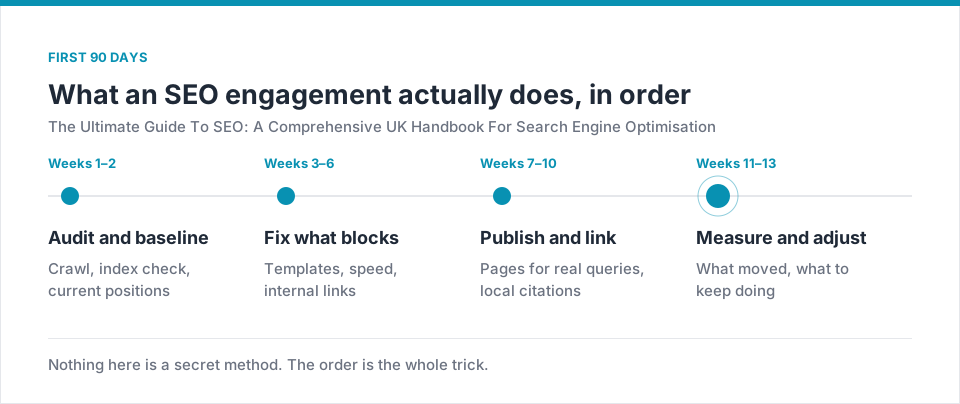
Establish a lightweight, repeatable technical audit cadence that fits your team’s rhythm. A monthly internal check can cover critical items such as crawl errors in Google Search Console, index coverage, broken links, and 4xx/5xx pages. A quarterly deeper audit should assess Core Web Vitals, route maps for critical pages, schema validity, and canonical integrity. Tie these checks to business outcomes: improved lead flow, shorter booking cycles, and higher on‑site engagement in Liverpool markets.
- Run speed audits monthly and after major site updates, logging LCP, CLS, and FID measures for desktop and mobile.
- Review crawl stats and index coverage to ensure priority pages are indexed and accessible.
- Validate structured data and fix any errors flagged by the preview tools.
- Audit redirects and canonical tags to avoid loops or misattributions of signals.
- Document changes and monitor impact on organic visibility and conversions.
For teams, integrate technical tasks into your broader Liverpool SEO plan. The aim is to prevent technical debt from accumulating while enabling a responsive, data‑driven optimisation cycle. If you’d like expert support with a technical audit or ongoing optimisation, explore our SEO services or contact our team for a bespoke plan that aligns with local opportunities.
Content Quality And User Experience
High-quality, original content sits at the heart of a sustainable SEO strategy for Liverpool businesses. It satisfies user intent, builds trust, and signals value to search engines beyond simple keyword presence. This part of the guide focuses on structuring content for clarity, demonstrating credibility through transparent methodologies, and delivering experiences that convert local searchers into customers. It’s about quality, not quantity—where every asset serves a real business purpose and supports measurable outcomes.
Key quality signals search engines reward
- Originality and practical usefulness: content that solves real problems in the Liverpool context earns trust and engagement signals.
- Clear structure and readability: well-organised pages with scannable headings help users and crawlers understand the topic quickly.
- Credible data and transparent methodologies: where numbers appear, show sources, timeframes, and limitations to reinforce trust.
- Evidence and case studies: real examples, testimonials, and before/after outcomes strengthen credibility.
- Accuracy and freshness: regularly reviewed information that reflects current services, pricing, and local conditions.
Structure, readability and context
For local audiences in Liverpool, content must be easy to read and directly navigable. Use concise opening summaries, descriptive headings, and short paragraphs that allow readers to scan for the actions they want to take. Integrate practical, step-by-step guidance where appropriate, especially for service pages and local how‑tos. Overly dense blocks of text diminish comprehension and can erode trust, particularly when a visitor is deciding which local provider to choose.
Credibility signals: transparent methodologies and examples
Credibility rises when you surface how you arrived at your conclusions. Include transparent methodologies for any data-driven claims, such as user surveys, service performance metrics, or case-study results. Document sample sizes, date ranges, and any assumptions or limitations. When you publish insights, pair them with real-world examples from Liverpool projects and, where possible, link to supporting evidence or independent references. This approach aligns with Google’s emphasis on high‑quality, user‑first content and helps your material withstand algorithmic shifts over time.
- State the problem, context, and the user need you’re addressing.
- Describe the data or evidence backing your claim, including dates and scope.
- Provide accessible visuals (charts, diagrams, or screenshots) to illustrate key points.
- Offer practical takeaways and actionable next steps for Liverpool readers.
- Include credible references and ensure you can reproduce the result if challenged.
Formats that address user needs
Effective content combines formats that cater to different stages of the local customer journey. Think about long-form guides that establish authority, FAQs that resolve common objections, case studies that demonstrate outcomes, and practical templates or checklists readers can reuse. Local content should reflect Liverpool-specific details—neighbourhood considerations, available services, timelines, and phone or booking pathways that are easy to act on from mobile or desktop.
Editorial governance and quality control
Quality cannot be an afterthought. Establish clear editorial standards, review cycles, and ownership for every content asset. An effective framework includes tone, factual accuracy, update schedules, and a protocol for addressing user feedback or new evidence. Regular audits help identify content gaps, outdated guidance, or places where statements require stronger sourcing. In Liverpool campaigns, align editorial activity with local events, seasonal needs, and community interests to keep content timely and relevant.
Quality assurance workflows and practical execution
Translate quality principles into a repeatable workflow. A pragmatic approach includes: 1) content brief and objective definition, 2) authoring with a focus on clarity and usefulness, 3) internal review for accuracy and sourcing, 4) expert or client validation where applicable, 5) publishing with structured data and accessible design, and 6) post-publication monitoring of engagement and conversions. For Liverpool campaigns, integrate these steps with your local SEO plan and ensure each asset has a concrete call to action, whether that's a consultation, a form submission, or a local booking.
- Develop a clear brief that states the target keyword, intent, depth, and format.
- Compose content in a readable style, breaking complex ideas into manageable steps.
- Incorporate local anchors, neighbourhood references, and local data where relevant.
- Apply accessible design and check for mobile readability.
- Validate with evidence, example relevance, and transparent sources.
For teams seeking support, our SEO services offer an end‑to‑end content quality framework, including editorial governance, content briefs, and local relevance checks. You can also get in touch for guidance tailored to your Liverpool business.
Link Building And Online Reputation
High‑quality backlinks and credible online mentions remain integral to SEO, especially for local businesses in Liverpool. A thoughtful approach to earning links and managing reputation translates into measurable increases in visibility, trust, and organic performance. This part of the LiverpoolSEO.org guide focuses on practical, ethical link-building strategies that align with local realities and long‑term business goals.
Backlinks continue to signal authority to search engines, but quality matters far more than sheer volume. Earning links from relevant Liverpool outlets, industry publications, and trusted directories helps search engines contextualise your expertise and strengthens local legitimacy. Positive online sentiment and consistent citations reinforce your credibility and bolster local discovery through maps, knowledge panels, and traditional results.
Strategies for earning high‑quality links and mentions
For Liverpool campaigns, a practical mix of assets, outreach, and reputation management yields durable results. The following tactics emphasise relevance, authenticity, and sustainability.
- Develop shareable assets: Local case studies, data about Liverpool’s market, or practical tools that professionals and residents can reference. These assets attract natural links from reporters, bloggers, and peers who recognise local value.
- Targeted outreach to local media and niche publications: Personalised pitches that highlight relevance to Liverpool’s communities or industries perform best. Build relationships with local journalists, trade associations, and neighbourhood newsletters.
- Local directories and citations with consistency: Ensure your business appears on authoritative Liverpool directories and sector-specific listings, with consistent name, address and phone data (NAP).
- Digital PR with a local angle: Create newsworthy narratives around city initiatives, infrastructure projects, or community outcomes to encourage coverage and mentions.
- Broken-link and resource replacement: Identify relevant Liverpool pages with broken links and offer updated assets (guides, checklists, or case studies) as replacements.
Quality signals to prioritise in outreach
- Relevance to Liverpool audiences: Mentions should connect to local services, neighbourhoods, or issues that matter locally.
- Editorial authority of the source: Preference for well-established outlets and credible domains with demonstrable influence.
- Contextual engagement: Links from content that shows practical value or provides data, insights, or unique perspectives.
- Referral potential and credibility: Pages with meaningful traffic and engaged readership are more valuable for sustained impact.
Measurement and governance form the backbone of an accountable link-building programme. Track backlinks, referrals, and conversions from organic channels, and regularly audit for quality and relevance. If a link poses risk or appears manipulative, consider disavowing it or removing the association. Tie link metrics to broader business outcomes, such as lead generation, appointment bookings, and revenue attributed to organic search. For guidance on reputable link-building practices within today’s evolving search landscape, consult Google’s guidelines on link schemes and widely respected industry sources such as Moz’s link-building primer.
To integrate link-building with Liverpool’s content strategy, promote your strongest local assets across channels, and cultivate partnerships with local media, agencies, and community groups. If you’d like a practical, outcome-driven plan to grow your backlink profile, explore our SEO services or contact our team via the contact page.
Putting reputation and links into a Liverpool context
In practice, successful local link-building combines credibility-building with visible, tangible local value. Case studies about Liverpool customers, data-driven local insights, and community‑focused resources often attract attention from local journalists and industry voices who want to reference real outcomes. Built correctly, this approach expands your digital footprint beyond your website and helps search engines perceive you as a trusted local authority.
For teams aiming to scale responsibly, adopt a periodic review cycle: audit the health of your backlink profile, refresh or retire low‑quality links, and prioritise new opportunities that align with evolving Liverpool needs. This disciplined cadence keeps your off‑site signals aligned with on‑site content and business goals, ultimately supporting more qualified traffic and higher conversion potential. For more guidance on evidence-based link-building and reputation management, you can reference Google’s guidelines and Moz’s practical frameworks.
Want the numbers behind this? The analytics guide shows how organic traffic and the queries GA4 hides are rebuilt in Semalt.
Practical rollout and next steps
- Audit current backlinks and local citations to establish a baseline for Liverpool-specific signals.
- Map link opportunities to pillar topics and local service areas to maximise relevance.
- Develop a monthly outreach plan focused on a mix of local media, directories, and community partnerships.
- Create a quarterly content plan that includes shareable local assets and data visualisations to attract links.
- Monitor results, adjust tactics, and integrate link signals with broader SEO and CRO goals.
Implementing a credible link-building and reputation strategy takes time, but the compounding effects are tangible: higher authority, improved local visibility, and a stronger pathway from discovery to conversion. For personalised guidance, reach out to our Liverpool SEO team or schedule a free consultation through the contact page.
Local And International SEO Considerations
Building on the local foundations covered in earlier parts, Part 10 focuses on localisation strategies and planning for international reach. Local optimisation remains the core for Liverpool audiences, yet smart expansion requires thoughtful language, regional targeting, and appropriate global signals. The aim is to grow visibility where it matters most for your business in Liverpool while preparing a scalable framework should you serve wider markets or multilingual audiences in the UK and beyond. Integrating localisation with a strong local strategy helps maintain relevance, trust, and conversion without diluting the core Liverpool narrative you’ve built in previous sections.
Local SEO considerations for Liverpool
Local optimisation in Liverpool hinges on clarity and consistency. Start with precise, neighbourhood-aware content that answers questions your nearby customers actually ask. Ensure your business data is consistent across touchpoints, including your Google Business Profile, directories, and your own site. Local service pages should reflect area-specific terms, such as suburb or district references, and include clear CTAs tailored to local user intent. Reviews, timely responses, and reputation signals remain powerful local trust builders that influence both discovery and conversion in maps and local packs.
- Maintain a single, authoritative NAP (Name, Address, Phone) across your site and major listings to reduce confusion for search engines and users.
- Develop neighbourhood-focused content that answers site visitors’ local questions and supports area-based conversions.
- Optimise your Google Business Profile with up-to-date hours, services, photos, and customer responses.
- Encourage qualified reviews from Liverpool customers and respond transparently to feedback to build credibility.
- Use local schema markup to clarify business location, hours, and service areas for Liverpool signals.
From an internal perspective, structure Liverpool content so crawlers can reach priority local pages quickly. Align internal linking to highlight service areas, FAQs relevant to Liverpool neighbourhoods, and area-specific case studies. This approach strengthens topical relevance and helps search engines understand the local ecosystem you serve. For teams seeking a practical, outcome-driven path, our SEO services outline a structured process for local optimisation, content localisation, and measurement, or you can contact our team for tailored guidance.
International SEO considerations
If your business aims to reach audiences beyond Liverpool or the wider UK, plan for international SEO by balancing language, regional targeting, and market-specific intent. Before implementation, map each target region to a practical strategy that preserves your Liverpool focus while delivering clear value to international or multilingual users. This involves selecting an appropriate domain architecture, implementing language and regional targeting, and ensuring your content remains relevant and accessible to each audience segment.
- Define target languages and regions based on demand, logistics, and customer behaviour that matter to your business.
- Choose a domain structure that aligns with scale and maintenance capacity (for example, country or language-specific folders or subdomains).
- Implement hreflang tags and region-aware sitemap entries to guide search engines in serving the right version to the right users.
- Localise content beyond translation: adapt pricing, examples, testimonials, and scenarios to reflect local realities and expectations.
- Plan technical readiness: canonical management, URL consistency, and structured data that support international surfaces.
Translation quality matters as much as translation breadth. Prioritise human review for critical pages (service descriptions, price, FAQs) and maintain a clear process for updates so content remains accurate across regions. Within Liverpool’s broader strategy, begin with a measured international pilot—perhaps a language variant for a nearby market or a specific region with demand—before expanding further. For teams seeking structured guidance, our SEO services offer an international-ready framework, or you can contact our team to tailor a plan for your markets.
Content localisation and keyword considerations
Localising content requires more than word-for-word translation. You should adapt keyword strategies to reflect language nuances, regional terms, and audience expectations. Start with a regional keyword research plan that couples Liverpool-focused terms with market-specific queries, ensuring you capture both local intent and cross-border opportunities. Topic clusters can be replicated across regions where relevant, with pillar pages reflecting the overarching global topic and country-specific clusters that address local needs and comparisons.
- Audit the Liverpool content you already have and identify pages that could be regionalised for new markets.
- Create regional content briefs that specify language, tone, currency, and local references.
- Use local examples, testimonials, and case studies to demonstrate credibility in each market.
- Implement translated or localised metadata, headings, and CTAs that match regional intent.
- Validate translated pages with native speakers or regional experts to preserve accuracy and trust.
The practical outcome is a scalable framework where Liverpool content serves as a reference point, while international assets maintain local relevance and authority. If you’re looking for a practical rollout, explore our SEO services or contact our team for a customised international localisation plan.
Implementation roadmap for localisation and international SEO
- Audit current local signals and identify opportunities for regional expansion from Liverpool as a hub.
- Define target regions and languages, and choose a domain strategy aligned with long-term goals.
- Develop a translation and localisation workflow with quality controls and update cadences.
- Launch localized assets in a staged manner, starting with high-priority pages and services.
- Establish hreflang, sitemaps, and canonical practices to avoid cross-region confusion.
- Measure regional performance and adjust content and signals to optimise conversions across markets.
For Liverpool campaigns that aim to scale, consistency across regions is key. Use a repeatable process to maintain the Liverpool voice while refining regional positioning. If you’d like a guided plan that aligns localisation with your broader SEO and revenue targets, our SEO services provide an end-to-end framework, or you can get in touch for a personalised assessment.
Measuring, Analysing And Reporting SEO
Measuring SEO success is the bridge between activity and business outcomes. At LiverpoolSEO.org we advocate a disciplined, transparent framework that captures the full effect of local optimisation across channels and touchpoints. This final part of the guide focuses on the practical mechanics of measurement: which metrics matter, how to structure dashboards, how to attribute value, and how to run experiments that drive continuous improvement for Liverpool-based campaigns.
Effective measurement begins with clarity about what you are trying to achieve. Rather than chasing vanity metrics, aim to demonstrate shifts in qualified traffic, engagement, conversions, and ultimately revenue that originate from organic and local search activity. A robust measurement framework also helps you diagnose problems quickly, prioritise work, and communicate progress to stakeholders with confidence. This section lays out a practical blueprint for turning data into actionable insights for teams in Liverpool and beyond.
Key metrics to track for Liverpool SEO
The spectrum of SEO metrics falls into several core categories. Each category serves a distinct purpose and helps you validate whether your strategies move the needle for your local audience.
- Visibility and reach: impressions, clicks, click-through rate (CTR), average position, and share of voice for target Liverpool queries. These signals indicate how often your content appears and how often users decide to visit your pages.
- Traffic quality: organic sessions, new vs returning visitors, and engagement signals such as pages per session and average session duration. Quality traffic is more likely to convert and stay aligned with local intent.
- Engagement and intent: on-page time, scroll depth, bounce rate on key pages, and interaction events (e.g., downloads, video plays, FAQ expansions). These metrics reflect how well content meets user expectations in Liverpool contexts.
- Conversion signals: form submissions, phone calls, click-to-call actions, direction requests, and bookings initiated from organic or maps surfaces. For local services, conversions often occur via multiple channels, including offline touchpoints.
- Business outcomes: revenue attributed to organic/search-driven traffic, cost per acquisition (where applicable), and contribution margin from organic channels. Tie these results to specific campaigns or pillar content where possible.
- Quality and credibility signals: brand searches, branded SERP presence, and credibility indicators such as reviews and local citations. These signals reinforce trust and influence local discovery.
In practice, you’ll combine data from Google Analytics 4 (GA4), Google Search Console (GSC), Google Business Profile insights, and your preferred analytics or business intelligence platform. The aim is to build a cohesive picture where on-page optimisations, technical health, and local signals map to observed movements in visits, engagement, and conversions. For Liverpool campaigns, it’s particularly valuable to segment data by neighbourhoods, service areas, and local intents to surface actionable opportunities.
Dashboards and reporting cadence
A well-structured dashboard organises complexity into accessible views for different stakeholders. Consider three common views: a strategic overview, a tactical performance view, and a local-detail lens that highlights neighbourhood or area-specific signals. With clear visualisations, stakeholders can understand where to invest next and how SEO intersects with wider marketing goals.
- Strategic overview: high-level trends in organic visibility, traffic value, and revenue contribution by quarter. This view supports executive decision-making and budgeting.
- Tactical performance: page-level and cluster-level dashboards showing impressions, CTR, engagement, and conversion signals for priority Liverpool assets.
- Local detail: maps, area pages, and neighbourhood signals that reveal which parts of the city deliver the strongest ROI from organic search.
Reporting cadence should balance speed with reliability. A weekly pulse can surface important anomalies, a monthly review confirms trends and progress against targets, and a quarterly deep-dive aligns SEO with strategic business planning. Establish ownership so stakeholders know who is responsible for data integrity, interpretation, and action. For Liverpool teams, regular cadence helps coordinate with local events, seasonal demand, and community initiatives that influence search behaviour and conversion opportunities.
Attribution: understanding and modelling value
Attribution in SEO is about assigning credit where it’s due across the journey from discovery to action. A practical approach recognises that local search often involves multiple touchpoints, including maps interactions, branded searches, support pages, and offline conversions. Google Analytics 4 offers built-in attribution models, but you should also consider a multi-model approach to reflect real-world buyer paths in Liverpool’s markets.
Recommended practices include:
- Use data-driven attribution where available to assign credit across touchpoints that influence conversion paths.
- Compare last-click and last-non-direct-click models to understand the impact of brand and discovery terms.
- Incorporate assisted conversions and time-lag analyses to appreciate the delayed effects of local content and citations.
- Integrate offline conversions where relevant, such as after a store visit or a booked service that originated from an online inquiry.
- Document attribution assumptions and regularly review model performance as your Liverpool campaigns evolve.
In practice, align attribution with business goals described in Part 3, so improvements in SEO translate into tangible returns. For teams using GA4, set up data-driven attribution and compare with other models to identify where the signals are strongest for your Liverpool audience. When communicating results to stakeholders, present attribution outcomes alongside direct outcomes like revenue and lead quality to demonstrate the real impact of SEO work.
Practical steps to implement attribution in Liverpool campaigns
- Map each priority Liverpool asset to a conversion event and a defined lifecycle stage.
- Configure at least two attribution models in GA4 and monitor differences over a 90-day window.
- Tag and track local interactions from Google Business Profile, Maps, and phone or direction requests as meaningful conversion events.
- Use multi-channel funnels reports to understand interactions across search, maps, and direct visits.
- Regularly review model outputs with the team and translate insights into optimisations for pillar pages and clusters.
As you refine attribution, maintain transparency with stakeholders. Communicate that attribution is an educated estimate rather than an exact science, and present improvements in a way that directly ties to business outcomes such as inquiries, bookings, or service revenue. This approach reinforces trust and supports ongoing investment in Liverpool-focused SEO initiatives.
Experimentation and testing in SEO
Experimentation provides a controlled way to learn what resonates with Liverpool audiences. SEO experiments can validate hypotheses about content, structure, metadata, and signals that influence rankings and conversions. A rigorous framework reduces risk and accelerates learning across the team.
- Hypothesis design: articulate the question, predicted outcome, and the metric you will improve (e.g., increase in organic conversions from a service page).
- Controlled changes: test one variable at a time, such as a title, a meta description, or a CTA placement, to isolate impact.
- Sample size and duration: ensure you have enough visitors from Liverpool queries to reach statistical significance within a reasonable timeframe.
- Measurement plan: predefine success thresholds, track the delta in the key metric, and apply learnings quickly if the experiment fails to meet expectations.
- Documentation: maintain a central log of experiments, results, and decisions to avoid repeating tests unnecessarily.
Examples of experiments suitable for Liverpool campaigns include variations in service-page CTAs, local schema configurations, or title tag positioning for high-potential neighbourhoods. By coupling experiments with a robust measurement framework, you can demonstrate incremental gains that compound over time, reinforcing the strategic value of SEO across the city’s markets.
Quality assurance and governance of measurement activity
Measurement is not a one-off task; it requires ongoing governance to stay accurate, timely, and aligned with business priorities. Establish a measurement champion or small dashboard squad responsible for data integrity, model validation, and timely reporting. Create a simple editorial calendar for data-informed updates, including monthly audits of data sources, conversions, and attribution rules to ensure consistency as algorithms and local conditions evolve.
Key governance practices include: - Regular data source validation to confirm GA4, GSC, and GBP feeds remain accurate and up to date. - Documentation of attribution assumptions and model choices, with a clear process for updating when the evidence base changes. - Transparent reporting that communicates both successes and limitations, with contextual notes about local market conditions and campaigns.
For teams seeking support with measurement architecture, our SEO services offer an end-to-end framework for measurement planning, dashboard design, and data governance. If you’d like to discuss how to tailor a measurement and reporting system for your Liverpool business, you can contact our team for a free initial consultation.