Local SEO Foundations For Liverpool Businesses: Understanding The Role Of A SEO Expert In Liverpool (Part 1 Of 14)
Why Local SEO Demands Specialist Expertise In Liverpool
Liverpool is a city where community, commerce, and culture converge in a tight geographic footprint. For local businesses—from independent retailers on Bold Street to service firms in Anfield or the waterfront hospitality venues around the docks—visibility in local search is less about broad brand reach and more about precise, location-aware relevance. An SEO expert in Liverpool brings a specialised understanding of the city’s neighbourhoods, competitors, and consumer behaviours, translating that insight into a dependable path from search to store visit or enquiry. The goal is not just traffic, but qualified traffic that matches Liverpool’s distinct districts and timing patterns.
The Role Of A SEO Expert In Liverpool
A Liverpool-focused SEO expert combines technical proficiency, local market intelligence, and a governance minded approach. Core responsibilities include auditing local data accuracy, optimising Google Business Profile (GBP), curating suburb-specific LocalPDPs (local service pages), and ensuring a coherent signal across multiple touchpoints. Their remit extends beyond on-page tweaks to strategic alignment across six surfaces that influence discovery, relevance, and conversion within Liverpool’s ecosystem. This governance mindset supports long-term resilience: updates are auditable, signals stay aligned to a central topic_id, and outcomes are measurable against clear local KPIs.
Six-Surface Governance: A Liverpool-Centric Framework
While many agencies focus solely on page-by-page improvements, a Liverpool-oriented strategy benefits from a governance framework that keeps signals coherent as you scale. The six surfaces typically include LocalPDPs, Maps descriptors, GBP attributes, glossaries, Zhidan prompts, and ambient captions. Anchoring everything to a single hub-topic spine (topic_id) ensures that changes on one surface ripple in a controlled manner across all others. For Liverpool businesses, this means clearer audit trails for regulator-readiness, easier cross-surface replication for new districts (for example, L1 city core areas and surrounding suburbs), and a city-wide ROI narrative grounded in local context rather than generic optimisation alone.
What To Expect From Part 1
Part 1 lays the foundation for a rigorous, regulator-ready approach to Liverpool SEO. You’ll understand the importance of local signals, the rationale for a hub-topic spine, and the role of governance in sustaining growth as Liverpool’s districts evolve. You’ll also see how a Liverpool-focused agency—like LiverpoolSEO.org—articulates a scalable activation plan that remains auditable from discovery to conversion. For practical guidance and services, explore the Liverpool SEO offerings under /services/ on LiverpoolSEO.org.
Anchor Points For Immediate Action
- Validate the hub-topic spine (topic_id) as the single source of truth across LocalPDPs, Maps descriptors, GBP, glossaries, Zhidan prompts, and ambient captions.
- Publish regulator-ready crosswalks linking all surfaces to the hub-topic spine, with explicit locale context for Liverpool districts.
- Establish delta histories to capture every surface change and enable reliable regulator replay.
Next Steps And How To Start
To begin, book a consultation via the Liverpool SEO Services page on LiverpoolSEO.org. The Part 1 framework introduces the governance approach, with Part 2 onward translating governance into suburb-focused activation across LocalPDPs, Maps descriptors, GBP panels, glossaries, Zhidan prompts, and ambient captions. For foundational best practices, reference Google’s SEO Starter Guide and tailor it to Liverpool’s six-surface model. Translation attestations and locale notes should accompany every surface update to preserve locale fidelity as Liverpool grows.
Internal link: Liverpool Small Business SEO Services.
External reference: Google’s SEO Starter Guide: SEO Starter Guide.
Local SEO Foundations For Liverpool Businesses (Part 2 Of 14)
Local Search Signals In Liverpool
Liverpool’s local search landscape rewards signals that reflect real-world proximity, district familiarity, and timely local relevance. For a Liverpool-based business, visibility hinges on accurate business data, active Google Business Profile (GBP) management, and suburb-aware content that speaks to nearby communities such as the City Centre, Anfield, Walton, and the waterfront districts. An SEO expert built for Liverpool translates these local nuances into a coherent signal architecture, anchored by the hub-topic spine (topic_id) that keeps all six surfaces aligned as you grow across the city’s distinctive neighbourhoods. The outcome is not just more visits online, but more meaningful store visits, calls, and enquiries from Liverpool-area customers.
Google Business Profile Optimisation For Liverpool
GBP is the frontline for near-me queries and map visibility in Liverpool. Optimisation should be grounded in accuracy, timeliness, and locale specificity. Key actions include:
- Claim, verify, and claim your exact Liverpool business name, NAP, and service areas to establish a single authoritative origin point feeding all surfaces.
- Choose precise primary and secondary categories that reflect Liverpool’s local services and district nuances (e.g., plumber in Liverpool City Centre, electrician in the Anfield area).
- Populate complete business hours, service areas, and a precise address, adding suburb qualifiers (e.g., South Liverpool, Walton) to sharpen proximity signals.
- Publish regular GBP posts about deals, events, and new services; upload high-quality local imagery that showcases Liverpool surroundings and customers.
- Utilise GBP Q&A and respond promptly to customer questions to close information gaps before conversions commence on LocalPDPs or Maps descriptors.
- Ensure GBP changes are reflected across all six surfaces via topic_id-aligned surface briefs for regulator replay.
Nap Consistency And Local Citations
Consistent NAP data across Liverpool directories and maps is foundational for proximity signals. A regulator-ready approach focuses on quality, consistency, and cross-surface provenance rather than sheer volume. Practical steps include:
- Audit NAP consistency across GBP, LocalPDPs, Maps descriptors, and external Liverpool directories, logging any drift in delta histories with locale context.
- Acquire high-quality, Liverpool-relevant citations from reputable local sources (business directories, Greater Liverpool business portals) that link to topic_id-aligned pages.
- Standardise service-area details and map them to district clusters (City Centre, Anfield, Walton, Waterfront) to strengthen maps proximity and surface relevance.
- Embed LocalBusiness or Organisation schemas with precise Liverpool addresses and service areas, keeping canonical references aligned to topic_id across surfaces.
Reviews Strategy For Liverpool Audiences
Reviews influence both rankings and consumer trust in Liverpool. A regulator-conscious programme treats reviews as an asset that travels across surfaces when managed transparently. Focus areas include:
- Encourage authentic reviews from customers in Liverpool suburbs; tailor prompts to reflect local districts and language nuances. Track solicitation cadence to avoid review-gating patterns that skew signals.
- Respond promptly within 24–72 hours, using a tone that acknowledges Liverpool neighbourhoods and local context to reinforce signals across surfaces.
- Integrate sentiment cues from GBP reviews into LocalPDPs and Maps descriptors to enrich proximity signals and inform content updates.
- Log review additions and responses in delta histories with locale notes to support regulator replay across six surfaces.
Anchor Points For Immediate Action
- Lock the hub-topic spine (topic_id) as the single source of truth across LocalPDPs, Maps descriptors, GBP, glossaries, Zhidan prompts, and ambient captions with explicit Liverpool locale context.
- Publish regulator-ready crosswalks linking all six surfaces to topic_id for auditability and replay.
- Establish delta histories for GBP updates, review activity, and citation migrations to track signal provenance across Liverpool districts.
Next Steps And How To Start
To begin Liverpool-focused local foundations, book a consultation via Liverpool Small Business SEO Services on LiverpoolSEO.org. The Part 2 framework translates governance into suburb-focused activation, with Part 3 onward expanding LocalPDPs, Maps descriptors, GBP panels, glossaries, Zhidan prompts, and ambient captions under the hub-topic spine. For foundational guidance, reference Google’s SEO Starter Guide and adapt it to Liverpool’s six-surface model. Translation attestations and locale notes should accompany every surface update to maintain locale fidelity as Liverpool grows.
External references: SEO Starter Guide and Google Business Profile Help.
Core SEO Services For Liverpool Businesses (Part 3 Of 14)
Overview: The Liverpool Expert’s Core Toolkit
For Liverpool-based brands, the core SEO services form a coherent toolkit that aligns with the six-surface governance model and the hub-topic spine (topic_id). A true Liverpool expert delivers more than isolated optimisations; they orchestrate technical foundations, on-page clarity, content leadership, credible link-building, and precise local signals so discovery and conversion stay aligned as the city evolves from the City Centre to Anfield, Walton, and the waterfront precincts. This part translates those four pillars—technical SEO, on-page optimisation, content marketing, and link building—into concrete, Liverpool-centric actions that feed every surface across LocalPDPs, Maps descriptors, GBP panels, glossaries, Zhidan prompts, and ambient captions.
Technical SEO Foundations For Liverpool Websites
Technical SEO is the backbone that keeps signals flowing smoothly across the six surfaces and supports regulator replay. Key Liverpool-specific priorities include a scalable site architecture that mirrors district structure, fast mobile performance, and robust structured data signalling local intent. A well-structured Liverpool site makes it easier for search engines to traverse LocalPDPs, Maps descriptors, GBP-linked pages, and ambient content without signal drift.
- Audit crawlability and indexability to ensure LocalPDPs and service pages are discoverable from main category paths and district clusters in Liverpool.
- Optimise Core Web Vitals with a mobile-first mindset, especially for pages targeting busy Liverpool districts like the City Centre and Walton.
- Implement schema markup for LocalBusiness, Service, and FAQ that reflect Liverpool’s local geography and parish-level nuances.
On-Page Optimisation: Clarity, Local Context, And Topic Cohesion
On-page signals should echo the hub-topic spine while incorporating Liverpool’s district language and proximity cues. Title tags, meta descriptions, headings, and internal links must consistently reference topic_id so that LocalPDPs, Maps descriptors, GBP content, glossaries, Zhidan prompts, and ambient captions stay in tight alignment.
- Craft title tags and meta descriptions that merge service intent with district qualifiers (for example, plumber in Liverpool City Centre or electrician in Anfield) and maintain topic_id continuity.
- Structure content with a clean H1–H2 hierarchy that places the Liverpool spine at the centre of every LocalPDP and surface brief.
- Strengthen internal linking so every LocalPDP points to central hub content and passes signals through Maps descriptors and GBP panels while keeping locale context intact.
Content Marketing And Topical Authority In Liverpool
Content that resonates with Liverpool’s communities strengthens topical authority and earns durable external signals. A Liverpool-focused content strategy harmonises LocalPDPs with district context, cultural references, and time-sensitive local events. The goal is to build a city-wide authority that remains coherent when you expand into neighbouring areas such as South Liverpool, Litherland, and Bootle while preserving the hub-topic spine across surfaces.
- Develop a district-forward content calendar that ties core services to LocalPDPs and GBP; include FAQs that reflect Liverpool neighbourhood questions.
- Create authority-building formats such as case studies, local data visuals, and service guides that can be repurposed across LocalPDPs, Maps descriptors, and ambient captions.
- Integrate What-If parity checks to ensure content updates stay aligned with topic_id and locale context before publishing.
Link Building And Digital PR For Liverpool
Ethical, locally relevant link-building is essential to amplify Liverpool’s hub-topic spine. A Liverpool expert channels digital PR into credible mentions, partnerships with local outlets, and district-focused thought leadership that links back to LocalPDPs or service pages. Each external signal should feed topic_id and be managed within delta histories for regulator replay across the six surfaces.
- Target authoritative Liverpool domains—local publications, universities, and business associations—and ensure links point to topic_id-aligned pages.
- Balance editorial placements with resource pages, case studies, and community-driven content to avoid over-reliance on a single source.
- Document outreach outcomes in delta histories, including target pages, anchor text, dates, and locale context to support regulator replay.
Anchor Points For Immediate Action
- Lock the hub-topic spine (topic_id) as the single source of truth across LocalPDPs, Maps descriptors, GBP, glossaries, Zhidan prompts, and ambient captions with explicit Liverpool locale context.
- Publish regulator-ready crosswalks linking all surfaces to topic_id, ensuring signal provenance across LocalPDPs, Maps descriptors, GBP panels, and ambient captions.
- Establish delta histories for GBP updates, reviews, and external link migrations to support regulator replay across Liverpool districts.
Next Steps And How To Start
To start implementing Liverpool-centric core SEO services, explore the Liverpool SEO Services page on LiverpoolSEO.org and book a consult to translate these foundations into suburb-focused activation. This Part 3 integrates with Part 1 and Part 2, setting the stage for later sections that will expand LocalPDPs, Maps descriptors, GBP panels, glossaries, Zhidan prompts, and ambient captions, all anchored to the hub-topic spine. For foundational guidance, refer to Google’s SEO Starter Guide and adapt it for Liverpool’s six-surface governance model.
External reference: Google's SEO Starter Guide.
Keyword Research And User Intent For Liverpool SEO (Part 4 Of 14)
Liverpool Local Intent And Keyword Discovery
Local search in Liverpool hinges on capturing proximity-informed intent with district-aware precision. For a Liverpool‑focused SEO programme, keyword discovery is not a flat list; it is a living framework that sits beneath the hub-topic spine (topic_id) and informs all six surfaces: LocalPDPs, Maps descriptors, Google Business Profile (GBP), glossaries, Zhidan prompts, and ambient captions. By prioritising signals that reflect Liverpool’s geography, culture, and daily rhythms—think City Centre corridors, Anfield neighbourhoods, Walton’s service corridors, and the Baltic Triangle’s tech ecosystem—you create a signal tapestry that remains coherent as you scale across districts such as the City Centre, Anfield, Walton, Baltic Triangle, Toxteth, and South Liverpool. This part translates Liverpool’s city landscape into actionable keyword architecture designed to power durable visibility.
A Three-Phase Framework For Liverpool Keyword Strategy
Phase 1: Discover. Seed terms emerge from service pages, local competitors, and Liverpool neighbourhood discussions. Include district qualifiers (e.g., Liverpool City Centre, Anfield, Walton) and service-specific phrases that locals actively search for.
Phase 2: Validate. Assess intent alignment (informational, navigational, transactional), approximate search volume, seasonality (stadium match days, events at the docks, university calendars), and content feasibility for LocalPDPs and GBP-linked surfaces.
Phase 3: Prioritise. Rank terms by likely ROI, surface feasibility, and signal coherence under topic_id so Liverpool’s six-surface ecosystem remains unified rather than fragmented by location variances.
Six-Surface Keyword Allocation Template
Map each keyword cluster to the most appropriate surface while preserving the hub-topic spine. This allocation ensures Liverpool’s locale signals stay coherent from discovery to conversion across LocalPDPs, Maps descriptors, GBP content, glossaries, Zhidan prompts, and ambient captions:
- LocalPDPs: Core service terms plus suburb modifiers, e.g., "Liverpool plumber Anfield" or "electrician Liverpool City Centre".
- Maps Descriptors: Proximity-led terms that drive near‑me actions, e.g., "plumber near me Liverpool CBD" or "emergency electrician Liverpool".
- GBP Content: Locale-aware phrases tied to business attributes and nearby areas, e.g., "Liverpool-based plumber near Anfield".
- Glossaries: Local terminology and industry jargon reflecting Liverpool’s linguistic nuances.
- Zhidan Prompts: Locale-aware prompts that guide AI outputs toward Liverpool contexts, ensuring topic_id fidelity across surfaces.
- Ambient Captions: Image alt text and captions with Liverpool cues to reinforce signals on every surface.
Maintaining a disciplined mapping preserves topic_id coherence as signals travel across Liverpool’s districts. Delta histories and What-If parity dashboards should be used to anticipate cross-surface journeys before publishing.
Onboarding Essentials For Liverpool Clients
Kick off with a regulator-friendly baseline. Begin with a local keyword audit that confirms hub-topic spine alignment across LocalPDPs, Maps descriptors, GBP attributes, glossaries, Zhidan prompts, and ambient captions. Assign surface owners to ensure clear accountability, and document delta histories for locale context. Build What-If parity dashboards to forecast cross-surface journeys before publish. This governance-first approach yields auditable progress and a scalable foundation for Liverpool growth, setting the stage for suburb-focused activation in Parts 5 through 12.
Anchor Points For Immediate Action
- Lock the hub-topic spine (topic_id) as the single source of truth across LocalPDPs, Maps descriptors, GBP, glossaries, Zhidan prompts, and ambient captions with explicit Liverpool locale context.
- Publish regulator-ready crosswalks linking all surfaces to topic_id, ensuring auditability and replay capability across LocalPDPs, Maps descriptors, GBP panels, and ambient captions.
- Establish delta histories for GBP updates, LocalPDP migrations, and citation movements to support regulator replay across Liverpool districts.
Next Steps And How To Start
To begin Liverpool-focused keyword research, book a consultation via the Liverpool SEO Services page on Liverpool Small Business SEO Services. This Part 4 integrates with Part 1–3, establishing a disciplined, suburb-aware keyword framework that Part 5 will translate into on-page and technical actions across LocalPDPs, Maps descriptors, GBP panels, glossaries, Zhidan prompts, and ambient captions. For foundational guidance, reference Google’s SEO Starter Guide and adapt it to Liverpool’s six-surface governance model. Translation attestations and locale notes should accompany every surface update to preserve locale fidelity as Liverpool grows.
External reference: SEO Starter Guide.
On-Page Optimisation Best Practices For Liverpool SMBs (Part 5 Of 14)
Coherent Signals Across The Six Surfaces
In a Liverpool-focused SEO programme, the hub-topic spine (topic_id) remains the north star for every signal you emit. On-page optimisation must translate local intent into clear, district-aware content that travels smoothly across LocalPDPs, Maps descriptors, Google Business Profile (GBP), glossaries, Zhidan prompts, and ambient captions. Part 5 converts keyword insights into practical on-page health, ensuring signals stay aligned as you scale from the City Centre to Anfield, Walton, and the waterfront communities. The result is auditable journeys from discovery to conversion with a regulator-ready provenance trail that can be replayed across the six surfaces.
Key On-Page Factors For Liverpool SMBs
Translating topic_id into visible, local-friendly content requires a structured approach. Start with precise title tags, meta descriptions, and a robust header hierarchy that reflects Liverpool districts such as City Centre, Anfield, Walton, and the Baltic Triangle, while preserving the central topic_id. Suburb qualifiers should strengthen local intent without fragmenting signal coherence across surfaces.
- Title Tags And Meta Descriptions: Craft Liverpool-focused, district-informed titles and descriptions that retain topic_id continuity and surface briefs.
- Headings And Content Structure: Maintain a clean H1–H2 hierarchy that places the hub-topic spine at the core, with local context threaded into subheadings for each LocalPDP or service page.
- Internal Linking: Build a dense but intentional internal link network from LocalPDPs to Maps descriptors and GBP content, all anchored to topic_id to preserve signal provenance.
- Image Optimisation: Use locale-aware alt text and captions that reinforce Liverpool signals and suburb context, aiding accessibility and indexation across surfaces.
- Content Freshness: Refresh LocalPDPs and related pages to reflect Liverpool events, seasonal offers, and neighbourhood developments, keeping the hub-topic spine intact.
Technical Foundations Behind On-Page Signals
Solid on-page groundwork is inseparable from technical health. Focus on a site structure that mirrors Liverpool's district footprint, mobile-first performance, and robust structured data that communicates intent to search engines without signal drift across the six surfaces.
Read next: Liverpool SEO agency: the local view · Liverpool SEO consultant: the ROI
- Crawlability And Indexability: Ensure LocalPDPs and district pages are discoverable, with a clear path from the homepage to surface pages and from district hubs back to the hub-topic spine.
- Core Web Vitals: Prioritise mobile speed, visual stability, and interactivity to meet Google’s performance expectations for local searches.
- Structured Data: Implement LocalBusiness, Service, BreadcrumbList, and FAQPage markup that clearly communicates Liverpool-specific signals and service areas.
Schema And Local Signals To Implement
Schema acts as a bridge between Liverpool’s real-world signals and search engines. Essential implementations include:
- LocalBusiness or Organisation with accurate addresses and service areas aligned to Liverpool districts.
- Service and AreaServed schemas to reflect suburb coverage and nearby areas.
- FAQPage markup for suburb-specific questions customers commonly ask.
- BreadcrumbList to connect LocalPDPs to Maps descriptors and GBP panels, preserving topic_id across surfaces.
Remember translation attestations and locale notes to sustain multilingual fidelity as Liverpool grows and diversifies.
On-Page Optimisation Audit: A Practical Liverpool Checklist
- Verify topic_id remains the single source of truth across LocalPDPs, Maps descriptors, GBP content, glossaries, Zhidan prompts, and ambient captions.
- Check URL structure for district variants and ensure canonical consistency to avoid content duplication across Liverpool surfaces.
- Confirm GBP listings are fully populated with Liverpool-specific attributes and service areas.
- Audit image assets for locale-aware alt text and captions that reinforce local signals across surfaces.
- Audit internal linking to ensure signal flow from LocalPDPs to Maps descriptors and GBP is cohesive and topic_id-aligned.
- Review structured data implementation for LocalBusiness, Service, FAQ, and Breadcrumb schema to ensure accurate proximity signals.
Anchor Points For Immediate Action
- Lock the hub-topic spine (topic_id) as the master reference across all surfaces and establish a regulator-ready crosswalk with explicit locale context.
- Publish delta histories for every on-page change to enable regulator replay and district-level auditability.
- Implement What-If parity dashboards to forecast cross-surface journeys before publishing and mitigate signal drift.
Next Steps And How To Start
To begin translating these on-page practices into Liverpool-scale activation, explore the Liverpool SEO Services section on LiverpoolSEO.org and book a consult to adjust the hub-topic spine and six-surface activation to your district mix. Part 5 lays the groundwork for Parts 6–9, where you’ll operationalise the six-surface framework across LocalPDPs, Maps descriptors, GBP panels, glossaries, Zhidan prompts, and ambient captions. For foundational guidance, reference Google’s SEO Starter Guide and tailor it to Liverpool’s local context.
Internal link: Liverpool Small Business SEO Services.
External reference: Google’s SEO Starter Guide: SEO Starter Guide.
Technical SEO And Site Performance For Liverpool SMBs (Part 6 Of 14)
Foundations Of Technical SEO For Liverpool Websites
Technical SEO is the backbone that keeps signals flowing reliably across Liverpool's six-surface framework. For a seo expert liverpool working with LiverpoolSEO.org, the aim is not merely to fix pages, but to design a scalable, auditable infrastructure where LocalPDPs, Maps descriptors, GBP panels, glossaries, Zhidan prompts, and ambient captions move in a coordinated rhythm under the hub-topic spine (topic_id). Solid technical health reduces friction for crawlers, improves indexation, and sustains performance as districts like City Centre, Anfield, Walton, and the Baltic Triangle grow in complexity and volume.
Technical SEO Foundations For Liverpool
Adopt a district-aware site architecture that mirrors how users navigate Liverpool. Key steps include: establishing a clear hierarchy that aligns with LocalPDPs and district clusters, ensuring canonical paths consolidate signals to topic_id, and implementing robust redirects for any content migrations so signal provenance remains intact across LocalPDPs, Maps descriptors, GBP, glossaries, Zhidan prompts, and ambient captions. A regulator-ready approach demands traceability: each change should be captured in delta histories that link back to topic_id, enabling replay for audits and regulatory reviews.
- Map the primary site architecture to Liverpool districts (City Centre, Anfield, Walton, Baltic Triangle) while retaining a single hub-topic spine.
- Implement a disciplined redirect strategy (301s for permanent moves, 302s only when temporary) and record reasoning in delta histories.
- Audit robots.txt, sitemap.xml, and crawl-delay rules to ensure LocalPDPs and service pages remain accessible to search engines.
Indexing Strategy Across Six Surfaces
Decisions about indexation must be deliberate. LocalPDPs and district-specific pages should be indexable when they carry high local intent; unnecessary dynamic content should be optimised to avoid crawl budget waste. Use robots meta tags to control indexing for non-essential pages and rely on a central crosswalk to ensure every surface (LocalPDPs, Maps descriptors, GBP, glossaries, Zhidan prompts, ambient captions) links back to topic_id. Maintain delta histories for all indexing changes to support regulator replay.
- Tag LocalPDPs and GBP-adjacent pages for indexability where local intent is clear.
- Limit indexation of content duplications by district variants to avoid keyword cannibalisation across Liverpool surfaces.
- Protect essential landing paths with canonical tags that anchor to the hub-topic spine.
Core Web Vitals And Performance Optimisation
Core Web Vitals remain central to Liverpool's local rankings and user experience. Prioritise Largest Contentful Paint (LCP) within 2.5 seconds, ensure low Cumulative Layout Shift (CLS), and reduce Total Blocking Time (TBT) for responsive interactivity. In practice, this means optimising images and fonts, deferring non-essential scripts, and leveraging caching strategies that benefit mobile users on busy Liverpool streets. Performance improvements on LocalPDPs and service pages cascade across Maps descriptors and GBP panels, reinforcing proximity signals city-wide.
- Compress and optimise images for local service pages, prioritising above-the-fold content for faster LCP.
- Minimise JavaScript and CSS blocking, using code-splitting and lazy loading to reduce CLS on district pages.
- Enhance server response times with caching, CDN strategies, and efficient hosting to support Liverpool-scale traffic.
Structured Data To Signal Local Intent
Structured data creates a meaningful dialogue with search engines about Liverpool’s local services and geography. Implement LocalBusiness or Organisation schemas with accurate address, areaServed, and service areas anchored to topic_id. Add Service schema for core offerings, FAQPage markup for suburb-specific questions, and BreadcrumbList to map journeys from Maps descriptors to LocalPDPs. Maintain translation attestations where necessary to preserve locale fidelity across surfaces.
- LocalBusiness/Organisation with district qualifiers and service areas aligned to Liverpool’s geography.
- Service schemas that mirror LocalPDPs and provide rich results in local search.
- FAQPage and Breadcrumb schema to guide user navigation and surface journeys.
Delta Histories, What-If Parity, And Regulator Replay
Delta histories capture every technical change, from sitemap updates to structured data refinements. What-If parity dashboards pre-validate cross-surface journeys before publication, helping LiverpoolSEO.org demonstrate regulator-ready signal provenance across LocalPDPs, Maps descriptors, GBP, glossaries, Zhidan prompts, and ambient captions. This discipline minimises risk during scale-up as districts grow and signals multiply.
- Record all crawl, index, and schema changes with locale context linked to topic_id.
- Use parity dashboards to forecast publishing impact across all surfaces.
- Maintain translation attestations for any multilingual pages to ensure locale fidelity.
Anchor Points For Immediate Action
- Lock the hub-topic spine (topic_id) as the single source of truth across LocalPDPs, Maps descriptors, GBP, glossaries, Zhidan prompts, and ambient captions with explicit Liverpool locale context.
- Publish regulator-ready crosswalks linking all surfaces to topic_id for auditability and replay.
- Establish delta histories for changes to LocalPDPs, GBP attributes, and structured data, with clear locale notes.
Next Steps And How To Start
To begin translating these technical foundations into Liverpool-scale activation, book a consultation via the Liverpool SEO Services page on Liverpool Small Business SEO Services. This Part 6 links seamlessly with Parts 1–5 to deliver a regulator-ready, six-surface technical backbone that supports suburb-focused growth. For baseline guidance, reference Google’s SEO Starter Guide and adapt it to Liverpool’s district-driven signals across LocalPDPs, Maps descriptors, GBP, glossaries, Zhidan prompts, and ambient captions.
External references: SEO Starter Guide and Core Web Vitals.
Content Strategy And Authority Building For Liverpool SEO (Part 7 Of 14)
Why Content Strategy Matters For Liverpool Audiences
In Liverpool, content strategy is more than ranking; it’s about speaking to real neighbourhoods, clubs, and communities in a way that builds trust and sustains visibility across a city that blends historic districts with modern business ecosystems. For a seo expert liverpool working with LiverpoolSEO.org, content strategy acts as the backbone of the hub-topic spine (topic_id), aligning LocalPDPs, Maps descriptors, Google Business Profile panels, glossaries, Zhidan prompts, and ambient captions. The objective is durable topical authority that translates into higher-quality traffic, longer engagement, and practical conversions from near-me searches in areas such as the City Centre, Anfield, Walton, and the Baltic Triangle.
Constructing Topical Authority In Liverpool
Topical authority grows when content consistently answers district-specific questions, showcases local data, and demonstrates practical insight into Liverpool’s service ecosystems. A Liverpool-focused authority plan aligns content assets with LocalPDPs that spotlight distinct neighbourhoods, while reinforcing the hub-topic spine across Maps descriptors, GBP, glossaries, Zhidan prompts, and ambient captions. This alignment makes it easier for search engines to infer relevance and for users to recognise the business as a genuine local expert.
Key tactics include building a district-forward content calendar, creating evergreen pillar pages tied to the hub-topic spine, and developing local case studies or data visualisations that can be repurposed across surfaces. The approach also supports regulator-ready narratives by attaching delta histories, locale notes, and What-If parity dashboards to every major publication.
Content Formats That Travel Across Surfaces
To maintain signal coherence, format content so it scales from LocalPDPs to Maps descriptors, GBP content, glossaries, Zhidan prompts, and ambient captions. Examples include:
- Pillar guides: comprehensive, district-tailored service guides that anchor to topic_id.
- Local case studies: evidence of impact in Liverpool districts that can be repurposed for other surfaces.
- FAQ resources: district-specific questions that feed into LocalPDPs and ambient captions.
- Data-driven visuals: Liverpool-relevant visuals that support LocalPDPs and Maps descriptors.
Off-Page And Local Authority Signals
Content authority is reinforced through local partnerships, digital PR, and authoritative mentions that link back to topic_id-aligned pages. Liverpool-specific relationships with media outlets, business associations, and educational institutions yield credible referrals that feed proximity signals across surfaces. Always connect external signals to the hub-topic spine and attach locale context for regulator replay.
External references: Google SEO Starter Guide for baseline best practices and local search guidelines. SEO Starter Guide.
Anchor Points For Immediate Action
- Align all content initiatives with the hub-topic spine (topic_id) and ensure cross-surface mappings are up to date.
- Publish delta histories for major content updates to support regulator replay across LocalPDPs, Maps descriptors, GBP, glossaries, Zhidan prompts, and ambient captions.
- Build district-focused pillar content and plan repurposing into satellite LocalPDPs and surface briefs.
Next Steps And How To Start
To translate these strategies into actionable activity, book a consultation via the Liverpool SEO Services page on Liverpool Small Business SEO Services or contact us to start your content authority playbook. We will help you design a district-aware content calendar, craft LocalPDP templates, and set up delta histories and parity dashboards to maintain regulator-ready governance as Liverpool grows. For baseline guidance, reference Google’s SEO Starter Guide and adapt it to Liverpool's six-surface model. Internal link: Liverpool Small Business SEO Services.
External reference: Google SEO Starter Guide: SEO Starter Guide.
Local Landing Pages And Service-Area Optimisation For Liverpool (Part 8 Of 14)
Why Local Landing Pages Matter In Liverpool
For a seo expert Liverpool, Local Landing Pages (LocalPDPs) are the cornerstone of a geographically intelligent strategy. Liverpool’s neighbourhoods—City Centre, Anfield, Walton, Baltic Triangle, and surrounding districts—each demand tailored signals that reflect proximity, culture, and service expectations. LocalPDPs translate an overarching service proposition into suburb-specific relevance, ensuring that six interlocking surfaces—LocalPDPs, Maps descriptors, Google Business Profile (GBP), glossaries, Zhidan prompts, and ambient captions—inherit a single hub-topic spine (topic_id). The goal is not merely visibility, but a coherent journey from local search to qualified interaction, grounded in Liverpool’s distinctive geography and daily rhythms.
Design Principles For Liverpool LocalPDPs
Applying the hub-topic spine across LocalPDPs requires disciplined design. Each LocalPDP should clearly signal the suburb, service, and proximity intent while remaining tethered to topic_id so six surfaces stay aligned as you scale. Consider these practical principles:
- Suburb-anchored URLs: structure paths that include the district name (e.g., /liverpool-plumber-anfield/), ensuring consistent hub-topic linkage across surfaces.
- Locale-aware metadata: H1s, titles, and meta descriptions must fuse district context with core services while preserving topic_id continuity.
- Cross-surface cohesion: every LocalPDP should feed proximity cues into Maps descriptors, GBP attributes, glossaries, Zhidan prompts, and ambient captions to maintain signal provenance.
Service-Area Strategy: When To Create LocalPDPs Or Broader Service Pages
Liverpool’s demand profile often warrants two complementary approaches. LocalPDPs for high-penetration suburbs with concentrated demand, and service-area pages that aggregate multiple districts under a single hub-topic spine for broader coverage. Practical guidance includes:
- Prioritise LocalPDPs for central districts with dense footfall (City Centre, Baltic Triangle) and predictable service needs.
- Use service-area pages to cover peripheral clusters (e.g., South Liverpool, Litherland) where volumes are steadier but district-specific signals remain important.
- Link LocalPDPs and service-area pages to the hub-topic spine (topic_id) to guarantee signal coherence across LocalPDPs, Maps descriptors, GBP, glossaries, Zhidan prompts, and ambient captions.
On-Page And Schema For Liverpool Local Landing Pages
On-page content and structured data should mirror the six-surface governance while embedding local signals. Key practices include:
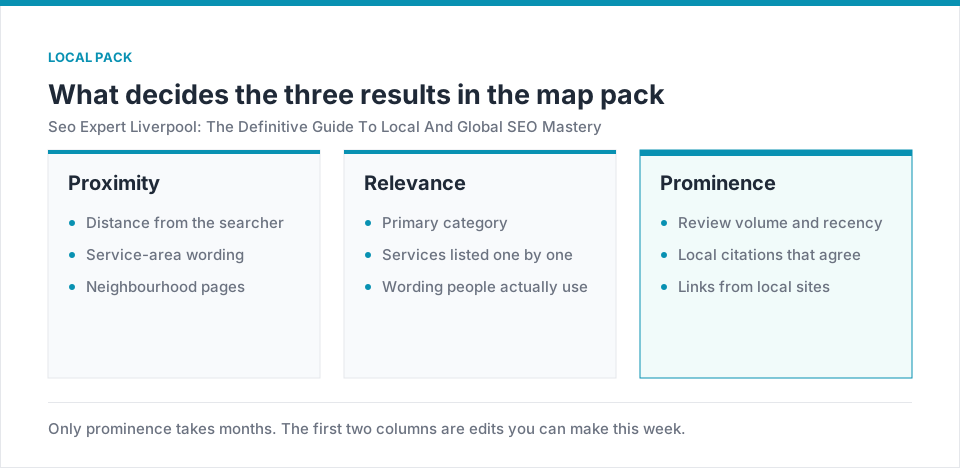
- Titles, meta descriptions, and headings that blend district qualifiers with core services, maintaining topic_id integrity.
- Internal linking that flows from LocalPDPs to Maps descriptors and GBP entries, anchored to the hub-topic spine.
- Schema markup: LocalBusiness or Organisation with accurate address and areaServed, plus Service, FAQPage, and BreadcrumbList where relevant, to communicate Liverpool-specific intent across surfaces.
Anchor Points For Immediate Action
- Lock the hub-topic spine (topic_id) as the single source of truth across all surfaces for Liverpool LocalPDPs and service pages.
- Publish regulator-ready crosswalks linking LocalPDPs, Maps descriptors, GBP, glossaries, Zhidan prompts, and ambient captions to topic_id with explicit locale context.
- Establish delta histories for LocalPDP changes, schema updates, and translation attestations to enable regulator replay across Liverpool districts.
Next Steps And How To Start
To begin implementing Liverpool-focused LocalPDPs and service-area optimisations, visit the Liverpool SEO Services page on Liverpool SEO Services and book a consultation. This Part 8 integrates with Parts 1–7 to deliver suburb-aware activation across six surfaces, anchored by the hub-topic spine. For foundational guidance, refer to Google's SEO Starter Guide and adapt it to Liverpool’s six-surface governance model. Translation attestations and locale notes should accompany every surface update to ensure ongoing locale fidelity as Liverpool grows.
Internal link: Liverpool Small Business SEO Services.
External reference: Google's SEO Starter Guide.
Local Vs International SEO Strategy For Liverpool (Part 9 Of 14)
Foundational Local Dominance Before Global Expansion
In Liverpool, the strongest starting point for any SEO programme is a robust local signal framework rooted in the hub-topic spine (topic_id). LocalPDPs, Maps descriptors, Google Business Profile panels, glossaries, Zhidan prompts, and ambient captions must align around Liverpool’s key districts—City Centre, Anfield, Walton, Baltic Triangle, and surrounding neighbourhoods—to create a dependable base. Only after local signals are consistently performing should strategic international expansion be considered. This approach preserves signal coherence across the six surfaces and prevents dilution of proximity cues that drive near-me searches and physical store visits. A well-constructed local foundation acts as a platform for scalable, regulator-ready growth when global audiences or multilingual scenarios enter the picture.
When To Think About International Or Multilingual Strategies
International considerations become relevant for Liverpool businesses with genuine cross-border demand: tourism businesses serving foreign visitors, export-focused services, or e-commerce with international shipping. The objective is to extend reach without compromising the core Liverpool signals. Implement a tiered approach that keeps topic_id at the centre while creating well-defined international layers. Use hreflang annotations to indicate language and regional variants, currency localisation when selling products online, and geo-targeting that respects Liverpool-based intents while optionally serving adjacent markets. A thoughtful international plan does not replace local authority signals; it complements them by adding precise, enumerated contexts for global users who still make decisions influenced by Liverpool’s locality.
Language, Currency, And Geo-Targeting Considerations For Liverpool
For Liverpool brands addressing international audiences, practical steps include the following. First, implement hreflang tags to accurately map language variants and regional targets to the hub-topic spine, ensuring that LocalPDPs and related surfaces link back to topic_id. Second, if selling goods or services in multiple currencies, provide a clean currency switcher and price formatting that respects user locale while preserving canonical content. Third, apply geo-targeting in Google Search Console and within ad campaigns to ensure that international pages do not erode Liverpool’s proximity signals. Fourth, maintain clear NAP (Name, Address, Phone) hygiene and consistent district qualifiers so that local signals remain strong even when international content is present. Finally, keep translation attestations and locale notes attached to every surface update to support regulator replay and to guard against signal drift as markets evolve.
Surface-Specific Implications: How Signals Travel Between Local And Global Layers
Six surfaces must remain tethered to the hub-topic spine even as you introduce international layers. LocalPDPs continue to carry suburb-specific signals; Maps descriptors should reflect proximity to Liverpool districts; GBP content remains anchored to local attributes; glossaries, Zhidan prompts, and ambient captions must incorporate locale context. When international content is activated, ensure it piggybacks on the Liverpool signals rather than replacing them. Create international LocalPDPs only for markets with clear demand, and link them back to topic_id with explicit locale notes. This structure supports regulator-ready audit trails and preserves a city-wide ROI narrative as global reach expands from Liverpool outward.
Practical Activation Playbook For Local And Global Signals
Adopt a clear sequence to grow responsibly from Liverpool’s core signals to international reach. Start with a local signal audit to confirm that the hub-topic spine is the single source of truth across all surfaces. Then design international layers that respect district nuances, language preferences, and currency considerations. Implement hreflang mappings, currency localisation, and geo-targeted surface briefs that tie back to topic_id. Establish delta histories and parity dashboards so you can replay journeys across surfaces for regulators. Finally, monitor the performance impact by district and by market to confirm that global expansion strengthens, rather than weakens, local authority signals.
- Confirm topic_id as the universal anchor across all six surfaces before introducing international variants.
- Create language and currency mappings for markets with legitimate demand, ensuring landing pages maintain proximity cues to Liverpool districts.
- Use What-If parity dashboards to forecast cross-surface journeys and validate regulatory replay readiness prior to publication.
Next Steps And How To Start
To explore a balanced Local + International strategy for Liverpool, book a consultation via Liverpool Small Business SEO Services on LiverpoolSEO.org. This Part 9 connects the local foundations established in Parts 1–8 with scalable international considerations, setting the stage for Parts 10–14 which will deepen measurement, governance, and execution across global markets while preserving Liverpool’s hub-topic spine. For foundational guidance, consult Google’s SEO Starter Guide and adapt it to a Liverpool context with six-surface governance in mind.
External reference: Google's SEO Starter Guide.
Measurement, Benchmarking, And Reporting For Liverpool SEO (Part 10 Of 14)
Anchoring Measurement To The Hub-Topic Spine
In a regulator-ready, six-surface framework for Liverpool businesses, every measurement decision must connect surface activity back to the central hub-topic spine, topic_id. This approach preserves signal provenance across LocalPDPs, Maps descriptors, Google Business Profile (GBP) panels, glossaries, Zhidan prompts, and ambient captions, ensuring that insights remain interpretable as the Liverpool ecosystem scales. Part 10 translates governance into auditable dashboards, delta histories, and What-If parity previews that regulators can replay with explicit locale context. The objective is a transparent, city-wide ROI narrative that travels coherently from discovery to conversion across all six surfaces.
A Three-Tier KPI Framework
Measure Liverpool activity with a tiered approach that reflects how signals travel through the six surfaces while remaining anchored to topic_id. This framework emphasises regulator-readiness and cross-surface accountability.
- Surface-Level Engagement KPIs: Track per-surface visits, dwell time, form submissions, and mobile performance for LocalPDPs, Maps descriptors, GBP-linked pages, glossaries, Zhidan prompts, and ambient captions.
- Cross-Surface Journey KPIs: Monitor user paths that move from proximity cues in Maps to LocalPDPs and GBP interactions, ensuring topic_id continuity across surfaces.
- City-Wide ROI KPIs: Compute inquiries, bookings, and revenue attributed to organic search, rolled up by topic_id to present a regulator-ready ROI narrative.
What To Track On Each Surface
To sustain six-surface coherence, gather surface-specific metrics that still feed into topic_id. The following anchors help keep reporting meaningful and auditable:
- LocalPDPs: page-level engagement, district relevance, and conversions that tie back to the Liverpool hub-topic spine.
- Maps descriptors: proximity-driven interactions and click-throughs to LocalPDPs or GBP entries.
- GBP panels: listing views, direction requests, calls, and attribute updates linked to topic_id.
- Glossaries: glossary page views and term-specific engagement that reinforce local language and district signals.
- Zhidan prompts: outputs that maintain topic_id fidelity and locale context when generating content across surfaces.
- Ambient captions: image alt texts and captions that embed Liverpool cues and district qualifiers.
Delta Histories And What-If Parity Dashboards
Delta histories capture every surface change, including keyword shifts, GBP updates, LocalPDP migrations, and translation attestations. What-If parity dashboards forecast cross-surface journeys before publication, enabling regulators to replay journeys with locale context and verify signal provenance. This discipline reduces risk as Liverpool expands, ensuring that six-surface signals remain coherent even when content evolves rapidly across districts such as the City Centre, Anfield, Walton, and the Baltic Triangle.
Cadence And Governance Reporting
Adopt a predictable reporting cadence that aggregates per-surface metrics into a city-wide Roll-Up by topic_id. Suggested rhythm includes per-surface health checks, cross-surface governance reviews, and regulator-facing dashboards that summarise signal provenance, locale context, and ROI by district. Regular artefacts such as delta histories and translator attestations should accompany every publish to support auditability and future replays.
Practical Onboarding And Compliance
Begin with a regulator-friendly baseline by mapping all surfaces to the hub-topic spine and assigning surface owners. Create delta histories for every change and deploy parity dashboards to forecast publishing impact. Maintain locale notes and translation attestations whenever you publish district-specific content. These artefacts provide the backbone for regulator replay as Liverpool scales, ensuring signals stay coherent and auditable across LocalPDPs, Maps descriptors, GBP panels, glossaries, Zhidan prompts, and ambient captions.
Internal link: Liverpool SEO Services.
External reference: Google Webmaster Guidelines and SEO Starter Guide.
Measurement, Benchmarking, And Reporting For Liverpool SEO (Part 11 Of 14)
Anchoring Measurement To The Hub-Topic Spine
In a regulator-ready Liverpool SEO programme, every metric must connect back to the central hub-topic spine, known as topic_id. This ensures signals remain coherent across LocalPDPs, Maps descriptors, Google Business Profile (GBP) panels, glossaries, Zhidan prompts, and ambient captions even as Liverpool districts evolve. Part 11 translates governance into auditable dashboards, delta histories, and What-If parity previews that regulators can replay with explicit locale context. The outcome is a transparent city-wide ROI narrative that travels cleanly from discovery to conversion across all six surfaces.
A Three-Tier KPI Framework
Adopt a tiered measurement approach that reflects how signals move through the six surfaces while remaining tethered to topic_id. This helps keep governance transparent and the ROI easy to interpret for Liverpool stakeholders. The framework consists of surface-level engagement, cross-surface journey analytics, and city-wide ROI metrics that sum up to a regulator-friendly outlook.
- Surface-Level Engagement: Track per-surface visits, dwell time, form submissions, and mobile performance for LocalPDPs, Maps descriptors, GBP-linked pages, glossaries, Zhidan prompts, and ambient captions.
- Cross-Surface Journey Analytics: Monitor user paths that move from proximity cues in Maps to LocalPDPs and GBP interactions, ensuring topic_id continuity across surfaces.
- City-Wide ROI: Compute inquiries, bookings, and revenue attributed to organic search, rolled up by topic_id to present a regulator-ready ROI narrative.
What To Track On Each Surface
To sustain six-surface coherence, curate surface-specific metrics that feed into the hub-topic spine. This ensures reporting is meaningful, auditable, and aligned with local goals in Liverpool.
- LocalPDPs: page-level engagement, district relevance, and conversions that tie back to the Liverpool hub-topic spine.
- Maps descriptors: proximity-driven interactions and click-throughs to LocalPDPs or GBP entries.
- GBP panels: listing views, direction requests, calls, and attribute updates linked to topic_id.
- Glossaries: glossary page views and term-specific engagement that reinforce local language and district signals.
- Zhidan prompts: outputs that maintain topic_id fidelity and locale context when content is generated across surfaces.
- Ambient captions: image alt texts and captions that embed Liverpool cues and district qualifiers.
Delta Histories And What-If Parity Dashboards
Delta histories capture every surface change, including keyword shifts, GBP updates, LocalPDP migrations, and translation attestations. What-If parity dashboards forecast cross-surface journeys before publication, allowing regulators to replay journeys with locale context and verify signal provenance. This discipline minimises risk as Liverpool scales, ensuring six-surface signals stay coherent even when districts expand from the City Centre to Anfield, Walton, and the Baltic Triangle.
Cadence And Governance Reporting
Establish a regular reporting cadence that aggregates per-surface metrics into a city-wide Roll-Up by topic_id. A practical rhythm includes weekly surface health checks, bi-weekly cross-surface synchronization, and monthly regulator-facing dashboards summarising signal provenance, locale context, and ROI by district. Each cycle should produce actionable artefacts—delta histories, parity previews, and updated surface briefs—that regulators can replay to verify discovery-to-conversion journeys across LocalPDPs, Maps descriptors, GBP panels, glossaries, Zhidan prompts, and ambient captions.
Practical Onboarding And Compliance
Begin with a regulator-friendly baseline by mapping all surfaces to the hub-topic spine and establishing delta histories for every change. Deploy parity dashboards to forecast publishing impact and ensure locale context is attached to all surface updates. Translation attestations and locale notes should accompany every major publish to protect signal fidelity as Liverpool grows. A well-documented measurement framework also supports ongoing optimisation, enabling Liverpool Small Business SEO Services to demonstrate progress with auditable, surface-to-surface provenance.
Case Studies: Typical Outcomes From Liverpool SEO (Part 12 Of 14)
Overview Of The Case Studies
These anonymised Liverpool-focused campaigns illustrate how a six-surface governance model translates strategy into tangible performance. Each case blends LocalPDPs, Maps descriptors, GBP panels, glossaries, Zhidan prompts, and ambient captions under the hub-topic spine (topic_id). The outcomes reflect improvements in visibility, engagement, and conversions across districts from the City Centre to Anfield, Walton, and the Baltic Triangle. The case studies emphasise not only traffic growth but search-intent alignment, proximity signalling, and regulator-ready provenance that scales with Liverpool's growth.
Case Study 1: City Centre Café Chain
A boutique café group operating across the City Centre benefited from LocalPDPs focused on proximity and district language, supported by Maps descriptors and GBP updates. The activation leveraged LocalLanding pages for nearby streets and events calendars to capture dine-in and takeaway intent.
- Organic sessions rose by 38% over six months, with a sustained uplift in long-tail queries such as "coffee Liverpool City Centre" and "best café near me Liverpool".
- Ranking improvements saw core terms move from position 6–8 to 1–3 on Google.co.uk for district-informed phrases.
- GBP interactions increased by 42%, with more directions requests and phone calls from nearby districts, translating to higher footfall.
Case Study 2: Anfield Trades Service (Plumbing)
This service business focused on district-tailored LocalPDPs and GBP attributes that highlighted emergency cover for Anfield and surrounding wards. The strategy blended technical SEO with local content to improve trust signals and conversions.
- Phone calls from organic search increased by 60% within four months due to enhanced GBP trust indicators and closer proximity prompts.
- Local pack and map rankings for primary terms, such as "plumber Anfield" and "emergency plumber Liverpool", improved from obscurity to top three positions.
- Lead quality improved, with more enquiries converted within 24 hours due to district-aligned LocalPDPs and service pages.
Case Study 3: Baltic Triangle Boutique Retailer
A fashion and lifestyle retailer near the Baltic Triangle executed content that reflected Liverpool's creative corridor, with LocalPDPs supporting event-driven promotions and seasonal campaigns.
- Local revenue from organic search grew by 55%, driven by district-led product pages and local knowledge hubs.
- Conversion rate from local visitors improved by 18%, aided by optimised product pages and proximity-sensitive descriptions.
- Reviews and user-generated content from nearby communities boosted trust signals across GBP and LocalPDPs.
What These Cases Tell Us About Liverpool SEO
Across the three anonymised campaigns, the common threads are hub-topic spine discipline, district-aware LocalPDP design, and robust cross-surface governance. Signals travel from proximity cues in Maps to LocalPDPs and GBP, with every update tracked in delta histories and validated through What-If parity dashboards before publication. The result is a scalable, regulator-ready performance narrative that correlates with visits, calls, and purchases in Liverpool's distinct districts.
- Local signal coherence beats mere traffic volume when it comes to conversions and ROI.
- Auditable trails support regulator replay and future expansion into new districts without signal drift.
- Structured data and district-tailored content amplify authority across six surfaces, reinforcing proximity signals city-wide.
Takeaways For Practitioners
For clients using LiverpoolSEO.org, these case studies illustrate the practical power of a hub-topic spine coupled with disciplined surface governance. To start or review a Liverpool-focused programme, book a consultation via Liverpool Small Business SEO Services and explore how LocalPDPs, Maps descriptors, GBP panels, glossaries, Zhidan prompts, and ambient captions can be orchestrated to deliver durable, regulator-ready results for districts across Liverpool.
Tools And Technology Used By A Liverpool SEO Expert (Part 13 Of 14)
A Liverpool-based SEO expert relies on a disciplined, regulator-ready toolkit that orchestrates the city’s six-surface governance. The hub-topic spine (topic_id) remains the central anchor, ensuring LocalPDPs, Maps descriptors, Google Business Profile panels, glossaries, Zhidan prompts, and ambient captions move in concert as Liverpool grows. The right combination of software, data workflows, and governance artefacts translates strategy into auditable, scalable activation across the City Centre, Anfield, Walton, and the waterfront districts.
The Modern Toolchain For Liverpool Six-Surface Governance
Effective Liverpool SEO hinges on a connected stack that supports six-surface activation and regulator replay. Core components include a central data layer that links every surface to topic_id, a robust content management workflow, and a set of dashboards that translate surface activity into a city-wide ROI narrative. Tools fall into four pragmatic categories: data collection and analysis, site health and performance, surface orchestration, and reporting and compliance.
Data Collection, Analysis, And Surface Alignment
Analytical foundations begin with Google Analytics for traffic patterns, Google Search Console for crawl and indexing signals, and Looker Studio (formerly Data Studio) dashboards that combine LocalPDP, Maps descriptors, GBP attributes, glossaries, Zhidan prompts, and ambient captions under topic_id. These feeds keep signals coherent, allow delta histories, and enable What-If parity scenarios before publishing.
In practice, use a single source of truth for local intent signals, then map every surface change back to topic_id. This supports regulator-ready audits while providing clear on-page, local, and technical feedback loops.
Technical Health, Performance, And Indexation
Screaming Frog or similar crawlers, combined with Lighthouse-based performance tooling, deliver ongoing health checks on crawlability, indexation, Core Web Vitals, and schema health. The Liverpool framework demands mobile-first performance and district-aware schemas that travel cleanly across all surfaces without signal drift. Regular audits identify bottlenecks in LocalPDPs and ensure GBP, Maps descriptors, and Local Landing Pages stay in sync with topic_id.
Surface Orchestration And Delta Histories
Delta histories capture every surface change, from a LocalPDP revision to an updated GBP attribute, and attach locale notes that preserve context for regulator replay. What-If parity dashboards allow teams to forecast cross-surface journeys before publishing, reinforcing governance while supporting rapid iteration across Liverpool districts.
Content Production, Optimisation, And Local Authority Signals
Content workflows leverage CMS capabilities to tie LocalPDPs, Maps descriptors, and GBP content to topic_id, ensuring district qualifiers and locale context are threaded through every surface. Tools for content planning, SEO auditing, and competitive intelligence (such as Ahrefs or SEMrush) help identify opportunities while keeping signals cohesive across LocalPDPs, Maps descriptors, GBP, glossaries, Zhidan prompts, and ambient captions.
Reporting, Compliance, And Regulator-Ready Artefacts
Reporting channels collate per-surface metrics into a city-wide Roll-Up by topic_id. What-If parity dashboards underpin the ability to replay journeys, while translation attestations and locale notes provide auditable context for regulators. Google’s official guidance and the SEO Starter Guide offer baseline principles that are adapted to Liverpool’s six-surface governance model. Regular governance artefacts include delta histories, surface briefs, and regulator-friendly narratives that explain locale choices and signal provenance.
Practical Next Steps For Practitioners
To operationalise this toolset, start with a regulator-friendly baseline: identify surface owners, map all six surfaces to topic_id, and establish delta histories. Build parity dashboards to forecast cross-surface journeys before publishing, and attach locale notes to every update. For ongoing guidance, explore Liverpool’s six-surface activation framework on the Liverpool SEO Services page and book a consult to translate these tools into suburb-focused activation. External references: Google's SEO Starter Guide, and Core Web Vitals.
Internal link: Liverpool SEO Services.
Choosing The Right SEO Expert In Liverpool (Part 14 Of 14)
Why A Liverpool-Centric Partner MatterS
By Part 14, the aim is to equip you with a decision framework that matches Liverpool’s distinctive local ecosystem. An authentic seo expert liverpool partner understands the city’s districts, rhythms, and consumer behaviours, and can translate that intelligence into a regulator-ready, six-surface activation plan anchored to the hub-topic spine (topic_id). The right partner does not just improve rankings; they orchestrate LocalPDPs, Maps descriptors, GBP panels, glossaries, Zhidan prompts, and ambient captions so signals travel coherently from discovery to conversion across every Liverpool neighbourhood, from City Centre to Anfield, Walton, and the waterfront.
What To Look For In A Liverpool SEO Partner
Choosing a partner requires clarity on capability, process, and fit. Prioritise firms that demonstrate a proven track record in Liverpool, with evidence of cohesive six-surface governance and a clear hub-topic spine. Look for transparent reporting, regulator-friendly delta histories, and the ability to articulate how surface changes ripple across LocalPDPs, Maps descriptors, GBP, glossaries, Zhidan prompts, and ambient captions. The strongest candidates will also present district-specific case studies, ideally within Liverpool or similar UK cities, showing measurable improvements in near-me searches and local conversions.
- Demonstrated Liverpool experience with district-focused activation and six-surface governance aligned to topic_id.
- Transparent, auditable reporting with delta histories and What-If parity dashboards that support regulator replay.
- Clear pathway from consultation to onboarding, with a structured cadence for LocalPDPs, Maps descriptors, GBP, glossaries, Zhidan prompts, and ambient captions.
- Ethical link-building and content strategies that prioritise local relevance over volume.
- Evidence of ROI delivery, such as increased near-me queries, in-store visits, or local conversions tied back to topic_id.
How To Validate Their Methodology
Ask how they would structure Liverpool activation around the hub-topic spine. A robust candidate will describe a regulator-ready cross-surface workflow that begins with LocalPDPs and Maps descriptors, then aligns GBP attributes, glossaries, Zhidan prompts, and ambient captions under topic_id. They should be able to show delta histories and parity dashboards that enable cross-surface journey replay before any publish. Additionally, seek evidence of practical district planning, such as content calendars that incorporate Liverpool events, stadium match days, and neighbourhood leadership insights that influence search intent.
- Request a live demonstration of delta histories showing how a surface change propagates to six surfaces while retaining locale context.
- Require a district-focused content plan that ties LocalPDPs to GBP and Maps descriptors through the hub-topic spine.
- Ask for structured data and schema implementations that reflect Liverpool’s geography and local services, mapped to topic_id.
Onboarding And Engagement Model
Onboarding should begin with a regulator-friendly baseline: confirm the hub-topic spine (topic_id), assign surface owners, and document delta histories. The engagement should progress through discovery, surface briefs, and a joint activation plan across LocalPDPs, Maps descriptors, GBP, glossaries, Zhidan prompts, and ambient captions. The right partner will present a detailed starter playbook with a 90-day milestone plan tailored to Liverpool’s districts, ensuring locale fidelity and practical outcomes from the outset.
- Establish topic_id as the master reference across all six surfaces with explicit Liverpool locale context.
- Define surface owners and a shared governance calendar to alignment across LocalPDPs, Maps descriptors, GBP, glossaries, Zhidan prompts, and ambient captions.
- Create delta histories for all surface changes to enable regulator replay from Brief to Publish.
Pricing, Contracts, And What To Expect
Anticipate pricing models that reflect Liverpool’s scale and regulatory scrutiny. Most teams opt for a monthly retainer with clear milestones, complemented by quarterly reviews and regulator-facing artefacts. Seek a written scope that ties each surface to topic_id, outlines delta histories, and defines What-If parity dashboards before publishing. Expect transparent reporting, explicit locale notes, and a measurable ROI narrative that ties activity back to Liverpool districts and business goals.
Next Steps: Get Started With A Liverpool SEO Expert
Ready to move forward? Start with a consult via Liverpool SEO Services on LiverpoolSEO.org. The Part 14 framework reinforces the six-surface governance you’ve built across Parts 1–13, and provides a concrete pathway to evaluate, onboard, and collaborate with a Liverpool-based specialist. For external guidance, consult Google’s SEO Starter Guide to ensure best practices are aligned with local scales and regulator expectations.
External reference: SEO Starter Guide.