Liverpool SEO: Foundations For A Local Strategy
Understanding Liverpool SEO and its local value
Liverpool operates as a vibrant, multi-faceted market where local searches are powered by proximity, district nuance and a busy urban rhythm. From the Baltic Triangle’s tech scene to the waterfront districts around Liverpool ONE, people search for services that are nearby, contextually relevant and easy to access. A Liverpool-focused SEO approach recognises the city’s unique mix of residents, students, visitors and businesses, translating this mix into a four-surface activation that delivers across Web, Images, News and Hub. This Part 1 outlines how Liverpool-specific signals shape search strategies, and why a district-aware plan is essential for sustainable visibility.
What a Liverpool SEO provider does
A Liverpool SEO partner combines technical prowess, content strategy and governance discipline to deliver enduring visibility. Core services include technical SEO to improve crawlability and speed, on-page optimisation tailored to Liverpool’s local intents, and a content framework that connects district relevance with four-surface activation. Local signals—such as Google Business Profile health, Maps proximity, and district pages tailored to neighbourhoods like Ropewalks, Anfield, and Woolton—are woven into Web, Images, News and Hub activities. Governance is built in: dashboards that monitor geography-specific performance, transparent reporting, and auditable artefacts that satisfy both business and regulatory needs.
Why Liverpool market matters for SEO providers
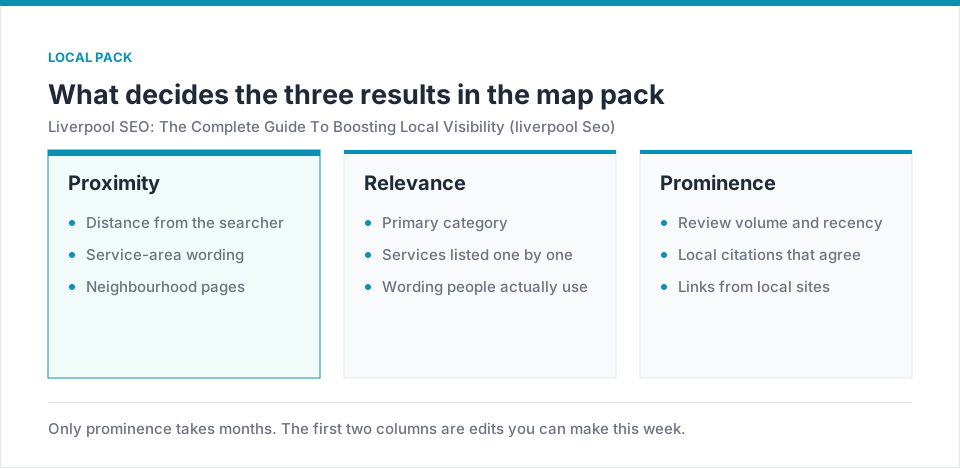
Proximity matters in Liverpool more than in many markets. Users search by district, by nearby landmarks, and by transport routes. A district-forward Liverpool plan uses district landing pages, highly local imagery, timely News hooks, and hub assets that consolidate authority. A governance-first approach ensures every activity is auditable, with geography-based dashboards that align with stakeholder expectations and local regulations. In practice, this means turning district knowledge into measurable outcomes across Web, Images, News and Hub.
Framing Part 1: The four-surface journey for Liverpool
The four-surface activation model—Web, Images, News and Hub—serves as a practical lens for planning, delivering and governing Liverpool campaigns. In Part 1, you’ll see how this framework informs partner selection, the standard service mix offered by Liverpool-focused agencies, and governance artefacts that keep activities auditable and aligned with district priorities. You’ll also learn how to translate district context into production-ready briefs, keyword maps, and surface-specific outputs that demonstrate capability across Liverpool’s diverse neighbourhoods.
Getting started with a Liverpool SEO partner
- Define your district footprint: identify target Liverpool districts where you want to compete and map proximity signals that matter for those areas.
- Clarify objectives by surface: decide what you want to achieve across Web, Images, News and Hub (for example, district pages, geo-qualified images, timely News hooks, and Hub assets).
- Request example artefacts: ask for Activation Briefs by surface and governance dashboards to assess how a provider plans work and tracks progress.
- Assess governance and reporting: look for regulator-ready dashboards, data lineage, and transparent measurement that ties outcomes to geography.
- Book a strategy session: use the Liverpool-focused contact channel to discuss a tailored four-surface plan for Liverpool campaigns and align on delivery cadence.
What to expect in Part 2
Part 2 dives into district-focused keyword mapping and topic development, showing how to build a district-first keyword map that supports four-surface activation. It will cover how to craft surface-specific briefs that translate district intent into production-ready content while keeping governance artefacts central to the process. To begin shaping your Liverpool plan today, explore our Service Portfolio and consider booking a strategy session to map a practical, four-surface pathway for your district goals.
Internal link: Service Portfolio | Book a strategy session.
Liverpool SEO: District-Focused Keyword Mapping And Topic Development
Why district-first keyword strategy matters for Liverpool
Liverpool’s neighbourhood mosaic creates distinctive search moments. Residents, students, visitors and local business buyers often describe intent with district qualifiers, landmarks and transport references. A Liverpool-focused keyword map starts by identifying key districts (for example, Baltic Triangle, Ropewalks, Anfield, Woolton) and then translates those signals into topic areas that align with the four-surface activation model: Web, Images, News and Hub. This approach ensures every surface reflects local relevance, supports proximity signals, and builds enduring authority across Liverpool’s diverse communities.
Mapping districts to surfaces: a practical blueprint
The district map becomes a lived production plan when you link district signals to surface-specific outputs. For each district, you’ll define core services, typical user journeys and the preferred surface* path that users take from discovery to action. This ensures Web pages offer district depth, Images capture locally resonant visuals, News hooks reflect timely, local events, and Hub assets curate evergreen authority. The governance framework then ties these outputs to measurable district ROI.
Begin with a district-first worksheet that pairs primary services with district qualifiers (for example, Liverpool plumbing Woolton or cafe marketing Baltic Triangle). Expand into topic clusters that reinforce authority across surfaces, while keeping a tight leash on geographic relevance and data provenance.
Constructing a district keyword map
- Identify target districts and clusters: select a manageable footprint and map proximity signals that matter for service areas.
- Capture district intents by service: classify queries as informational, navigational or transactional with a district emphasis.
- Pair services with district qualifiers: create keyword variants that combine core services with district names (for example, Liverpool boiler repairs Anfield, cafe marketing Baltic Triangle).
- Develop topic clusters per district: group related topics around a district to support depth and topical authority across surfaces.
- Prioritise by business value and seasonality: rank topics by potential revenue impact and local events that spike demand.
From keyword maps to four-surface briefs
Translate each district map into actionable briefs for Web, Images, News and Hub. The goal is a coherent journey where a reader moves from discovery to action with local relevance at every touchpoint. For Web pages, the briefs should describe district depth, service scope and local credibility cues. For Images, outline geo-qualified visuals and captions that anchor Maps proximity. For News, plan timely district updates and partnerships. For Hub, curate evergreen district guides and case studies that reinforce authority.
A governance-first mindset means including artefacts such as Activation Briefs by surface and geography, Guardian Dashboards by location, and Provenance Trails that document data lineage. These artefacts underpin regulator-ready reporting while keeping your Liverpool campaigns auditable and scalable.
On-page considerations for Liverpool district pages
- Titles and meta descriptions with district qualifiers: embed district names without sacrificing readability or user value.
- Headers that reflect intent and geography: structure H1/H2s to foreground district relevance and service depth.
- Internal linking by district clusters: build logical pathways between district pages, hub assets and related services to boost topical authority.
- Structured data: apply LocalBusiness or Organisation schema at district levels, plus FAQ and BreadcrumbList where appropriate to surface rich results in local packs.
For more details on best-practice local schema, see authoritative guidance such as Google's LocalBusiness structured data guidelines. Google's LocalBusiness structured data guidance.
Sample district worksheet: Liverpool city centre, Baltic Triangle and Anfield
This sample illustrates how to populate a district worksheet with core services, intents, and surface assignments. It’s designed to scale across multiple districts while preserving district flavour and regulatory governance.
- City Centre: core services and hospitality-focused content, district landing page depth, GBP optimisation for central arias and walkable addresses.
- Baltic Triangle: tech and creative services focus, imagery that showcases venues and studios, and timely News hooks tied to events.
- Anfield: community services and transport near-locations content, district images with landmarks, and hub assets featuring local case studies.
Use this framework to plan production briefs and governance artefacts for every Liverpool district you target. Regular governance reviews ensure district goals stay aligned with four-surface momentum.
Next steps and calls to action
Ready to translate district insight into practical four-surface outputs? Start with our Service Portfolio to preview Activation Briefs by surface and a district-ready governance toolkit. Then book a strategy session to tailor a Liverpool-focused keyword map and content plan that aligns with your district footprint across Web, Images, News and Hub.
Internal links: Service Portfolio | Book a strategy session.
Local SEO Essentials For Liverpool Businesses
In Liverpool, local search isn’t just about being found; it’s about being found by the right people in the right places at the right time. This part focuses on practical, district-aware local optimisation for Liverpool businesses, building on the district-first, four-surface framework introduced earlier. The aim is to translate proximity signals and neighbourhood nuance into district pages, geo-qualified imagery, timely local News items and Hub assets that collectively lift visibility, trust and conversions across Web, Images, News and Hub.
Google Business Profile and proximity signals in Liverpool
The Liverpool search landscape rewards well‑managed GBP health and Maps proximity. Each district or borough should have a verified GBP profile with accurate NAP, hours and service categories reflecting the local offer. Regular updates via GBP posts can highlight district events, promotions, or partnerships that drive immediate engagement from nearby users.
- NAP consistency: align addresses and phone numbers across GBP, website footers and local directories to prevent confusion in Maps and local packs.
- Category specificity: choose precise service categories that mirror the Liverpool district’s real-world services.
- Reviews management: implement a proactive review programme that responds promptly and professionally to local feedback.
District landing pages and local citations
Develop district landing pages for key Liverpool areas (for example, Baltic Triangle, Ropewalks, Anfield, Woolton, and the city centre) to capture district-specific search intent. Pair these with a disciplined local citation strategy, prioritising Liverpool‑facing directories and community‑driven platforms. Ensure citations include consistent NAP, a local business description, and a link back to the corresponding district page.
- District depth pages: one canonical page per district with service depth, nearby landmarks and local testimonials.
- Citation governance: maintain a master sheet of all local directories and ensure updates propagate across platforms.
- Reviews and social proof: feature fresh reviews and locally relevant case studies on district pages.
On-page optimisation for Liverpool districts
- Titles and meta with district qualifiers: include district names in titles and meta descriptions while preserving user readability.
- Header structure: use H2s and H3s that foreground district relevance and service depth.
- Internal linking by district clusters: connect district pages to hub assets and appropriate services to reinforce topical authority.
- Structured data: apply LocalBusiness or Organisation schema at district levels, plus FAQ for common local questions and BreadcrumbList for clear navigation.
For best-practice local schema guidance, refer to Google's local-search structured data guidelines and keep district content semantically rich and user-focused.
Reviews, reputation and trust in Liverpool
Active reputation management is crucial in Liverpool. Encourage customers to leave detailed local reviews and respond in a timely, professional manner. Use review schemas to improve the appearance in search results and maintain a steady stream of authentic commentary from residents, students and visitors. A strong review profile supports higher click-through and stronger proximity signals for district pages.
- Response time: aim to reply within 24–48 hours on average.
- Review diversity: seek feedback across multiple services and districts to reflect Liverpool’s varied communities.
- Showcase success stories: highlight district case studies within Hub assets and district pages.
Measurement and governance by district
Adopt a district‑first KPI framework that mirrors the four-surface activation: Web depth, Images relevance, News recency, and Hub authority, all broken down by Liverpool district. Guardian Dashboards by geography provide real-time visibility into proximity signals, Maps impressions and GBP completeness for each area, while Activation Briefs by surface translate strategy into deliverables. Provenance Trails ensure data lineage from discovery to outcome, supporting regulator-friendly reporting across surfaces.
- Web metrics by district: organic visibility, district page depth and conversion events.
- Images metrics by district: geo-qualified impressions and image-driven referrals to district pages.
- News metrics by district: recency-weighted engagement and traffic spikes tied to local events.
- Hub metrics by district: downloads, time on assets and cross-surface referrals to district pages.
Liverpool SEO: District-Driven Keyword Research And Content Planning
Building on the district-focused framework established in Parts 1–3, this section dives into the practical mechanics of keyword research and content planning for Liverpool. The aim is to translate district nuance into a cohesive four-surface strategy (Web, Images, News and Hub) that reflects proximity signals, local intent and the city’s distinctive geography. You’ll learn how to define a district footprint, map intents to surfaces, and produce production-ready briefs that keep governance artefacts central to delivery.
Why district-focused keyword research matters in Liverpool
Liverpool’s neighbourhood mosaic creates unique search moments. Residents, students, visitors and business buyers describe intent with district qualifiers, landmarks and transport references. A district-led keyword map begins by identifying core Liverpool districts (for example, Baltic Triangle, Ropewalks, Anfield, Woolton) and then translates those signals into topic areas aligned with Web, Images, News and Hub. This approach ensures every surface reflects local relevance, leverages proximity signals, and builds enduring authority across Liverpool’s diverse communities.
Identify Liverpool districts and surface goals
Outline a practical district footprint that captures where you compete and which proximity cues matter most. Suggested Liverpool districts to begin with include the City Centre, Baltic Triangle, Ropewalks, Anfield, Woolton, and surrounding suburbs. For each district, define your surface-specific objectives: depth on Web pages, visually engaging and geo-qualified imagery, timely district News hooks, and Hub resources that reinforce authority. The four-surface lens ensures district intent translates into scalable outputs across Web, Images, News and Hub.
Constructing a district keyword map
- Identify target districts and clusters: select a manageable footprint and map proximity signals that matter for Liverpool services.
- Capture district intents by service: classify queries as informational, navigational or transactional with a district emphasis.
- Pair services with district qualifiers: create keyword variants that combine core services with district names (for example, Liverpool boiler repairs Anfield, cafe marketing Baltic Triangle).
- Develop topic clusters per district: group related topics around a district to support depth and topical authority across surfaces.
- Prioritise by business value and seasonality: rank topics by potential revenue impact and local events that spike demand.
From district maps to four-surface briefs
Translate each district map into actionable briefs for Web, Images, News and Hub. The objective is a coherent journey where a reader moves from discovery to action with local relevance at every touchpoint. For Web pages, briefs should describe district depth, service scope and local credibility cues. For Images, outline geo-qualified visuals and captions that anchor Maps proximity. For News, plan timely district updates and partnerships. For Hub, curate evergreen district guides and case studies that reinforce authority. Governance artefacts such as Activation Briefs by surface, Guardian Dashboards by geography, and Provenance Trails should be embedded to demonstrate auditable, district-focused delivery.
In Liverpool’s governance-first environment, every surface plan should include district-ready artefacts to enable regulator-ready reporting and cross-surface consistency.
District content planning templates
Develop practical templates that Liverpool teams can reuse across districts. A compact district worksheet should link primary services with district qualifiers, define the intended surface path, and specify success metrics per district. Pair district topics with a scalable content calendar that aligns Web depth, geo-qualified imagery, timely News hooks and Hub assets. Governance artefacts—Activation Briefs by surface, Guardian Dashboards by geography, and Provenance Trails—should be produced alongside to ensure auditable delivery.
For ready-to-use templates and artefacts, explore our Service Portfolio and book a strategy session to tailor a Liverpool-focused, four-surface content plan.
On-page considerations for Liverpool district pages
- Titles and meta with district qualifiers: embed district names without sacrificing readability or user value.
- Headers that reflect intent and geography: structure H1/H2s to foreground district relevance and service depth.
- Internal linking by district clusters: build logical pathways between district pages, hub assets and related services to boost topical authority.
- Structured data: apply LocalBusiness or Organisation schema at district levels, plus FAQ and BreadcrumbList where appropriate to surface rich results in local packs.
For authoritative guidance on local schema, refer to Google’s LocalBusiness structured data guidance and keep content focused on user needs. Google's LocalBusiness structured data guidance.
Read next: Liverpool SEO consultant: the ROI · SEO expert Liverpool: local and global
Measuring momentum and governance by district
Adopt a district-first KPI framework aligned with the four-surface activation: Web depth, Images relevance, News recency and Hub authority. Guardian Dashboards by geography provide real-time visibility into proximity signals and Maps interactions, while Activation Briefs by surface translate strategy into tangible deliverables. Provenance Trails document data lineage to support regulator-ready reporting. Regular governance reviews ensure district goals stay aligned with four-surface momentum across Web, Images, News and Hub.
To preview artefacts and governance templates that support this approach, visit our Service Portfolio or book a strategy session to tailor a district-forward plan for Liverpool campaigns.
Liverpool SEO: Technical SEO Foundations For Liverpool Websites
Technical SEO forms the unglamorous yet indispensable backbone of a successful Liverpool-focused four-surface strategy. This part drills into the mechanics that underpin fast, crawlable, secure and scalable websites that can sustain momentum across Web, Images, News and Hub. By aligning technical foundations with district-aware content and governance artefacts, Liverpool campaigns gain reliability, better user experiences, and stronger proximity signals that translate into durable visibility in local search results.
Core speed and performance: prioritising Liverpool users
In Liverpool, where district pages, maps integrations and local service depth are critical, page speed is not simply a ranking factor; it directly shapes how readers perceive proximity and credibility. Core Web Vitals provide a practical baseline: Largest Contentful Paint (LCP) for initial load, First Input Delay (FID) for interactivity, and Cumulative Layout Shift (CLS) for visual stability. A district-first implementation should target sub-second LCP on critical district pages, fast interactivity for mobile devices, and stable layout during interactive discovery. Practical steps include server-side optimisations, image compression tuned to district content needs, and aggressive caching for frequently accessed district assets. When these elements are in place, your Web surface gains the speed needed to support district-accurate navigation and timely engagement across four surfaces.
- Audit critical district pages for LCP challenges: identify hero elements and above-the-fold assets that delay rendering and optimise them with lazy loading where appropriate.
- Prioritise image and asset optimisation by district: serve next-gen formats (WebP/AVIF where supported) and compress assets without compromising readability of district content.
- Implement efficient caching strategies: leverage cache-control headers and a content delivery network (CDN) to reduce latency for visitors accessing Liverpool district pages from different locales.
- Minimise render-blocking resources: defer non-critical JavaScript and CSS to improve initial render times on mobile devices common in urban Liverpool contexts.
Structured data as a governance backbone
Structured data helps search engines understand local context and district relevance. For Liverpool, implement schema that reflects LocalBusiness or Organisation at district levels, supplemented by BreadcrumbList for intuitive navigation. FAQPage schemas on district pages answer common Liverpool-specific questions (e.g., service areas, opening times, parking proximity). The governance mindset requires you to maintain versioned, auditable schema updates that align with activation briefs by surface and geography. This ensures that when a district page shifts content, the schema remains accurate and discoverable, supporting rich results in local packs and knowledge panels.
Mobile optimisation for Liverpool’s diverse audience
Mobile users in Liverpool expect fast, accessible information about nearby services. A mobile-first approach should ensure responsive design, legible typography, tappable CTAs, and streamlined navigation that surfaces district depth without overwhelming the reader. Prioritise district landing pages with clear, action-oriented headings and district-specific FAQs that guide users to conversions. Local content should be easy to scan on small screens, with maps integration, nearby landmarks, and proximity cues that reinforce the user’s intent across four surfaces.
- Viewport and typography: ensure legible font sizes and comfortable spacing for reading district content on mobile devices.
- Touch targets: maintain generous hit areas for navigation within district pages and Maps elements.
- Progressive enhancement: load essential content first and progressively enhance with visuals and interactions for richer user experiences.
Crawlability, indexation and site architecture
A well-structured Liverpool site guides search engines efficiently to district pages and hub assets. A crawler-friendly architecture uses a logical hierarchy: district landing pages grouped by geography, with service-depth pages linked from each district, and hub assets that reinforce authority. Critical items include a clean robots.txt file, an up-to-date sitemap.xml, clear canonical tags to avoid duplicate content across district pages, and an accessible internal linking structure that helps crawlers discover depth without creating orphaned pages. A disciplined approach to indexation ensures four-surface signals are accessible to search engines and readers alike.
- Robots.txt hygiene: explicitly allow district content you want crawled and block duplicate areas that do not contribute to user value.
- Sitemap strategy: include district pages, hub assets and important service-depth pages, ensuring frequency and reliability of updates.
- Canonicalisation: implement canonical tags where necessary to prevent content duplication across district variations.
- Internal linking: structure links to create a predictable crawl path from the homepage to district hubs and service pages.
Security, reliability and trust signals
Secure connections (HTTPS), strong TLS configurations, and modern cipher suites are non-negotiable. In Liverpool’s local market, stability matters for trust signals—business owners and customers rely on secure interactions when booking services, submitting forms, or requesting quotes. Implement HTTP Strict Transport Security (HSTS) policies to protect user sessions and improve perceived safety. Regular security practices, including monitoring for vulnerabilities and applying timely updates, reduce risk and support a four-surface strategy that people can trust across Web, Images, News and Hub.
Putting technical SEO into the four-surface framework
Technical SEO does not live in isolation; it underpins every surface of Liverpool campaigns. Web depth relies on fast, crawlable district pages; Images benefit from efficient delivery and accurate alt text for geo-context; News hinges on timely, well-structured content; Hub assets rely on solid data, clear navigation, and durable schema. Governance artefacts should capture the technical plan for each surface: Activation Briefs by surface describe the technical deliverables, Guardian Dashboards monitor the health of technical signals by geography, and Provenance Trails document data lineage and change history for regulator-ready reporting. This alignment ensures that the technical layer supports district ROI and four-surface momentum over time.
Measurement and governance of technical SEO in Liverpool
Establish a district-focused dashboard to track technical health alongside content performance. Core metrics include page speed by district, crawl errors by geography, index coverage, structured data validation, and security status. Guardian Dashboards by geography should visualise proximity signals and technical signal health, while Activation Briefs by surface translate technical findings into production tasks for Web, Images, News and Hub. Provenance Trails ensure data provenance for audit trails, making regulatory reporting straightforward and trustworthy for Liverpool stakeholders.
- Technical health metrics by district: page speed, render times, and resource load times per district page.
- Index and crawl signals by geography: index coverage, crawl budget management and detectable anomalies by district.
- Structured data validation: regular audits to ensure schema accuracy and alignment with local signals.
- Security status: TLS health, certificate validity and uptime metrics across district assets.
Next steps: artefacts and practical templates for Liverpool
To operationalise these foundations, request artefacts that demonstrate how a Liverpool-based partner will manage technical SEO within the four-surface framework. Key artefacts include Activation Briefs by surface, Guardian Dashboards by geography showing technical health, and Provenance Trails detailing data lineage. Leverage our Service Portfolio to access starter templates and governance checklists, then book a strategy session to tailor a Liverpool-specific technical SEO playbook that aligns with district priorities and regulatory requirements.
Internal links: Service Portfolio | Book a strategy session.
On-Page Optimisation And Content Strategy For Liverpool Audiences
Within the four-surface framework for Liverpool, on-page optimisation is the connective tissue that binds district intent to practical actions on Web, Images, News and Hub. The goal is to deliver district-relevant content that satisfies local queries, leverages proximity signals and invites meaningful engagement from readers in Merseyside. This part focuses on how to structure pages, craft district-aware content briefs, and govern production so that every surface remains crisp, credible and convertible for Liverpool audiences.
Titles, meta descriptions and district qualifiers
Titles should explicitly reference Liverpool districts when they reflect user intent, while preserving readability and click-through appeal. Meta descriptions should pair district cues with a clear value proposition, ensuring the snippet communicates relevance for nearby readers. For example, a service page targeting Ropewalks might use a title like "Ropewalks Liverpool Boiler Repairs – Local Experts" with a meta description emphasising proximity, availability and trusted service depth. Maintain consistency across district pages to build coherent topical authority that search engines recognise through proximity signals.
- District naming convention: integrate district names in a natural, user-focused way.
- Value-driven copy: highlight benefits and local credibility within the first 160 characters.
- Consistency: ensure uniformity of naming and schema across all district pages.
Headers that reflect intent and geography
Use a clear header hierarchy that foregrounds district relevance and service depth. H1 should announce the district page focus, followed by H2s that split between the core service, local credibility signals, and district-specific statements. Avoid over-optimisation for a single keyword; instead, create semantic structure that guides readers through district depth while signalling relevance to search engines. Structured H2s also support helpful snippets in local packs and knowledge panels.
- H1 district focus: one clear district page per district footprint.
- H2 sections: separate blocks for services, proximity cues, testimonials, and local maps integration.
- H3 and lower: drill into subtopics such as emergency availability, nearby landmarks, or district-specific regulations where applicable.
Internal linking by district clusters
Strategic internal linking reinforces topical authority and guides readers from discovery to conversion. Create district clusters that connect district pages to relevant service-depth pages, hub assets and geo-targeted case studies. This approach helps distribute authority across Liverpool’s neighbourhoods and strengthens proximity signals, ensuring readers can navigate from a district landing page to related services, imagery and local narratives with ease.
- District hub connections: link district pages to a central hub resource and to adjacent district pages where logical.
- Service-depth pages: connect district pages to the core services most used within that area.
- Cross-surface pathways: ensure each district page has a clear path to Images, News and Hub assets.
Structured data and local signals
Apply LocalBusiness or Organisation schema at the district level to improve local visibility. Add FAQ sections tailored to Liverpool districts, and use BreadcrumbList to provide clear navigation from the homepage through district pages to services. These structured data signals help search engines better understand the relationship between district depth, proximity and local intent. See Google's guidance on LocalBusiness structured data for authoritative best practices.
Governance should ensure schema updates stay aligned with activation briefs by surface and geography, maintaining data accuracy and consistency as district content evolves.
Content production briefs for Liverpool districts
Translate district insights into production-ready briefs that cover Web pages, geo-qualified imagery, timely News hooks, and Hub assets. Each brief should specify the district focus, target user journeys, and the required governance artefacts. For Web, outline depth and local credibility cues; for Images, specify geo-contextual captions; for News, plan timely district updates; for Hub, curate evergreen district guides and case studies. Embedding Activation Briefs by surface, Guardian Dashboards by geography, and Provenance Trails within briefs supports auditable, scalable delivery.
- Brief components: district focus, surface assignment, success metrics, and data sources.
- Governance alignment: attach artefacts to each brief for easy review.
- Content cadence: align production calendars with district events and seasonal demand in Liverpool.
Next steps and practical calls to action
Ready to begin implementing district-aware on-page optimisation? Start by reviewing our Service Portfolio for artefact templates and governance checklists, then book a strategy session to tailor a Liverpool-focused, four-surface content plan. With district fluency and disciplined governance, your Liverpool pages can reliably convert local search interest into tangible outcomes across Web, Images, News and Hub.
Internal links: Service Portfolio | Book a strategy session.
Liverpool SEO: Link Building And Digital PR For Liverpool Campaigns
Link building in Liverpool isn’t about harvesting links in isolation. It’s about earning authority that reflects proximity, neighbourhood nuance and local trust. This part integrates ethical link-building and digital PR into the Liverpool four-surface framework—Web, Images, News and Hub—showing how to attract high-quality backlinks while preserving governance discipline that aligns with district priorities.
Why local backlinks matter in Liverpool
The Liverpool ecosystem rewards links from locally relevant domains: district pages, business directories, community portals and regional media. High-quality links not only improve authority, they reinforce proximity signals by associating your Liverpool content with trusted local sources. A district-aware link plan strengthens rankings for district landing pages, service-depth content and four-surface assets by creating a coherent authority narrative across Web, Images, News and Hub.
White-hat link-building strategies tailored to Liverpool
- Local partnerships and sponsorships: collaborate with Liverpool-based clubs, charities and events to earn contextual links on partner sites and district pages. Ensure each partnership is properly documented in Activation Briefs and linked to district assets to maximise relevance.
- Chamber of commerce and regional directories: secure listings and featured articles that reference Liverpool districts, services and case studies. Maintain consistent NAP data across local listings to support proximity signals and avoid duplications.
- Content-led link magnets: publish district-specific datasets, guides or white papers that invite local media and community sites to reference and link back. These assets should be geo-targeted and useful for readers in Liverpool’s districts.
- News-value and media outreach: craft stories about local events, partnerships with Liverpool organisations, or district innovations. Pitch to local press with fresh data and sharable visuals to secure earned coverage and backlinks.
- Resource pages and how-to guides: create practical Liverpool-focused resources (neighbourhood guides, service-area directories, maps-ready case studies) that other local sites will want to reference.
- Ethical outreach and governance: adopt a transparent outreach process, comply with UK advertising and privacy standards, and avoid manipulative linking tactics. For guidance, review Google’s guidelines on link schemes to stay compliant.
Link-building tactics mapped to four surfaces
Across Web, Images, News and Hub, tailor outreach to surface-specific opportunities. For Web pages, pursue district-focused partner pages and resource listings. For Images, secure local visual assets that linking sites can reference alongside descriptive captions. For News, secure coverage of timely district events that offer backlink-worthy stories. For Hub, publish evergreen district playbooks and case studies that naturally attract citations from local sites and institutions.
Governance and measurement of link-building in Liverpool
Embed link-building within the four-surface governance model. Activation Briefs by surface should specify target domains, outreach cadences and success metrics. Guardian Dashboards by geography can monitor backlink velocity, link quality indicators and proximity signals linked to district pages. Provenance Trails document data sources and decision points for regulator-ready reporting. This governance trio ensures links contribute to district ROI and remain auditable across Web, Images, News and Hub.
Practical steps to start building Liverpool links
- Audit current backlinks by district: identify which Liverpool pages already attract quality links and which districts lack external validation.
- Prioritise district pages and services with strongest local demand: target district landing pages and service-depth content that can attract relevance-led links.
- Develop a district outreach plan: create a cadence for local partnerships, press outreach and content promotion that aligns with district events and news cycles.
- Produce link-worthy content assets: district guides, data visualisations, and case studies that local media and community sites will reference.
- Implement governance checks: require Activation Briefs, Guardian Dashboards and Provenance Trails for every significant outreach initiative.
Digital PR playbook for Liverpool audiences
Digital PR in Liverpool benefits from a district-first narrative. Frame stories around local collaboration, neighbourhood developments and community impact. Use data-rich visuals and district-relevant angles to increase the likelihood of pickup by local outlets and blogs. A well-executed PR plan earns authoritative links that strengthen proximity signals and support four-surface performance.
Tools and best-practice references
To plan and evaluate link-building, reference established guidance on ethical SEO practice. For example, Google’s guidelines on link schemes offer clear boundaries to avoid manipulation: Google's link schemes guidelines. Practical link-building insights can also be explored in Moz’s guide to link building: Moz: Beginner’s Guide to Link Building.
Next steps and calls to action
Ready to translate link-building and digital PR into tangible Liverpool results? Review our Service Portfolio to preview artefacts like Activation Briefs by surface and district-facing assets, then book a strategy session to tailor a district-focused, four-surface link-building plan. Our governance-driven approach helps ensure that every earned link supports district ROI across Web, Images, News and Hub.
Internal links: Service Portfolio | Book a strategy session.
Liverpool SEO: Analytics, KPIs And Reporting For District Campaigns
In a district-forward, four-surface approach to Liverpool SEO, measurement is the compass that keeps activity aligned with local priorities. This part delves into how to design district-aware KPIs, deploy geography-led dashboards, and govern reporting so every piece of activity — Web, Images, News and Hub — can be audited, replicated and scaled across Liverpool’s diverse neighbourhoods. The goal is clarity: meaningful metrics, transparent governance, and a reproducible path from discovery to district ROI.
Establishing a district KPI framework
Begin with a compact, district-centric KPI framework that mirrors the four-surface activation. This ensures every surface contributes to district momentum and ROI. For Web, track district-page depth, local intent convergence, and conversions such as inquiries or bookings. For Images, monitor geo-qualified impressions and image-driven referrals to district pages. For News, prioritise recency-weighted engagement and district-event traffic. For Hub, measure asset downloads, time-on-resource, and cross-surface referrals to core Web pages.
- Web depth and conversion: monitor district pages, service-depth content and lead generation metrics by district.
- Images relevance: track geo-contextual visuals, alt-text accuracy, and location-driven referrals.
- News recency and impact: evaluate engagement, open rates where available, and traffic spikes tied to local events.
- Hub authority and referrals: assess time on assets, downloads, and how Hub content moves readers to district pages.
These metrics should be presented in a way that supports district decision-making, with dashboards that map ROI to geography and surface activity.
Geography governance and real-time visibility
Guardian Dashboards by geography provide live visibility into proximity signals, Maps impressions, GBP health and surface health. They enable rapid course corrections when a district underperforms or when proximity signals shift due to local events or transport changes. Governance rituals should couple these dashboards with Activation Brief reviews by surface and scheduled governance refreshes at the district level. This structure makes it possible to demonstrate a clear link between district tactics and four-surface results.
- Proximity signal monitoring: track Maps impressions and GBP completeness by district.
- Surface health scoring: rate Web, Images, News and Hub outputs per district to identify accelerators and blockers.
- Dashboards cadence: establish monthly health checks and quarterly governance sessions.
Activation artefacts and their reporting role
The governance framework relies on three core artefacts that translate strategy into auditable outputs: Activation Briefs by surface, Guardian Dashboards by geography, and Provenance Trails. Activation Briefs detail the district focus, surface deliverables, milestones and quality criteria. Guardian Dashboards provide real-time, geography-filtered performance data for proximity signals and surface health. Provenance Trails document data origins, transformations and decisions to support regulator-ready reporting. Together, these artefacts create a transparent, repeatable process that scales across Liverpool’s districts.
- Activation Briefs by surface: concrete roadmaps with district emphasis and measurable outcomes.
- Guardian Dashboards by geography: live views of proximity signals, traffic and ROI by district.
- Provenance Trails: end-to-end data provenance for auditability and regulatory review.
A practical 90-day measurement playbook
Structure a concise, auditable plan that delivers early momentum while establishing a foundation for ongoing governance. The playbook should map district signs to surface outputs, define data sources, and outline review cadences that stakeholders recognise as standard practice in Liverpool’s market environment.
- Weeks 1–4: confirm district footprint, establish GBP health baselines, publish baseline district pages, and set up Activation Briefs by surface. Create guardian dashboards for geography and surface health.
- Weeks 5–8: launch geo-qualified imagery, publish initial News hooks aligned with district events, and deploy Hub assets that aggregate district narratives. Begin iterative QA and governance reviews.
- Weeks 9–12: expand district coverage, optimise based on early metrics, and assemble a district portfolio with demonstrated ROI. Prepare governance review materials for stakeholders.
Attribution, ROI and cross-surface budgets
Align attribution models with four-surface activity to reveal how district-led content drives Web depth, image engagement, News recency, and Hub authority. Use multi-touch attribution to connect district impressions with conversions across surfaces, ensuring that proximity signals are reflected in budget allocations and ROI calculations. In Liverpool, this means attributing a district visit or enquiry to the combination of district pages, geo-qualified imagery, timely News items, and Hub assets that influenced the reader’s journey.
- By-surface attribution: assign value to Web, Images, News and Hub interactions within each district.
- Cross-district budgeting: allocate resources based on district potential and observed momentum across surfaces.
- ROI modelling: forecast outcomes using historical data and district event calendars to anticipate demand surges.
Reporting cadence and stakeholder communication
Communicate progress through a predictable cadence. Monthly dashboards summarise proximity signals and surface health by district; quarterly governance reviews assess ROI against district objectives; and an annual audit validates governance and data provenance. For Liverpool teams, pair concise, district-focused summaries with deeper governance artefacts to satisfy both business and regulatory expectations. Access ready-to-use artefacts and dashboards in our Service Portfolio, and consider a strategy session to tailor a district-focused reporting framework for your campaigns.
Internal links: Service Portfolio | Book a strategy session.
Localised Pages And Territorial Targeting Across Merseyside
Localised pages in Merseyside reflect the region’s distinct neighbourhoods and districts. By designing territorial pages that map to the five primary areas — Liverpool City Centre, Wirral, Sefton, Knowsley and St Helens — you can capitalise on proximity signals and district-specific intent. A Liverpool-focused, four-surface framework helps ensure that Web, Images, News and Hub assets respond to nearby readers, students, visitors and local buyers in real time.
Defining your Merseyside district footprint
Begin with a practical footprint that captures where you actively compete and what proximity signals matter for those areas. Prioritise Liverpool City Centre and Wirral’s key towns, Sefton’s coastal towns, Knowsley’s residential hubs, and St Helens town centre as initial targets. For each district, align surface priorities and plan district landing pages, geo-qualified imagery, timely News hooks, and Hub resources that reinforce authority across four surfaces. This footprint should be auditable, scalable, and designed to adapt to local events and seasonal demand.
- District selection: identify core Liverpool and Merseyside districts to focus on first.
- Proximity signals: map maps impressions, GBP completeness and transport links for each district.
- Surface alignment: determine how Web, Images, News and Hub will serve each district's needs.
District pages and territorial structure
Build a territorial architecture that makes it easy for readers to explore a district's depth. Create a canonical district landing page for each area, with service-depth content that reflects local needs, followed by district-specific hub content that aggregates case studies and guides. Establish clear navigation from the homepage to district pages and ensure internal links connect district pages to relevant services and Hub assets. Use accurate local data, including addresses, walk times, and nearby landmarks, to increase trust and proximity signals.
- District landing pages: one canonical page per district with depth and credibility signals.
- Service-depth pages: reflect district-specific service depth and local offers.
- Hub assets: curate evergreen district guides and case studies that reinforce authority.
Four-surface alignment for Merseyside
Across Web, Images, News and Hub, tailor outputs to district signals. For Web pages, deliver district depth and local credibility cues; for Images, feature geo-qualified visuals with local captions; for News, publish timely district updates and partnerships; for Hub, assemble evergreen district playbooks and case studies. Governance artefacts should underpin production, including Activation Briefs by surface, Guardian Dashboards by geography, and Provenance Trails that document data lineage for regulator-ready reporting.
Local signals, citations and trust
GBP health, Maps proximity and consistent NAP across pages and district assets reinforce trust. Create district pages that display accurate local data, citations from reputable Merseyside directories, and clear calls to action that reflect local needs. This local fidelity strengthens search relevance and encourages engagement from nearby readers who are more likely to convert to enquiries or bookings.
Measurement and governance by district
Adopt a district-first KPI framework that mirrors the four-surface activation. Track Web depth, Images relevance, News recency, and Hub authority for each district, then aggregate to a Merseyside-wide view. Guardian Dashboards by geography provide live proximity signals, Maps interactions and surface health; Activation Briefs by surface translate strategy into concrete deliverables; Provenance Trails ensure data lineage for regulator-ready reporting. This governance trio keeps district momentum measurable and auditable across Web, Images, News and Hub.
Next steps: practical artefacts and calls to action
To operationalise this approach, review our Service Portfolio for activation artefacts and governance templates, or book a strategy session to tailor a Merseyside-focused, four-surface plan. The aim is to translate district nuance into production-ready briefs and dashboards that quantify district ROI and support regulator-ready reporting across Web, Images, News and Hub.
Liverpool SEO: Localised Pages And Territorial Targeting Across Merseyside
Localised pages for Merseyside capture proximity-driven search intent across Liverpool and neighbouring districts. This part of the Liverpool SEO guide concentrates on building district landing pages, structuring territorial pages for broader demand, and embedding governance artefacts that ensure consistent delivery across Web, Images, News and Hub. The goal is to create a scalable framework where district nuance informs each surface while maintaining auditable progress against district ROI.
Want the numbers behind this? The analytics guide shows how organic traffic and the queries GA4 hides are rebuilt in Semalt.
Defining your Merseyside district footprint
Begin with a practical footprint that reflects where you actively compete and which proximity signals matter. Key districts around Liverpool to start with include Liverpool City Centre, Wirral towns, Sefton coastal communities, Knowsley residential hubs, and St Helens town centre. For each district, map the four-surface priorities: depth on Web pages, geo-qualified imagery, timely district News hooks, and Hub assets that aggregate authority. This footprint should be auditable, scalable and responsive to events such as local markets, transport changes or seasonal activity.
- District selection: identify core Liverpool and Merseyside districts to prioritise.
- Proximity signals: list Maps impressions, GBP completeness, transport links, and landmark proximity relevant to each district.
- Surface alignment: determine how Web, Images, News and Hub will serve each district's needs.
- Governance prerequisites: set up baseline dashboards and artefacts to monitor district momentum.
Territorial architecture and internal linking
Turn the footprint into a scalable information architecture. Create canonical district landing pages that act as hubs for depth content, then connect them to district-specific service pages, geo-qualified imagery, and hub resources. The internal linking strategy should establish clear paths from the homepage to district hubs, from district pages to core services, and between adjacent districts where user journeys cross boundaries. This structure strengthens topical authority and helps search engines associate proximity with local intent across four surfaces.
- District landing pages: one canonical page per district with depth and credibility signals.
- Service-depth linkage: tie district pages to relevant depth pages for services most used in that area.
- Hub consolidation: aggregate evergreen district guides and case studies to reinforce authority.
- Cross-district navigation: implement logical connections to adjacent districts to support reader exploration.
On-page considerations for Liverpool district pages
- Titles and meta with district qualifiers: feature district names while keeping readability and user value high.
- Headers reflecting intent and geography: use structured H1, H2 and H3 to foreground district relevance and service depth.
- Internal linking by district clusters: build pathways that connect district pages to related services and hub assets.
- Structured data: apply LocalBusiness or Organisation schema at district level, plus FAQ sections to surface in local packs.
For authoritative guidance on local schema, see Google's local-search structured data guidance. Google's LocalBusiness structured data guidance.
Local signals, citations and trust in Merseyside
Proximity and trust hinge on consistent NAP data, GBP health and credible local citations. Build district landing pages with accurate addresses, phone numbers and service descriptions, and cultivate citations on well-regarded Merseyside directories. Feature local testimonials and case studies on district pages to demonstrate credibility and encourage nearby readers to engage.
- NAP consistency: synchronise across GBP, website footers and key directories.
- Local citations: prioritise district- and city-wide directories that are reputable and relevant.
- Reviews and social proof: display recent, district-specific feedback on landing pages.
Governance, measurement and district reporting
Adopt a district-first KPI framework that mirrors the four-surface activation. Track Web depth, Images relevance, News recency and Hub authority per district, then aggregate to a broader Merseyside view. Guardian Dashboards by geography offer live proximity signals, Maps interactions and surface health, while Activation Briefs by surface translate strategy into concrete deliverables. Provenance Trails document data lineage to support regulator-ready reporting. Regular governance reviews ensure district goals stay aligned with momentum across Web, Images, News and Hub.
- District metrics: monitor depth, engagement and conversions per district page.
- Impression and proximity signals: track Maps impressions and GBP updates per district.
- Governance cadence: monthly dashboards, quarterly reviews and an annual audit.
Next steps and practical calls to action
Ready to implement territorial targeting across Merseyside? Explore our Service Portfolio to preview Activation Briefs by surface and district-focused artefacts, then book a strategy session to tailor a Merseyside district plan that aligns with Web, Images, News and Hub. A governance-backed approach helps translate district nuance into durable, measurable momentum.
Internal links: Service Portfolio | Book a strategy session.
Liverpool SEO: Analytics, KPIs And Reporting For District Campaigns
With Liverpool’s districts driving distinct search moments, a robust analytics and reporting framework is essential to translate activity into district ROI. This part translates the four-surface Liverpool strategy—Web, Images, News and Hub—into measurable outcomes, clear governance, and regulator-ready data provenance. The aim is to provide a transparent, auditable view of progress by geography, surface and district, so stakeholders can validate impact and adjust tactics with confidence.
Establishing a district KPI framework
Adopt a compact, district-focused KPI set that mirrors the four-surface activation. Each surface contributes distinct signals, and the aggregate reveals district momentum and ROI. By district, you’ll want a baseline of health metrics, then progressive targets aligned with proximity signals and user journeys across Web, Images, News and Hub.
- Web depth and conversion: track district page depth, organic visibility for key district terms, and conversions such as enquiries or quote requests per district.
- Images engagement: monitor geo-qualified impressions, click-through rates, alt-text relevance and image-driven referrals to district pages.
- News recency and impact: measure engagement with district-specific News items, including traffic spikes around local events and partnerships.
- Hub authority and referrals: assess downloads, time-on-resource, and cross-surface referrals from Hub to district pages or service-depth content.
Governance artefacts that support trustworthy reporting
Three governance artefacts underpin auditability and consistency across Liverpool campaigns: Activation Briefs by surface, Guardian Dashboards by geography, and Provenance Trails. Activation Briefs translate KPI targets into concrete deliverables for Web, Images, News and Hub, with owners and deadlines clearly defined. Guardian Dashboards offer geography-filtered views of proximity signals, surface health, and district ROI. Provenance Trails document data origins, transformations and decisions, creating a clear data lineage for regulator-ready reporting.
- Activation Briefs by surface: specify deliverables, owners and milestones per surface and district.
- Guardian Dashboards by geography: real-time, district-filtered performance views across surfaces.
- Provenance Trails: end-to-end data lineage that supports accountability and auditability.
90-day momentum plan: a practical roadmap
Structure a concise, auditable 90-day plan that demonstrates early momentum while laying a foundation for ongoing governance. The plan should map district signals to surface outputs, define data sources, and specify review cadences that stakeholders will recognise as standard practice in Liverpool.
- Weeks 1–4: confirm district footprint, establish GBP health baselines, publish baseline district pages, and publish Activation Briefs by surface. Create Guardian Dashboards for geography and surface health.
- Weeks 5–8: launch geo-qualified imagery and initial News hooks tied to district events; deploy Hub assets to consolidate district narratives. Begin governance QA and iterations.
- Weeks 9–12: expand district coverage, optimise based on early metrics, and assemble a district portfolio with demonstrated ROI. Prepare governance review materials for stakeholders.
Dashboards and data sources by geography
Geography-filtered dashboards enable rapid course corrections when proximity signals shift due to local events or transport changes. Guardian Dashboards should visualise proximity signals (Maps impressions, GBP completeness, district page depth) and surface health across Web, Images, News and Hub. Connect dashboards to district Landing Pages and Hub assets so performance is visible where decisions are made.
- Proximity signals by district: Maps impressions, GBP completeness, transport links and landmark proximity.
- Surface health scoring: rate Web, Images, News and Hub outputs per district to identify accelerators and blockers.
- Cadence: monthly health checks and quarterly governance sessions to maintain momentum.
Reporting cadence and stakeholder communication
Establish a predictable reporting rhythm that mirrors the four-surface workflow. Deliver monthly district-focused dashboards that combine Web depth, Images engagement, News recency and Hub authority. Pair these with quarterly governance reviews and an annual audit to ensure continued compliance and district alignment. For Liverpool teams, combine concise district summaries with deeper governance artefacts to satisfy both business needs and regulatory expectations.
- Monthly dashboards: district-filtered views of surface health and proximity signals.
- Quarterly governance reviews: assess ROI, adjust district priorities and surface allocations.
- Annual audit readiness: document data provenance and governance processes for regulators.
Choosing A London-Based SEO Copywriting Course: What To Look For
Opting for a London-based SEO copywriting course can be a strategic move for professionals aiming to elevate their ability to craft district-aware, four-surface content. While this guide focuses on a London context, the core principles translate directly to Liverpool-focused campaigns: a comprehensive curriculum, practical artefacts, and governance mechanisms that make learning actionable in Web, Images, News and Hub. This part highlights the criteria you should evaluate, the questions to ask, and the practical outcomes you should expect from a programme that prepares you to operate across diverse surfaces in one of Europe’s most dynamic markets.
Delivery model and cadence
A strong London course offers a balanced mix of in-person and remote learning to accommodate busy professionals. The ideal programme blends live workshops, mentor-led feedback, and asynchronous tasks that allow you to apply concepts between sessions. Expect a clear timetable with start dates, module durations, and consolidation weeks that mirror practical agency rhythms so you can apply learnings to real-world Liverpool or Merseyside campaigns without a disconnect.
- Delivery modes: assess whether a hybrid model suits your schedule, with ample live practice and practical assignments.
- Timeline clarity: confirm module start dates, assessment windows, and final portfolio deadlines to plan work commitments around learning milestones.
- Real-world briefs: ensure access to live or closely simulated London briefs that map to four-surface outputs across Web, Images, News and Hub.
- Mentoring and career support: look for structured mentoring, portfolio reviews and introductions to industry networks in London.
Practical alignment with London’s market
Beyond theory, you need a curriculum that translates to tangible outputs. A well-structured course provides a portfolio spine: district landing pages, geo-qualified imagery, timely News hooks and Hub resources that demonstrate four-surface capability. Expect a mapping from district or borough signals to surface outputs, with governance artefacts baked into the curriculum so you can demonstrate auditability from day one.
- Portfolio scaffolding: a clear path from keyword research to production-ready briefs for all surfaces.
- Live hooks and sprints: assignments aligned to current events and local partnerships to build practical resonance.
- Governance literacy: training in Activation Briefs by surface, Guardian Dashboards by geography, and Provenance Trails for data lineage.
Faculty, industry connections and career outcomes
Choose programmes led by practitioners with active London campaigns or robust regional experience. Instructors who regularly translate district insights into cross-surface activation empower you to apply similar frameworks to Liverpool and Merseyside contexts. Examine mentor availability, guest lectures from London agencies, and structured career services that connect you with local and regional employers seeking four-surface expertise.
- Instructor credibility: verify current practice in London markets and ongoing district-focused work.
- Industry access: consider opportunities for live briefs, site visits, and introductions to London-based agencies or clients.
- Career support: ensure portfolio reviews, interview coaching and networking events are integrated into the programme.
Assessment, portfolio and certification
Look for a programme that culminates in a tangible portfolio: district or borough landing pages, geo-qualified imagery with captions, district-focused News items, and Hub assets that showcase evergreen authority. A credible certification should attest to four-surface competency and include artefacts such as Activation Briefs by surface, Guardian Dashboards by geography, and Provenance Trails demonstrating data provenance. The more explicit the assessment criteria and the more council-ready the artefacts, the stronger your evidence of capability for potential employers or clients in Liverpool and beyond.
- Capstone project: a cohesive activation across Web, Images, News and Hub that you can present to recruiters.
- Portfolio depth: ensure a balanced suite across district pages, imagery, timely News and long-form Hub content.
- Certification value: seek recognition that resonates with UK marketing and SEO communities, ideally with industry benchmarks.
Getting started: how to compare and enrol
To select a London-based course that truly enhances your Liverpool focus, use a simple rubric: curriculum relevance to four surfaces, governance artefacts, real-world briefs, and career outcomes. Request sample Activation Briefs by surface, ask for access to current Guardian Dashboards by geography if possible, and probe whether Provenance Trails are included in the certification package. When you’re ready, book a strategy session to discuss how a London-based programme can complement your Liverpool ambition and help you scale across Web, Images, News and Hub.
Internal links: Service Portfolio | Book a strategy session.